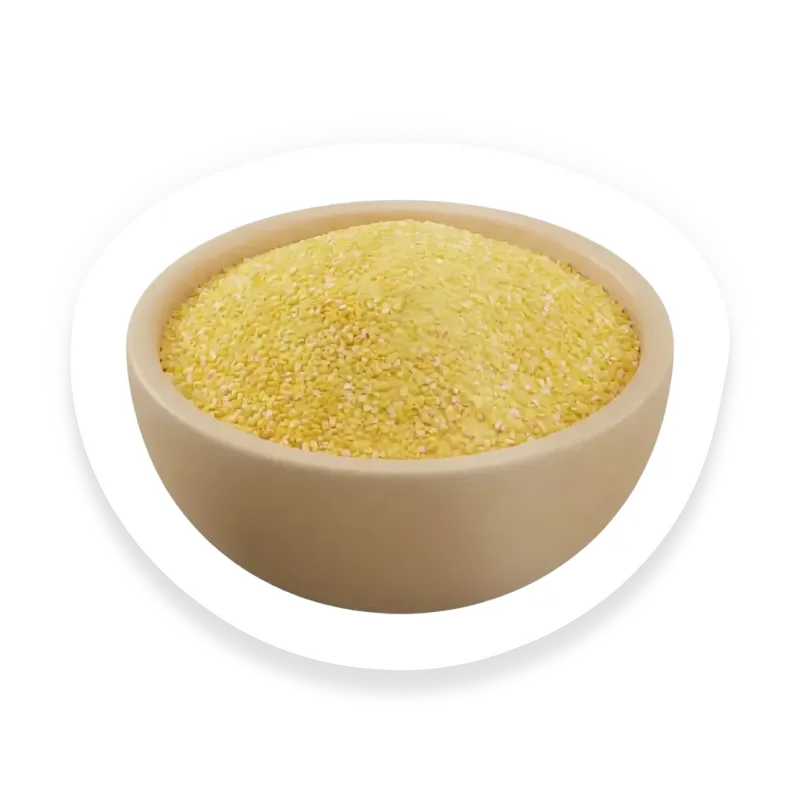
Cornmeal (Polenta)
Grain
Is Cornmeal (Polenta) Safe for Babies?
Yes, cornmeal can be introduced around 6 months when a baby is ready for solids; serve it cooked and in age-appropriate textures.
Yes, but there are some things to know
At a Glance
Polenta made from whole-grain corn provides gentle, filling whole grain fiber that helps keep bowel movements regular and digestion moving. It also has a resistant starch content that feeds friendly gut bacteria, which produce short-chain fatty acids that support colon health.
How Do You Serve Cornmeal (Polenta)?
- 1Cook grits, porridge, or thin polenta with extra liquid until very soft and creamy so baby can scoop with a spoon or pick up small pieces; avoid dry, firm, or crispy textures that are hard to mash.
- 2When using cornmeal in pancakes, breads, or muffins, keep the batter and crumbs moist and tender — add a little milk, yogurt, or oil if they seem dry to prevent sticking to the roof of the mouth.
- 3If serving set polenta, slice it very thin and reheat briefly with a splash of water, milk, or broth to soften. Ensure pieces are mashable before offering.
- 4Test texture by pressing with a spoon or between finger and thumb, cut into small soft pieces for self-feeding, and always supervise while the baby eats.
Is Cornmeal (Polenta) a Common Allergen?
Cornmeal (polenta) is naturally free of dairy, eggs, soy, nuts, sesame, fish, shellfish and is gluten-free when made from pure corn. However, cross-contact with wheat (gluten) or other allergens can occur during processing—always check packaging for 'gluten-free' certification and allergen statements. Prepared polenta or mixes may contain dairy (butter, cheese) or other additives, so verify ingredient lists before serving to children with allergies. Corn allergy is uncommon but possible—avoid if a child has a known corn allergy.
What Nutrients Does Cornmeal (Polenta) Have?
Cornmeal is an energy-dense, gluten-free grain rich in carbohydrates for quick energy and containing modest protein and fiber to support digestion and a healthy gut microbiome. It provides important B vitamins—especially folate, niacin, and vitamin B6—that support growth, brain development, and metabolism; some commercial cornmeal products may be fortified with iron and other micronutrients, so check the label. Because cornmeal is not inherently high in iron or many other micronutrients, relying on it heavily can displace more nutrient-dense foods and increase the risk of nutrient gaps, so offer it alongside iron-rich proteins, fruits, and vegetables. Watch prepared mixes for added salt, sugar, or fat, and avoid very firm or crispy preparations to reduce choking risk.
Is Cornmeal (Polenta) a Choking Hazard?
Very Low Choking Risk
Overall, cornmeal presents a low choking risk, but firm or crispy preparations (like very firm polenta cakes) can increase the danger. Always supervise meals and keep your baby within arm’s reach. Be familiar with the signs of choking and how to perform infant choking first aid so you can act quickly if needed.
Have More Questions?
Yes. Cornmeal can be stored in an airtight container in a cool, dry place for several months, but it's best to check the expiration date on the package.
Yes. You can freeze pureed or cooked cornmeal in an airtight container for up to 3 months, making it convenient to prepare in advance.
Yes. Organic cornmeal is available and can be a good choice, but both organic and conventional cornmeal are safe for babies when prepared properly.
Yes. You can combine cornmeal with other baby-safe foods like vegetables or mashed fruits to introduce different flavors and textures.
The appropriate portion size varies, but generally 1-2 tablespoons of cooked cornmeal per feeding is suitable for babies around 6-8 months old, gradually increasing as they grow.
Is Cornmeal (Polenta) safe for your baby?
Get personalized guidance on introducing Cornmeal (Polenta) — with prep tips, allergen alerts, and age-specific serving ideas.
Sources
- Maize food allergy: a double-blind placebo-controlled study onlinelibrary.wiley.com
- The maize major allergen, which is responsible for food-induced allergic reactions, is a lipid transfer protein pubmed.ncbi.nlm.nih.gov
- Chitinases as Food Allergens pmc.ncbi.nlm.nih.gov
- Immunologic cross-reactivity among cereal grains and grasses in children with food hypersensitivity pubmed.ncbi.nlm.nih.gov
- Other Food Allergens - Food Allergy Research & Education foodallergy.org
What Other Grain Can Babies Eat?
See all →
Backed by Science
Data you can trust.
Every food, guideline, and recommendation in Tummi is sourced from leading health institutions and peer-reviewed research.
 Centers for Disease Control and Prevention
Developmental milestones, nutrition guidelines, and allergen introduction timelines.
 American Academy of Pediatrics
Evidence-based feeding recommendations from the leading pediatric authority.
 National Institutes of Health
Peer-reviewed research on infant nutrition, allergies, and food safety.