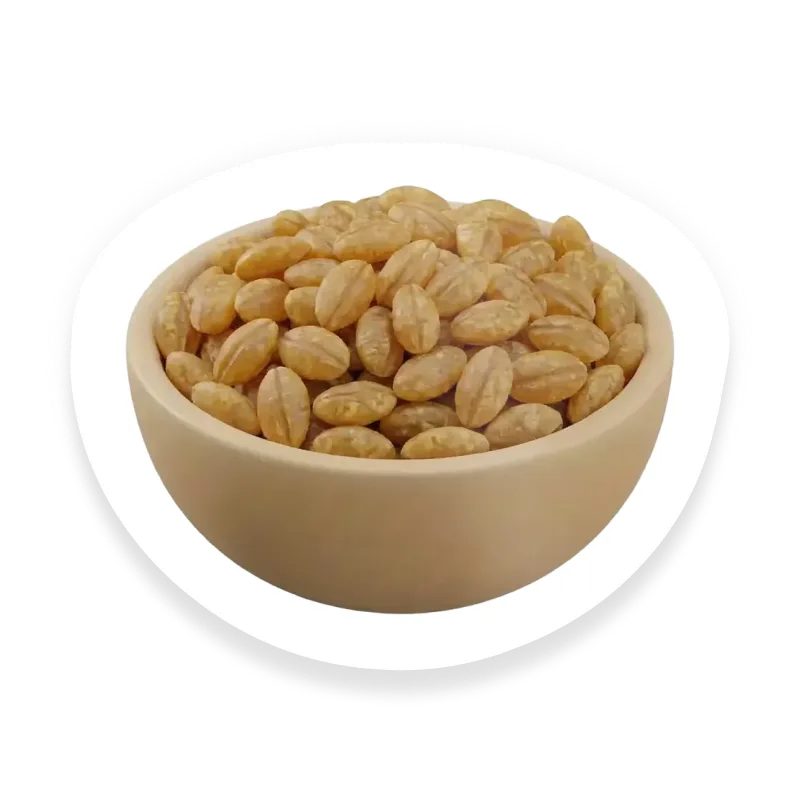
Bulgur
Grain
Is Bulgur Safe for Babies?
Yes, you can introduce cooked and softened bulgur to babies around 6 months old, considering their readiness for solids and gluten tolerance.
Yes, but there are some things to know
At a Glance
Bulgur is rich in fiber, with about 8 grams per cooked cup, so it adds bulk that helps stool move through the gut. The grain’s fiber and whole‑grain structure help bowel regularity, which can reduce constipation and make bathroom trips more predictable.
Because bulgur is made from wheat, people with wheat or gluten sensitivities can have reactions to it. It is also a whole grain source rich in fiber, B vitamins and minerals, which help digestion and provide a steady energy supply.
How Do You Serve Bulgur?
- 1Use finely ground bulgur or bulgur flour and cook in water, breastmilk, or formula until the grains are very soft and break apart easily.
- 2Stir and mash while cooking to make a smooth, spoonable porridge; thin gradually with extra liquid until it's an easy-to-scoop consistency.
- 3Stir in mashed fruits, cooked vegetables, or finely ground nuts to introduce new flavors; introduce each new ingredient one at a time and watch for allergic reactions.
- 4Serve cooled to lukewarm and stay within arm’s reach while your child eats; never place food directly into their mouth and avoid large lumps or whole nuts to reduce choking risk.
- 5Let the child self-feed with a spoon and offer small, manageable spoonfuls; stop feeding if they turn away or cough and continue to supervise every bite.
Is Bulgur a Common Allergen?
Bulgur is made from wheat and contains gluten, so it should be avoided by anyone with celiac disease, non-celiac gluten sensitivity, or a wheat allergy. Parents should check product labels for wheat and possible cross-contamination and choose gluten-free alternatives (quinoa, rice, or buckwheat) when needed. If uncertain, consult your child’s clinician or a registered dietitian.
What Nutrients Does Bulgur Have?
Cooked bulgur is a nutrient-dense whole grain that provides modest protein and higher fiber along with key minerals—iron, magnesium, manganese, zinc—and B‑vitamins that support growth, energy metabolism, and healthy digestion. For babies, its iron (non-heme) and B‑vitamins are especially useful, and the fiber helps promote regular stools. Because bulgur contains phytates and provides non-heme iron, pair it with vitamin C–rich foods and consider soaking to improve mineral absorption. Avoid for infants with wheat allergy or celiac disease, and don’t let high-fiber servings displace other iron-rich foods—excessive fiber can reduce overall intake and mineral absorption.
Is Bulgur a Choking Hazard?
Very Low Choking Risk
Cooked bulgur isn’t a common choking hazard because the grains are small, but they can be aspirated if a grain enters the airway. To lower the risk, never put food directly into your baby’s mouth and stay within arm’s reach during meals so you can intervene quickly. Learn the signs that distinguish gagging from true choking and review infant choking first-aid so you’ll be prepared if needed.
Have More Questions?
Yes. Bulgur can be introduced to babies at around 6 months once they are ready for solids, but it contains gluten, so avoid if they have gluten sensitivity or celiac disease.
Yes. Bulgur provides beneficial carbohydrates, fiber, and nutrients from whole wheat, making it a healthy grain option for babies in a varied diet.
Yes. Wheat-based products like bulgur are common allergens in children, but most outgrow wheat allergies by age 12; always observe for reactions when first introduced.
No. Cooked bulgur generally does not pose a choking hazard for babies because of its small, cooked grains; however, always supervise eating and serve appropriately.
Yes. Gluten in bulgur is safe for most babies unless they have celiac disease, gluten sensitivity, or wheat allergy; consult a healthcare provider if unsure.
Is Bulgur safe for your baby?
Get personalized guidance on introducing Bulgur — with prep tips, allergen alerts, and age-specific serving ideas.
Sources
- Contaminants in Grain—A Major Risk for Whole Grain Safety? (Nutrients, 2018) doi.org
- Bioactive healthy components of bulgur (Int J Food Sci Nutr, 2012) doi.org
- Molecular Advances on Phytases in Barley and Wheat (Int J Mol Sci, 2019) doi.org
- Wheat Allergy (Food Allergy Research & Education) foodallergy.org
- Wheat Allergy (American College of Allergy, Asthma & Immunology) acaai.org
- Food-Dependent, Exercise-Induced Anaphylaxis (J Allergy Clin Immunol Pract, 2017) doi.org
- Oral Allergy Syndrome: An Update for Stomatologists (Journal of Allergy, 2015) doi.org
- What is Celiac Disease? (Celiac Disease Foundation) celiac.org
- Diagnosis of gluten related disorders (World J Gastroenterol, 2015) doi.org
What Other Grain Can Babies Eat?
See all →
Backed by Science
Data you can trust.
Every food, guideline, and recommendation in Tummi is sourced from leading health institutions and peer-reviewed research.
 Centers for Disease Control and Prevention
Developmental milestones, nutrition guidelines, and allergen introduction timelines.
 American Academy of Pediatrics
Evidence-based feeding recommendations from the leading pediatric authority.
 National Institutes of Health
Peer-reviewed research on infant nutrition, allergies, and food safety.