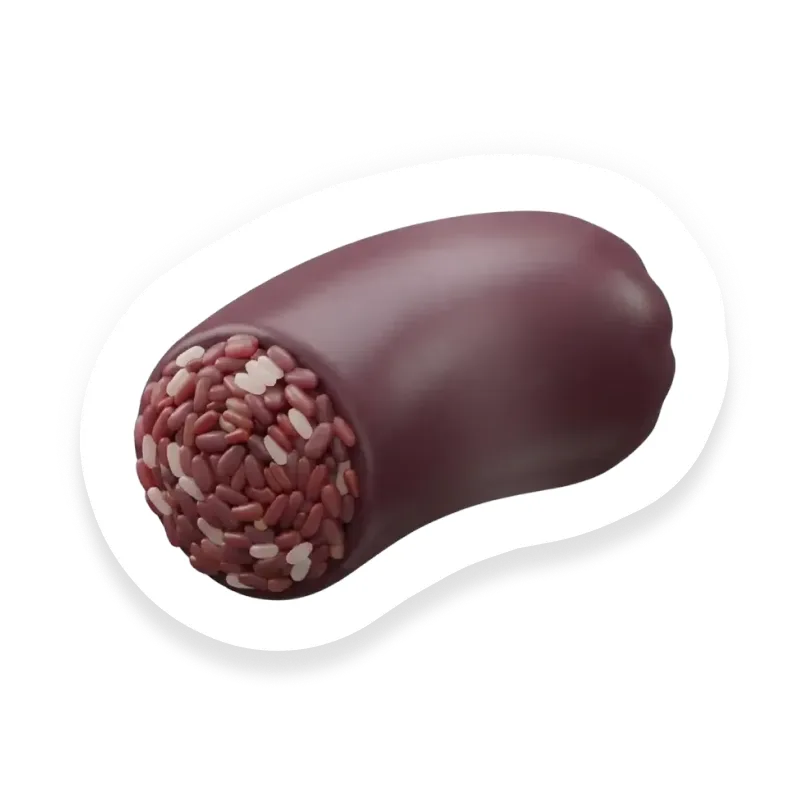
Blood Sausage
Meat
Is Blood Sausage Safe for Babies?
Yes, blood sausage can be introduced around 6 months if well-cooked, in an age-appropriate manner, and free of honey, as part of a varied diet.
Yes, but there are some things to know
At a Glance
Because it’s made from animal blood, blood sausage supplies easily absorbed iron that helps the body make red blood cells. It also gives protein and minerals like zinc and vitamin B12 to support growth and immune health.
How Do You Serve Blood Sausage?
- 1Remove any casing and crumble or finely chop the fully cooked blood sausage so the texture is soft and easy to scoop.
- 2Mix into soft foods like mashed vegetables, porridge, mashed potato, or thick yogurt so it blends and won’t form lumps.
- 3Check temperature and taste for salt or strong spices; aim for low salt and mild seasoning before serving.
- 4Offer tiny spoonfuls and supervise closely — never give slices or large pieces on their own to reduce choking risk.
- 5Serve only occasionally due to rich flavor and higher salt/iron; check with pediatrician if you have health or dietary concerns.
Is Blood Sausage a Common Allergen?
Blood sausage (black pudding) typically does not contain shellfish, tree nuts, peanuts, soy, sesame, fish, eggs, or dairy, but recipes vary by region and producer. Some versions include cereals such as barley, oats, or breadcrumbs (which may contain gluten) or added milk, so gluten and dairy can be present. Always check the product label or ask the maker about ingredients and potential cross-contact, especially if your child has a gluten or dairy allergy. Note it contains pork blood—this is not a common allergen but may be a dietary concern for some families.
What Nutrients Does Blood Sausage Have?
Nutrient Snapshot: Blood sausage is a concentrated source of heme iron, protein, vitamin B12, zinc and selenium — 100 g can provide ~6–6.4 mg iron and ~15 g protein — making it useful as an occasional iron-rich complementary food for babies starting solids. Its heme iron is highly bioavailable and supports brain development and growth, but blood sausage is also high in fat (including saturated fat), cholesterol, and sodium (≈680 mg/100 g). Offer only small, well-cooked, age-appropriate portions infrequently to avoid excess sodium and saturated fat and to reduce choking risk.
Is Blood Sausage a Choking Hazard?
High Choking Risk
Blood sausage poses a notable choking risk because its cylindrical shape and firm, springy texture can more easily block an infant’s airway. Round, coin‑like slices are particularly hazardous and challenging for young children to manage. Keep the child seated and within arm’s reach while eating and be ready to act quickly if choking occurs. Learn infant choking first aid so you can respond confidently in an emergency.
Have More Questions?
Yes, blood sausage can be introduced to babies around 6 months when they start solids, but it must be well-cooked, age-appropriate, and free of honey.
Yes, as long as the blood sausage is thoroughly cooked, prepared in an age-appropriate way, and served in small, manageable pieces to avoid choking hazards.
No, blood sausage is not a common allergen, but always check ingredient labels for potential allergens like dairy or wheat if added.
It depends; blood sausage is often firm and cylindrical, increasing choking risk, so it should be prepared in a soft, baby-friendly form and supervised during feeding.
Yes, blood sausage should be cooked thoroughly, even if pre-cooked, to eliminate bacteria and ensure safety for young children.
Is Blood Sausage safe for your baby?
Get personalized guidance on introducing Blood Sausage — with prep tips, allergen alerts, and age-specific serving ideas.
Sources
What Other Meat Can Babies Eat?
See all →


Backed by Science
Data you can trust.
Every food, guideline, and recommendation in Tummi is sourced from leading health institutions and peer-reviewed research.
 Centers for Disease Control and Prevention
Developmental milestones, nutrition guidelines, and allergen introduction timelines.
 American Academy of Pediatrics
Evidence-based feeding recommendations from the leading pediatric authority.
 National Institutes of Health
Peer-reviewed research on infant nutrition, allergies, and food safety.