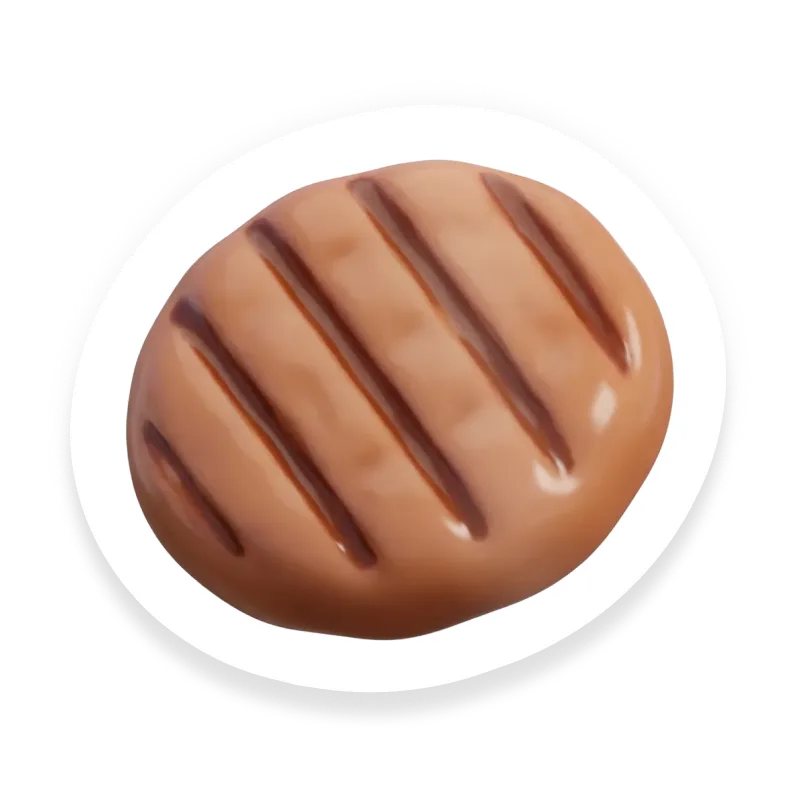
Ground Beef
Meat
Is Ground Beef Safe for Babies?
Yes, well-cooked ground beef can be introduced to babies around 6 months old as they start solids, ensuring it is thoroughly cooked and served appropriately.
Yes, but there are some things to know
At a Glance
Ground beef supplies easily absorbed heme iron, which your body uses to make red blood cells. It also provides protein and vitamin B12 to support growth and energy.
How Do You Serve Ground Beef?
- 1Cook ground beef until it reaches 160°F (71°C); use a food thermometer to confirm it is fully cooked.
- 2Mix the cooked beef into scoopable, soft foods like mashed potatoes, polenta, or pureed vegetables so your baby can pick up food or use a pre-loaded spoon.
- 3Offer large, soft meatballs or patties about 2 inches (5 cm) across that can be easily squashed between your fingers and avoid serving loose, dry crumbles on their own.
- 4Stay within arm’s reach and supervise every bite to reduce choking risk.
Is Ground Beef a Common Allergen?
Ground beef is not a common top-9 allergen for most people, but mammalian meats (including beef) can trigger red‑meat (alpha‑gal) allergy in sensitized individuals. Processed or pre‑seasoned ground beef may contain or be cross‑contaminated with common allergens (e.g., dairy, soy, gluten), so always check ingredient labels and preparation practices. If a child has known red‑meat/alpha‑gal allergy or other food allergies, avoid beef until evaluated by an allergist and follow their guidance.
What Nutrients Does Ground Beef Have?
Ground beef supplies highly bioavailable heme iron (important to prevent iron-deficiency anemia in babies ~6+ months), complete high-quality protein for growth, zinc (immune function and tissue growth), vitamin B12 and choline (neurologic and brain development), and selenium. Its fat provides concentrated calories needed in infancy, but frequent servings of high‑fat or high‑saturated‑fat ground beef can deliver excess calories and saturated fat—offer small portions and rotate with other protein/iron sources. Always cook ground beef thoroughly (160°F/71°C) to reduce foodborne illness risk.
Is Ground Beef a Choking Hazard?
Very Low Choking Risk
Ground beef can be a choking hazard—its firmness and loose, dry crumbles can scatter unpredictably in a baby’s mouth and increase the risk of choking. Parents should stay within arm’s reach, closely watch feeding, be able to tell gagging from true choking, and know basic choking first-aid so they can respond calmly if needed.
Have More Questions?
Yes. When thoroughly cooked to an internal temperature of 160°F (71°C), ground beef can be safely introduced to babies around 6 months, provided it is prepared in an age-appropriate, soft, mashable form.
Yes. Ground beef is a good source of iron and protein, which support baby’s growth. Ensure it is well-cooked and served in small, manageable portions to avoid choking.
Yes. When cooked properly, ground beef is safe for babies, except in regions like Argentina where certain strains of bacteria pose higher risks to children under 5. Always ensure thorough cooking.
No. Beef is not a common allergen, but some tick bites can cause allergies to mammalian meat, which may affect some babies with related sensitivities. Start with small servings and watch for reactions.
Yes. Loose, firm ground beef crumbles can pose a choking risk for babies. Serve it soft, mashed, or incorporated into a pureed or mashable food to minimize choking hazards.
Is Ground Beef safe for your baby?
Get personalized guidance on introducing Ground Beef — with prep tips, allergen alerts, and age-specific serving ideas.
Sources
- Department of Health & Human Services. (2022). Cook to a safe minimum internal temperature.
- Centers for Disease Control and Prevention. (2022). Salmonella and ground beef.
- Ministerio de Salud. Síndrome Urémico Hemolítico: todo lo que debés saber.
- Karmali MA, Gannon V, Sargeant JM. (2010). Verocytotoxin-producing Escherichia coli (VTEC). Vet Microbiol.
- Majowicz SE, Scallan E, Jones-Bitton A, Sargeant JM, Stapleton J, Angulo FJ, et al. (2014). Global incidence of human Shiga toxin-producing Escherichia coli infections and deaths. Foodborne Pathog Dis.
- Ministerio de Salud. Recomendaciones para la prevención del síndrome urémico hemolítico en niños y niñas.
- Ministerio de Salud. (2018) ¿Cómo podemos prevenir el Síndrome Urémico Hemolítico?
- FAO WHO. (2018). Shiga toxin-producing Escherichia coli (STEC) and food: attribution, characterization, and monitoring. Microbiological risk assessment series. 31.
- Rivas M, Sosa-Estani S, Rangel J, Caletti MG, Vallés P, Roldán CD, et al. (2008). Risk factors for sporadic Shiga toxin–producing Escherichia coli infections in children, Argentina. Emerg Infect Dis.
- Brusa V, Costa M, Padola NL, Etcheverría A, Sampedro F, et al. (2020). Quantitative risk assessment of haemolytic uremic syndrome associated with beef consumption in Argentina. PLOS ONE 15(11): e0242317. doi.org
- American Academy of Allergy, Asthma, & Immunology. Alpha-gal defined.
- American College of Asthma, Allergy, & Immunology. Meat Allergy.
- Johns Hopkins Medicine. Milk allergy diet.
- Wilson, J.M., Platts-Mills, T. (2018). Meat allergy and allergens. Molecular immunology, 100, 107–112. doi.org
- Restani P, Ballabio C, Tripodi S, Fiocchi A. (2009). Meat allergy. Curr Opin Allergy Clin Immunol. 2009; 9(3):25-9.
What Other Meat Can Babies Eat?
See all →

Backed by Science
Data you can trust.
Every food, guideline, and recommendation in Tummi is sourced from leading health institutions and peer-reviewed research.
 Centers for Disease Control and Prevention
Developmental milestones, nutrition guidelines, and allergen introduction timelines.
 American Academy of Pediatrics
Evidence-based feeding recommendations from the leading pediatric authority.
 National Institutes of Health
Peer-reviewed research on infant nutrition, allergies, and food safety.