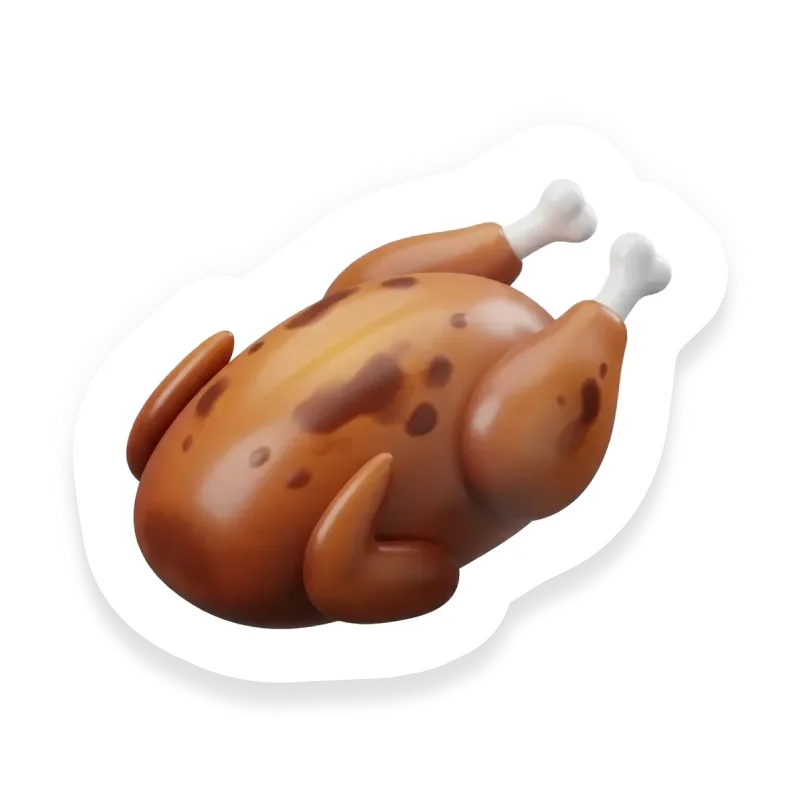
Goose
Meat
Is Goose Safe for Babies?
Yes, well-cooked goose can be introduced around 6 months when starting solids, ensuring it's prepared thoroughly to be tender and easy to chew.
Yes, but there are some things to know
At a Glance
Goose meat is high in iron and supplies readily absorbed heme iron from animal muscle that helps the body make oxygen-carrying red blood cells. It also provides vitamin B12 and zinc, nutrients that help the body use that iron to keep blood healthy.
How Do You Serve Goose?
- 1Cut the goose into large, flat strips about the width of two adult fingers pressed together, removing all bones, loose cartilage, and skin before serving.
- 2Cook thoroughly until no pink remains — internal temperature 165°F (74°C) and juices run clear to ensure safety.
- 3Offer one strip at a time for oral‑motor exploration and let the child handle it; supervise closely and allow them to push food out if they bite off too much.
- 4Double-check each strip for any small bones or hard cartilage and adjust size or shred the meat further if your child needs a softer texture.
Is Goose a Common Allergen?
Goose meat itself is not a common food allergen and the sheet indicates no major allergens present. However, rare poultry allergies can occur, so avoid if your child has a known allergy to poultry. Be mindful of allergens introduced during preparation (for example, wheat in breading, dairy in sauces, or soy-based marinades) and possible cross-contact in shared cookware. When offering goose for the first time, give a small amount and watch closely for any reactions.
What Nutrients Does Goose Have?
Goose is nutrient‑dense: it provides high‑quality protein, concentrated fats including omega‑3s, and is a rich source of heme iron, choline, zinc, selenium, and B‑vitamins (B6, B12) that support growth, brain development, and healthy red blood cells. For babies, the heme iron and B12 are particularly valuable to help prevent iron‑deficiency anemia and support neurodevelopment, while fats and choline support brain growth. Caution: goose is higher in total fat and calories than many other poultry (and goose liver is very high in vitamin A), so offer moderate portions, avoid honey‑glazed preparations for <12 months, and balance with other lean proteins and iron‑rich foods.
Is Goose a Choking Hazard?
Low Choking Risk
Goose can be quite firm and challenging to chew, which raises the risk of choking for infants learning to eat solids. Closely supervise meals and stay within arm’s reach so you can respond quickly, and make sure you and caregivers know the signs of gagging versus true choking and basic infant choking first aid. Also avoid making the meat overly dry, since dry, tough meat is harder to swallow.
Have More Questions?
It depends. While goose can be introduced to babies around 6 months, ensure it is well-cooked, offered in age-appropriate textures, and served in a safe, manageable portion to reduce choking risks.
Yes. Cooked goose can be stored in an airtight container in the refrigerator for up to 3 days or frozen for 2-3 months, but always reheat thoroughly before serving to your baby.
It depends. Organic goose may be preferable for some parents, but conventional goose is equally nutritious; choose based on your preferences and availability.
Yes. Combining goose with vegetables or grains can introduce diverse flavors and nutrients, but ensure the textures are suitable and that new combinations are introduced gradually.
It depends. Portion sizes should be small, about 1-2 teaspoons initially, gradually increasing as your baby develops their eating skills and appetite.
Is Goose safe for your baby?
Get personalized guidance on introducing Goose — with prep tips, allergen alerts, and age-specific serving ideas.
Sources
- Washing Food: Does it Promote Food Safety? (U.S. Department of Agriculture) fsis.usda.gov
- Food allergy with monovalent sensitivity to poultry meat (Cahen et al., 1998) onlinelibrary.wiley.com
- Common allergens in avian meats (Kelso et al., 1999) pubmed.ncbi.nlm.nih.gov
- Update on the bird-egg syndrome and genuine poultry meat allergy (Hemmer et al., 2016) link.springer.com
- What is FPIES (International FPIES Association) fpies.org
- Introducing food to the infant with FPIES (Children's Hospital Los Angeles) chla.org
What Other Meat Can Babies Eat?
See all →
Backed by Science
Data you can trust.
Every food, guideline, and recommendation in Tummi is sourced from leading health institutions and peer-reviewed research.
 Centers for Disease Control and Prevention
Developmental milestones, nutrition guidelines, and allergen introduction timelines.
 American Academy of Pediatrics
Evidence-based feeding recommendations from the leading pediatric authority.
 National Institutes of Health
Peer-reviewed research on infant nutrition, allergies, and food safety.