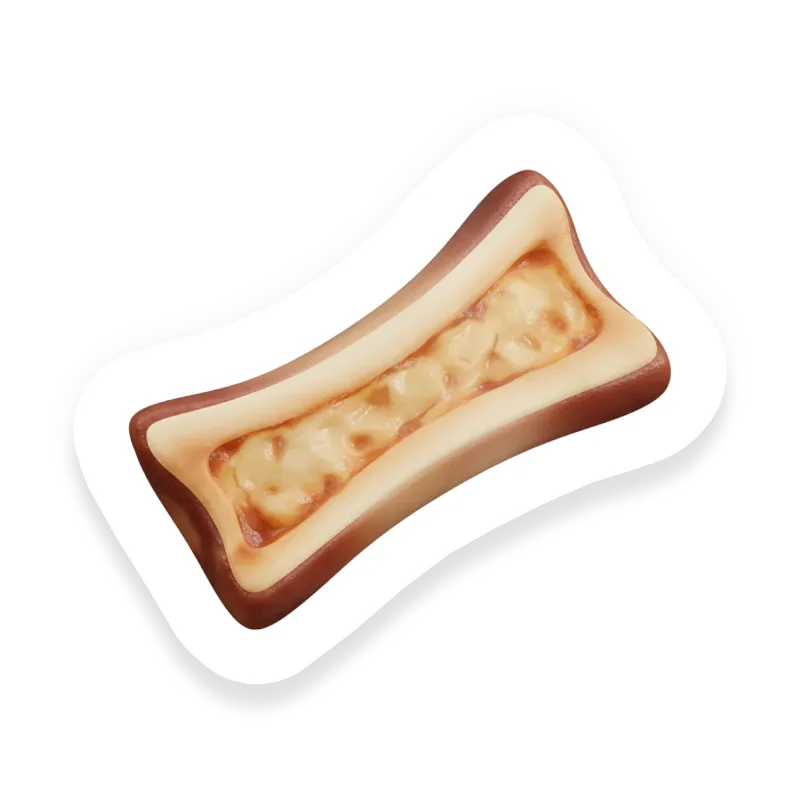
Bone Marrow
Meat
Is Bone Marrow Safe for Babies?
Yes, well-cooked bone marrow can be introduced around 6 months when babies start solids.
Yes, but there are some things to know
At a Glance
Bone marrow is rich in iron and vitamin B12. These nutrients help the body make healthy red blood cells and carry oxygen.
How Do You Serve Bone Marrow?
- 1Cook marrow thoroughly: roast or simmer until the marrow is very soft and gelatinous, then scoop out the center.
- 2Thin and smooth: spread a very thin layer over soft toast or stir marrow into mashed vegetables or beans and blend until scoopable.
- 3Remove lumps and cool: break up any fatty lumps and let the mixture cool. Smooth texture minimizes choking risk.
- 4Broth option: offer a small amount of strained marrow broth in an open cup for supervised sipping.
Is Bone Marrow a Common Allergen?
Bone marrow is not a common listed allergen (no milk, egg, peanut, tree nut, fish, shellfish, soy, sesame, or gluten), but it is an animal-derived red meat product and can trigger allergic reactions in individuals with red meat/alpha-gal allergy. Cross-contamination may occur if processed in facilities that handle other allergens, so check packaging or ask your butcher. Bone marrow is high in fat and can be a choking hazard for infants and toddlers—introduce cautiously and avoid offering large spoonfuls to young children. Parents of children with severe food allergies or known meat allergies should consult their pediatrician before offering bone marrow.
What Nutrients Does Bone Marrow Have?
Bone marrow is a nutrient-dense, energy-rich food: it provides concentrated fats (including omega‑3s), protein, heme iron, zinc, selenium, and vitamins such as A and B12 — nutrients that support growth, brain development, and healthy red blood cells. Small, well‑cooked servings can be a helpful source of iron and B12 for babies starting solids and help absorption of fat‑soluble vitamins. Because marrow is calorie- and fat‑dense (and may contain firm fat globs), serve in small, smooth portions to reduce choking risk and avoid displacing other varied foods; excessive intake could contribute too many calories and saturated fat.
Is Bone Marrow a Choking Hazard?
Very Low Choking Risk
Bone marrow can contain firm, slippery globs of fat and sometimes hard fragments that increase the risk of choking. Always supervise closely—stay within arm’s reach—and ensure caregivers recognize the signs of choking and know how to respond. Keep bones and any hard pieces out of the child’s reach.
Have More Questions?
Yes. Well-cooked bone marrow can be introduced around 6 months when your baby is ready for solids, offering a rich, flavor-filled option.
Yes. Bone marrow contains essential nutrients like iron, vitamins A, B12, E, and K, which support your baby's growth and development.
No. Bone marrow is not considered a common allergen, but some people with red meat allergies or alpha-gal allergy should avoid it, especially if they have experienced reactions.
Yes. The slippery fats and potential globules can pose a choking risk for babies, making proper preparation and supervision crucial.
It depends. Bone marrow can be a nutritious addition to a baby’s diet when prepared appropriately, but always ensure it’s served in a safe, manageable texture for your baby.
Is Bone Marrow safe for your baby?
Get personalized guidance on introducing Bone Marrow — with prep tips, allergen alerts, and age-specific serving ideas.
Sources
- Alpha-gal and Red Meat Allergy - American Academy of Allergy, Asthma & Immunology aaaai.org
- Meat Allergy - American College of Allergy, Asthma & Immunology (ACAAI) acaai.org
- Diagnosis and management of patients with the α-Gal syndrome - Platts-Mills et al. (J Allergy Clin Immunol Pract) pmc.ncbi.nlm.nih.gov
What Other Meat Can Babies Eat?
See all →


Backed by Science
Data you can trust.
Every food, guideline, and recommendation in Tummi is sourced from leading health institutions and peer-reviewed research.
 Centers for Disease Control and Prevention
Developmental milestones, nutrition guidelines, and allergen introduction timelines.
 American Academy of Pediatrics
Evidence-based feeding recommendations from the leading pediatric authority.
 National Institutes of Health
Peer-reviewed research on infant nutrition, allergies, and food safety.