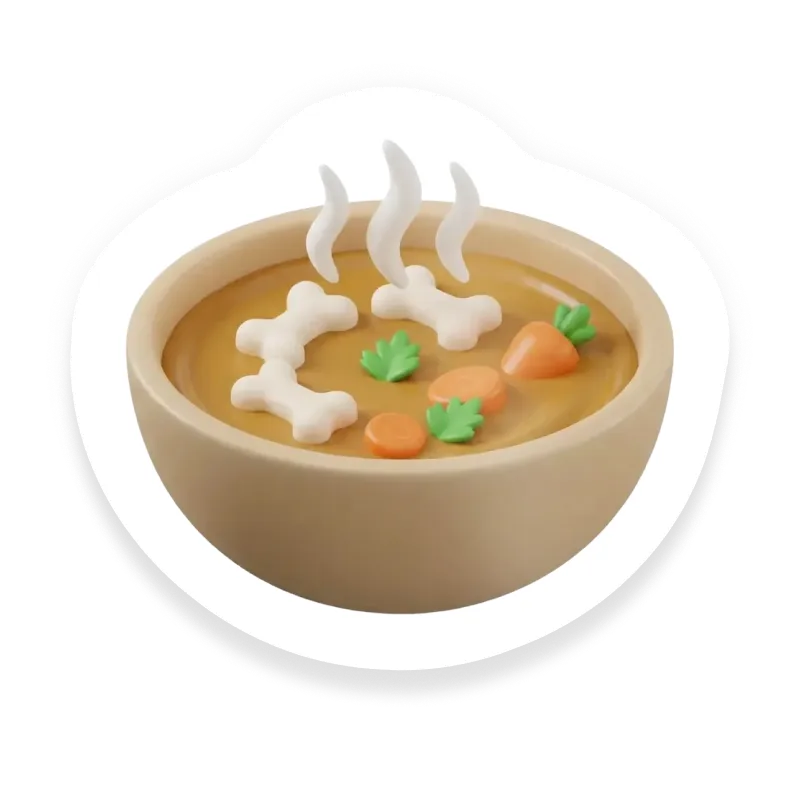
Bone Broth
Meat
Is Bone Broth Safe for Babies?
Yes, bone broth can be introduced around 6 months as an ingredient in meals or a small drink, in moderation and prepared safely.
Yes, but there are some things to know
At a Glance
Bone broth is rich in gelatin, collagen breakdown products, and amino acids like glycine and glutamine that can help soothe the gut lining and ease digestion. The broth's dissolved minerals and gelatin can also help hold water in the intestines to improve stool consistency and support gut barrier function.
How Do You Serve Bone Broth?
- 1Use bone broth mainly as a cooking ingredient—stir into purees, savory porridges, mashed vegetables, or grains to add gentle flavor and extra moisture.
- 2If offered as a drink, serve only small amounts (about 60–120 mL / 2–4 oz) in an open cup at mealtimes; do not use a bottle.
- 3Keep breast milk or formula as the main source of nutrition and offer broth sparingly rather than as a meal replacement.
- 4Prefer low-sodium or homemade broth with no added salt. If using store-bought, dilute with water to reduce salt and skim off fat after cooling.
- 5Strain well and serve lukewarm; avoid bone fragments or large pieces and check labels for added spices or allergens before offering.
Is Bone Broth a Common Allergen?
Plain bone broth made from beef, chicken, or pork bones generally does not contain common allergens (milk, egg, peanut, tree nuts, soy, wheat/gluten, sesame, shellfish, fish) unless those ingredients are added or cross-contact occurs. Broths made from fish or shellfish will contain fish/shellfish allergens. Commercial or restaurant broths can include soy, wheat-containing flavorings (e.g., soy sauce, bouillon), dairy, or other additives—always read labels and ask about ingredients. If your child has a known allergy, avoid broths made from that allergen and choose single-ingredient, low-sodium homemade broth or verified allergen-free brands.
What Nutrients Does Bone Broth Have?
Bone broth supplies fluid plus small amounts of minerals (sodium, calcium, magnesium, zinc, copper, and sometimes iron), and some protein/collagen-derived amino acids. These nutrients can support hydration, electrolyte balance, and provide minerals important for bone development and red blood cell formation, but amounts vary widely by recipe and cooking time. Because broths can be concentrated in sodium and may be high in histamine if cooked long, offer small amounts (2–4 oz/60–120 mL) for babies under 12 months and use broth mainly as a flavoring or in purees so it doesn't displace breastmilk or formula.
Is Bone Broth a Choking Hazard?
Very Low Choking Risk
Bone broth poses a low choking risk when it’s free of large solids, but any food or liquid can lead to choking in rare cases. Always stay within arm’s reach and closely observe your baby during meals so you can respond quickly if they gag or cough. If you have concerns about your baby’s swallowing or gagging, consult your pediatrician or a feeding specialist.
Have More Questions?
Yes, you can give bone broth to babies, but in small amounts and as part of a varied diet. It is best used in cooking or served in an open cup for babies over 6 months.
Yes, bone broth can support hydration and provide minerals, but it should not replace breast milk or formula as the main source of nutrition before age 1.
No, bone broth is not a common allergen, but it may contain trace allergens from the meat used, and some people may have sensitivities to histamines.
No, bone broth itself is not a choking hazard when prepared appropriately. Always serve in an age-appropriate manner and supervise your baby during meals.
Yes, small amounts of bone broth can be given to sick babies to help with hydration and comfort, but it should be limited to 2-4 ounces and not offered in a bottle.
Is Bone Broth safe for your baby?
Get personalized guidance on introducing Bone Broth — with prep tips, allergen alerts, and age-specific serving ideas.
Sources
- Alpha-gal and Red Meat Allergy - American Academy of Allergy, Asthma & Immunology aaaai.org
- Meat allergy and allergens - Wilson & Platts-Mills (Molecular Immunology, 2018) pmc.ncbi.nlm.nih.gov
- Severe allergy to chicken meat - Zacharisen MC (WMJ, 2006) pubmed.ncbi.nlm.nih.gov
What Other Meat Can Babies Eat?
See all →


Backed by Science
Data you can trust.
Every food, guideline, and recommendation in Tummi is sourced from leading health institutions and peer-reviewed research.
 Centers for Disease Control and Prevention
Developmental milestones, nutrition guidelines, and allergen introduction timelines.
 American Academy of Pediatrics
Evidence-based feeding recommendations from the leading pediatric authority.
 National Institutes of Health
Peer-reviewed research on infant nutrition, allergies, and food safety.