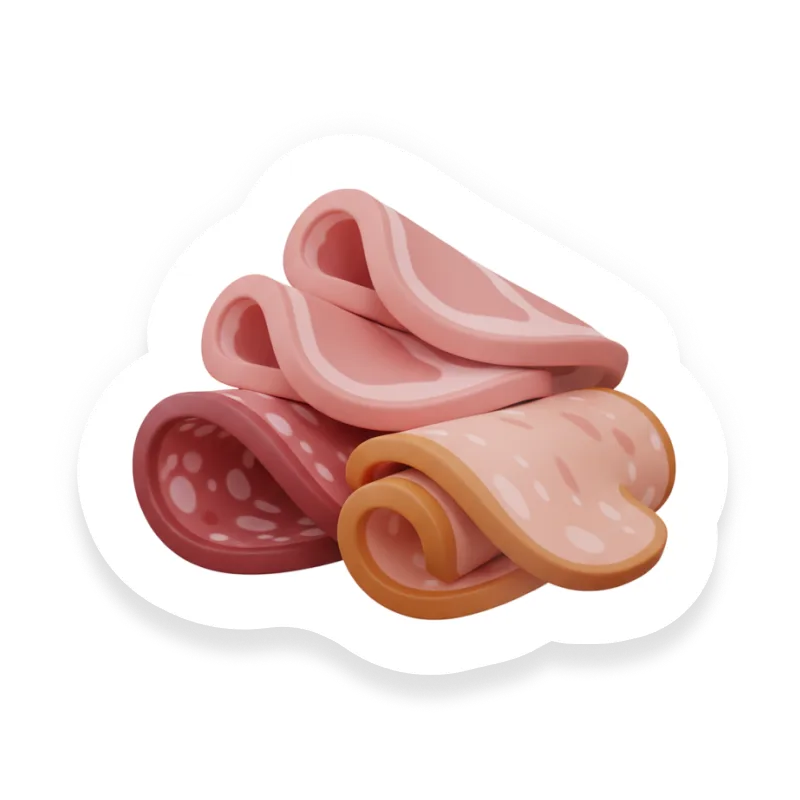
Deli Meat
Meat
Is Deli Meat Safe for Babies?
No, wait until after 12 months to serve deli meat due to foodborne illness risks and potential containing honey, which can cause infant botulism.
Yes, but there are some things to know
At a Glance
Many sliced deli meats are a heme iron source because they contain the form of iron from animal foods that the body absorbs more easily than plant iron. This easily absorbed iron supports healthy red blood cells and helps carry oxygen through the body.
How Do You Serve Deli Meat?
- 1Because deli meat can carry bacteria, heat until steaming (or to 165°F) and let it cool before offering a small taste — this reduces the risk of foodborne illness.
- 2Finely chop or shred the meat and mix it into a soft, scoopable food (for example, mashed avocado or pureed veggies) so pieces won’t form thin slices that can stick to the throat.
- 3Avoid thin slices, rolls, or large chunks that can cling or cause gagging; serve tiny, soft pieces or spread the meat through a softer food instead.
- 4Do not give deli products that contain honey or honey-glazes; avoid any honey-containing meats or sauces.
Is Deli Meat a Common Allergen?
No major allergens are flagged in our record for this deli meat. However, processed deli meats can include or be contaminated by common allergens (soy, milk, wheat/gluten, egg, etc.) through added ingredients or cross-contact on slicers—always check the ingredient list and packaging. For children with severe allergies, prefer sealed packages with full ingredient labels or confirm with deli staff that slicers/lines are cleaned before serving.
What Nutrients Does Deli Meat Have?
Deli meats provide concentrated, high-quality protein plus heme iron, vitamin B12, and zinc—nutrients that support growth, brain development, and help prevent iron-deficiency anemia in infants and toddlers. However, they are often high in sodium and may contain preservatives (nitrates/nitrites); excessive intake can lead to too much salt for young children and is best limited. Choose lean, low-sodium options, serve in age-appropriate textures, and heat until steaming for younger children to reduce infection risk.
Is Deli Meat a Choking Hazard?
Low Choking Risk
Deli meat can be a choking hazard because thicker pieces are firm and hard for young children to chew, and very thin slices may cling to the tongue or roof of the mouth and trigger gagging. Stay within arm’s reach and watch your child closely during meals so you can intervene quickly if they struggle. If your child has difficulty managing textures or frequently gags, consult your pediatrician or a feeding specialist for personalized guidance.
Have More Questions?
It depends. Deli meats can be served to toddlers after 12 months, but they should be cut into small, manageable pieces and checked for safety and freshness, due to the risk of foodborne illness.
Yes, you can store deli meat in the refrigerator for up to 3-4 days or freeze it for longer storage. Ensure it is airtight and properly labeled to maintain quality and safety.
Yes, choosing organic deli meats can reduce exposure to certain additives and preservatives. However, all deli meats should still be served with care, especially regarding sodium content.
It depends. Combining deli meats with other foods like vegetables or bread can introduce variety and balanced nutrients, but always consider the child's ability to chew and the risk of choking.
A typical portion size for a toddler is about 1-2 ounces of deli meat per serving, depending on their age, appetite, and dietary needs.
Is Deli Meat safe for your baby?
Get personalized guidance on introducing Deli Meat — with prep tips, allergen alerts, and age-specific serving ideas.
Sources
What Other Meat Can Babies Eat?
See all →







Backed by Science
Data you can trust.
Every food, guideline, and recommendation in Tummi is sourced from leading health institutions and peer-reviewed research.
 Centers for Disease Control and Prevention
Developmental milestones, nutrition guidelines, and allergen introduction timelines.
 American Academy of Pediatrics
Evidence-based feeding recommendations from the leading pediatric authority.
 National Institutes of Health
Peer-reviewed research on infant nutrition, allergies, and food safety.