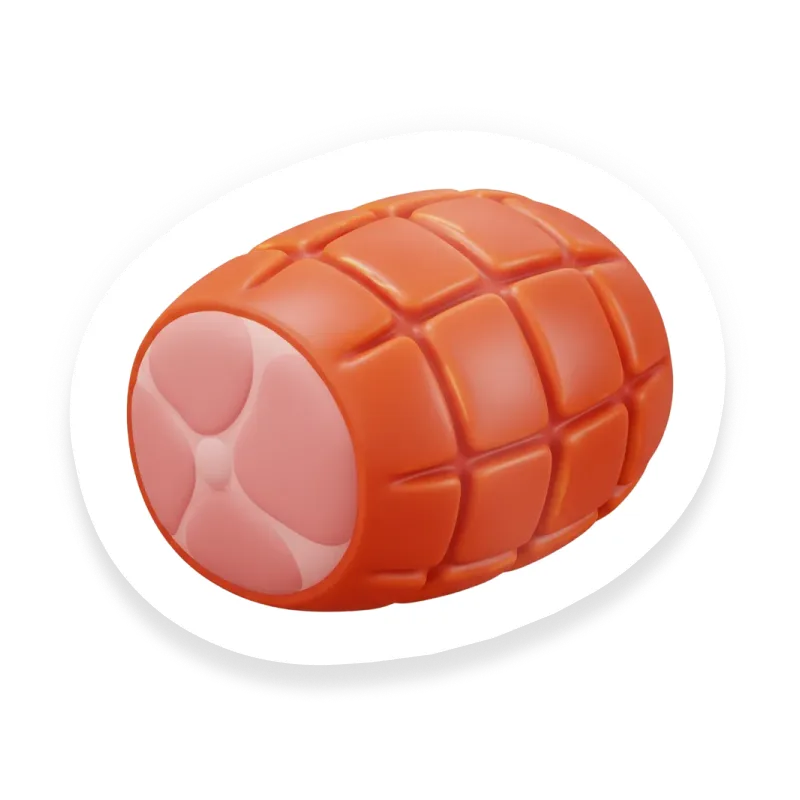
Ham
Meat
Is Ham Safe for Babies?
Yes, ham can be introduced around 6 months if it is plain and free of honey; wait until after 12 months if it contains honey.
Yes, but there are some things to know
At a Glance
Cooked ham is a good iron source because it contains heme iron, which the body absorbs easily to help make healthy red blood cells. It also provides protein and vitamin B12 that support energy and recovery.
How Do You Serve Ham?
- 1Remove all rind, skin, loose gristle, and excess fat, then cut a long, flat strip about the width of two adult fingers pressed together to reduce choking risk.
- 2If the slice is thick, rubbery, or too floppy to chew safely, finely chop or mince the ham and mix it into a scoopable food like mashed potatoes or porridge.
- 3Do not use glazed hams that contain honey for infants under 12 months.
- 4Consider delaying deli-style ham because of foodborne-illness risk; if using deli meat, heat until steaming then cool before serving.
Is Ham a Common Allergen?
Plain ham (pork) is not one of the common major allergens (milk, eggs, fish, shellfish, tree nuts, peanuts, wheat, soy), but processed or cured hams can include allergenic ingredients (e.g., milk, wheat/gluten or soy) or be exposed to cross-contact during processing. Always check the product ingredient list and any “Contains” or advisory labeling, and prefer single-ingredient, clearly labeled products for children with allergies. If you’re unsure, contact the manufacturer or avoid giving ham until you’ve confirmed it’s safe for your child. For children with diagnosed food allergies, follow your clinician’s guidance.
What Nutrients Does Ham Have?
Ham provides high-quality protein and easily absorbed heme iron, along with vitamin B12, zinc, phosphorus, and selenium—nutrients that support growth, brain development, and iron stores in babies. Many hams are cured or processed and can be high in sodium and may contain preservatives or honey (avoid honey before 12 months), so serve small portions and limit frequency to prevent excess sodium intake. Prepare age-appropriate textures (flat strips, shreds, or finely chopped mixed into other foods) and heat deli meats until steaming to reduce foodborne risk. Offer a small amount first and watch for rare allergic reactions (including alpha-gal), increasing amounts only if tolerated.
Is Ham a Choking Hazard?
Low Choking Risk
Ham can be a choking hazard because chunks and cubes are firm and may be difficult for babies to chew and swallow. Always keep babies within arm’s reach and closely supervise them during meals, watching for signs of gagging, coughing, or trouble breathing. Caregivers should learn basic infant choking first aid so they can respond quickly if an emergency occurs.
Have More Questions?
It depends. Babies can have cooked, plain ham as soon as they are ready for solids around 6 months, but avoid processed or cured varieties with added ingredients like honey until after 12 months.
It depends. Typically, babies can have small, finely chopped or shredded ham once they are comfortable with solid foods, usually around 8-10 months, to reduce choking risk.
It depends. Choose ham that is free of added sugars, honey, or preservatives; freshly cooked or minimally processed ham is best for babies.
It depends. When serving ham to toddlers, always cut it into small pieces or strips appropriate for their chewing ability, typically 1 year and older.
It depends. Many parents opt to store cooked ham in airtight containers in the refrigerator for 3-4 days or freeze it for up to 1-2 months.
Is Ham safe for your baby?
Get personalized guidance on introducing Ham — with prep tips, allergen alerts, and age-specific serving ideas.
Sources
- Meat Allergy - American College of Allergy, Asthma & Immunology acaai.org
- Meat allergy and allergens - Wilson JM, Platts-Mills TA (2018), Molecular Immunology pmc.ncbi.nlm.nih.gov
- Alpha-gal and Red Meat Allergy - American Academy of Allergy, Asthma & Immunology aaaai.org
- Alpha-gal Syndrome - CDC cdc.gov
- 2022 Outbreak of Listeria Infections Linked to Deli Meats and Cheese - CDC (archived Mar 29, 2023) archive.cdc.gov
What Other Meat Can Babies Eat?
See all →

Backed by Science
Data you can trust.
Every food, guideline, and recommendation in Tummi is sourced from leading health institutions and peer-reviewed research.
 Centers for Disease Control and Prevention
Developmental milestones, nutrition guidelines, and allergen introduction timelines.
 American Academy of Pediatrics
Evidence-based feeding recommendations from the leading pediatric authority.
 National Institutes of Health
Peer-reviewed research on infant nutrition, allergies, and food safety.