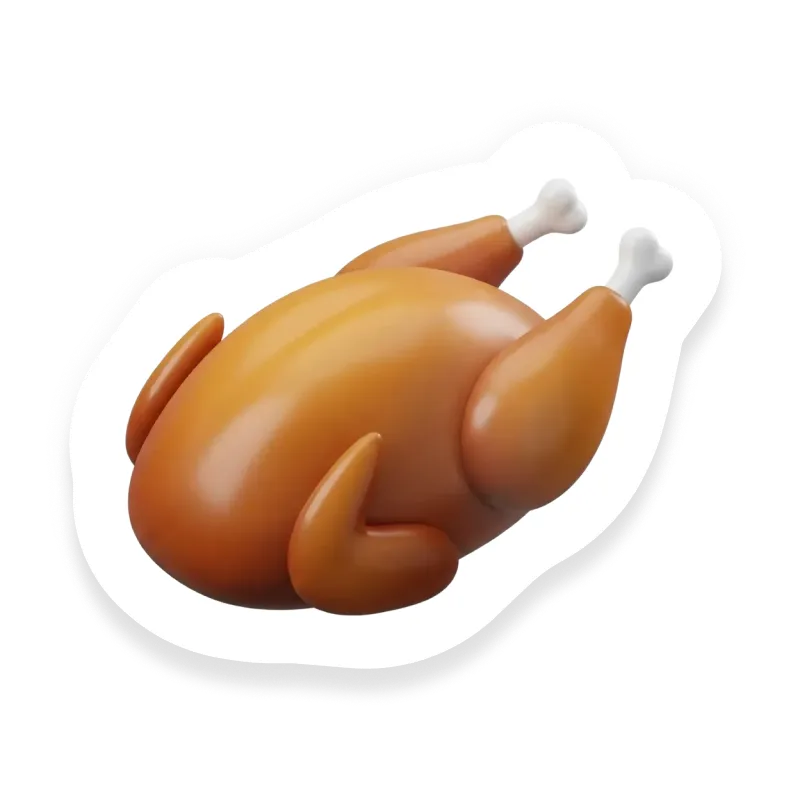
Turkey
Meat
Is Turkey Safe for Babies?
Yes, well-cooked turkey can be introduced to babies around 6 months as a source of protein and nutrients.
Yes, but there are some things to know
At a Glance
Turkey is a lean protein source that provides B vitamins and zinc to support healthy blood and muscles. It also supplies easily absorbed iron, which helps carry oxygen in the blood and prevent low iron levels.
How Do You Serve Turkey?
- 1Remove all bones and skin, then slice the turkey into long, flat strips that a baby can hold, suck, and gum.
- 2Cook the turkey until the internal temperature reaches 165°F (74°C). Prefer dark meat when possible because it’s moister and easier for babies to manage.
- 3For softer options, shred or finely ground the cooked turkey and mix into mashed vegetables or form small, soft meatballs; ensure pieces are soft enough to be mashed with gentle finger pressure.
- 4Let food cool to a safe serving temperature and serve plain—no added salt or sweeteners. Always supervise the baby while eating and offer small amounts to monitor for choking or allergic reactions.
Is Turkey a Common Allergen?
Turkey (poultry) is not a common top‑9 allergen and true turkey allergy is uncommon, but poultry‑meat allergy can occur. There is documented cross‑reactivity between chicken and turkey proteins (and sometimes with egg proteins—"bird‑egg syndrome"), so children with egg or poultry allergies may react. Processed turkey products often contain or are processed with other common allergens (soy, milk, wheat/gluten, etc.), so always read ingredient labels and allergy statements. If a child has known egg, meat, or severe allergies, consult an allergist before introducing turkey.
What Nutrients Does Turkey Have?
Turkey is a high-quality, iron-containing protein that also provides choline, selenium, zinc, and B vitamins (B6 and B12)—nutrients that support growth, brain development, red blood cell formation, and immune function. Offering turkey in age-appropriate textures helps babies absorb iron and benefit from its nutrient-dense profile. Parents should avoid frequent servings of processed/deli turkey due to high sodium and food-safety risks; ordinary portions of cooked turkey are unlikely to cause nutrient excess in infants.
Is Turkey a Choking Hazard?
Low Choking Risk
Turkey can be a choking risk because its texture can be tough, dry, or form pieces that are hard for a baby to manage in the mouth; stay attentive when introducing it. Keep your baby seated and supervised at all times, and have a plan—know how to recognize choking versus gagging and be prepared to act (including seeking emergency help if the child cannot breathe, cough, or cry).
Have More Questions?
Yes. Properly cooked turkey can be introduced to babies around 6 months and can be pureed or finely shredded for manageable eating.
Yes. Turkey is a healthy protein source for babies, supporting growth, brain development, and immune function.
No. It is not a common allergen, but some children with poultry or egg allergies might react; watch for signs of allergy when introducing.
Yes. Turkey can pose a choking risk as it is chewy and dense; serve in small, manageable pieces and supervise feeding.
It depends. For babies under 12 months, avoid deli turkey unless heated thoroughly to eliminate bacteria; always serve in safe, age-appropriate textures.
Is Turkey safe for your baby?
Get personalized guidance on introducing Turkey — with prep tips, allergen alerts, and age-specific serving ideas.
Sources
- Surveillance for Foodborne Disease Outbreaks — United States, 2009–2015 cdc.gov
- Food allergy with monovalent sensitivity to poultry meat doi.org
- Update on the bird-egg syndrome and genuine poultry meat allergy doi.org
- What is FPIES? — International FPIES Association fpies.org
- Introducing food to the infant with FPIES — Children’s Hospital Los Angeles chla.org
- Listeria outbreak linked to deli meat and cheese — CDC (2023) cdc.gov
What Other Meat Can Babies Eat?
See all →

Backed by Science
Data you can trust.
Every food, guideline, and recommendation in Tummi is sourced from leading health institutions and peer-reviewed research.
 Centers for Disease Control and Prevention
Developmental milestones, nutrition guidelines, and allergen introduction timelines.
 American Academy of Pediatrics
Evidence-based feeding recommendations from the leading pediatric authority.
 National Institutes of Health
Peer-reviewed research on infant nutrition, allergies, and food safety.