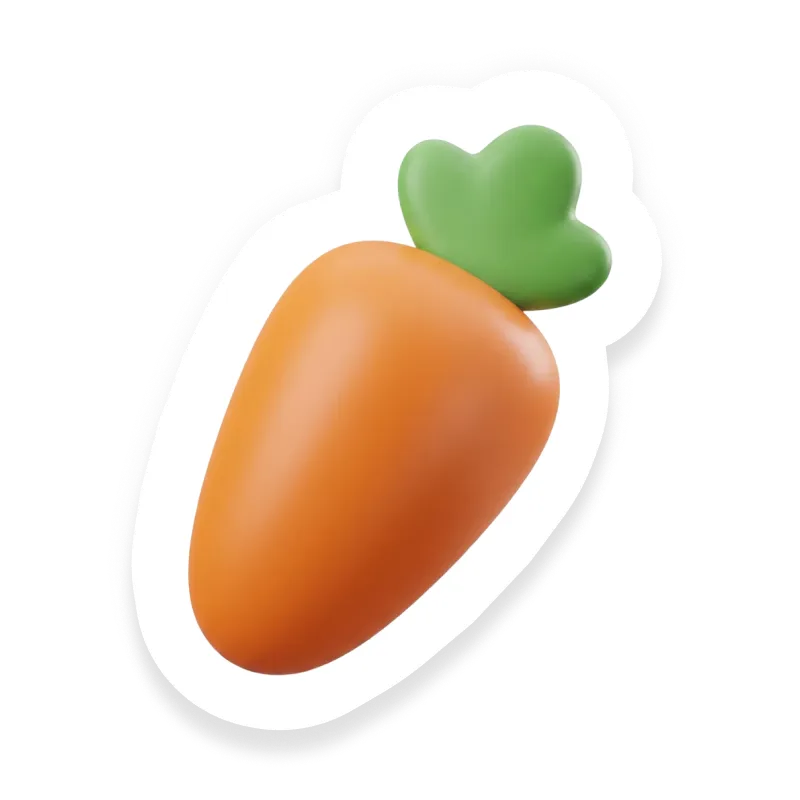
Carrot
Vegetable
Is Carrot Safe for Babies?
Yes, carrots can be introduced to babies at around 6 months old, prepared as soft, cooked, and age-appropriate pieces to minimize choking hazards.
Yes, but there are some things to know
At a Glance
Carrots have a high fiber content, including soluble pectin that helps soften stool and keep bowel movements regular. That fiber also feeds good bacteria in the gut, and carrots add beta‑carotene and potassium that support overall digestive health.
How Do You Serve Carrot?
- 1Cook whole peeled carrots until they are very soft and a fork pierces them easily, then halve each carrot lengthwise so baby can grasp and gnaw safely.
- 2For self-feeding or spoon-feeding, mash the cooked carrot or pre-load a spoon with soft carrot; ensure pieces are smooth and small enough to avoid choking.
- 3If using a raw carrot for teething, peel it and offer a thick stick about 1 inch (2 cm) in diameter at both ends—avoid the tapered tip and any thin pieces.
- 4Always supervise closely while baby is eating or teething; stop immediately and remove the carrot if the baby bites off a piece, coughs, or shows difficulty breathing.
- 5Check temperature and texture before serving—cool cooked carrots completely and inspect for any hard cores or small fragments.
Is Carrot a Common Allergen?
Carrots aren’t a common top allergen, but some children—especially those with birch‑pollen allergy—can get oral allergy syndrome (itchy mouth or throat) after eating raw carrot; cooking usually reduces this risk. True carrot allergy is uncommon, though rare severe reactions have been reported. Introduce carrots gradually, wash/peel them well, offer cooked if you’re concerned, and seek medical care if your child develops hives, swelling, breathing difficulty, or other worrying symptoms.
What Nutrients Does Carrot Have?
Carrots are rich in beta‑carotene (a vitamin A precursor), fiber, vitamin K, potassium, vitamin C, B6, and carotenoids like lutein and zeaxanthin—nutrients that support vision, immune function, digestion, and growth in babies. They are low in iron, so serve with iron‑rich foods. Excessive consumption can cause benign carotenemia (yellowing of the skin); carrots also contain natural nitrates, so avoid storing homemade carrot purees >24 hours and use tested water to reduce nitrate risk. Overall, carrots are a nutritious, baby‑friendly vegetable when offered in age‑appropriate forms.
Is Carrot a Choking Hazard?
Elevated Choking Risk
Carrots—especially whole raw baby carrots and sticks—are a common choking hazard due to their firm texture and shape that can easily block a baby’s airway. Babies and young toddlers can sometimes bite off pieces unexpectedly, so stay within arm’s reach and supervise closely during mealtimes. If a piece becomes stuck or the child is struggling, stay calm, lean them forward to help them expel it, avoid putting fingers into the mouth, and seek emergency help if the airway remains blocked or the child becomes unresponsive.
Have More Questions?
Yes, you can store cooked or pureed carrots in the refrigerator for up to 24 hours or freeze them for longer storage, ensuring they are kept in airtight containers.
Yes, pureed carrots can be frozen in ice cube trays and transferred to a sealed bag or container for up to 3 months, making feeding quick and convenient.
Yes, choosing organic carrots reduces exposure to pesticides, but commercially grown conventionally farmed carrots are also safe and nutritionally comparable.
Yes, you can combine cooked carrots with other vegetables or fruits, which can introduce your baby to various flavors and nutrients in a single feeding.
Portion sizes for babies typically start with 1-2 tablespoons of cooked or pureed carrots and gradually increase as your baby grows and shows readiness for more.
Is Carrot safe for your baby?
Get personalized guidance on introducing Carrot — with prep tips, allergen alerts, and age-specific serving ideas.
Sources
- Carrot allergy: Double-blinded, placebo-controlled food challenge and identification of allergens (Ballmer-Weber et al., 2001) doi.org
- NITRATE IN LEAFY GREEN VEGETABLES AND ESTIMATED INTAKE (Brkić et al., 2017) doi.org
- Food sources of nitrates and nitrites: the physiological context for potential health benefits (Hord et al., 2009) doi.org
- Infant methemoglobinemia: the role of dietary nitrate in food and water (Greer & Shannon, 2005) doi.org
- Vegetable-borne nitrate and nitrite and the risk of methaemoglobinaemia (Chan, 2011) doi.org
- Vascular effects of dietary nitrate via the nitrate-nitrite-nitric oxide pathway (Lidder & Webb, 2013) doi.org
What Other Vegetable Can Babies Eat?
See all →
Backed by Science
Data you can trust.
Every food, guideline, and recommendation in Tummi is sourced from leading health institutions and peer-reviewed research.
 Centers for Disease Control and Prevention
Developmental milestones, nutrition guidelines, and allergen introduction timelines.
 American Academy of Pediatrics
Evidence-based feeding recommendations from the leading pediatric authority.
 National Institutes of Health
Peer-reviewed research on infant nutrition, allergies, and food safety.