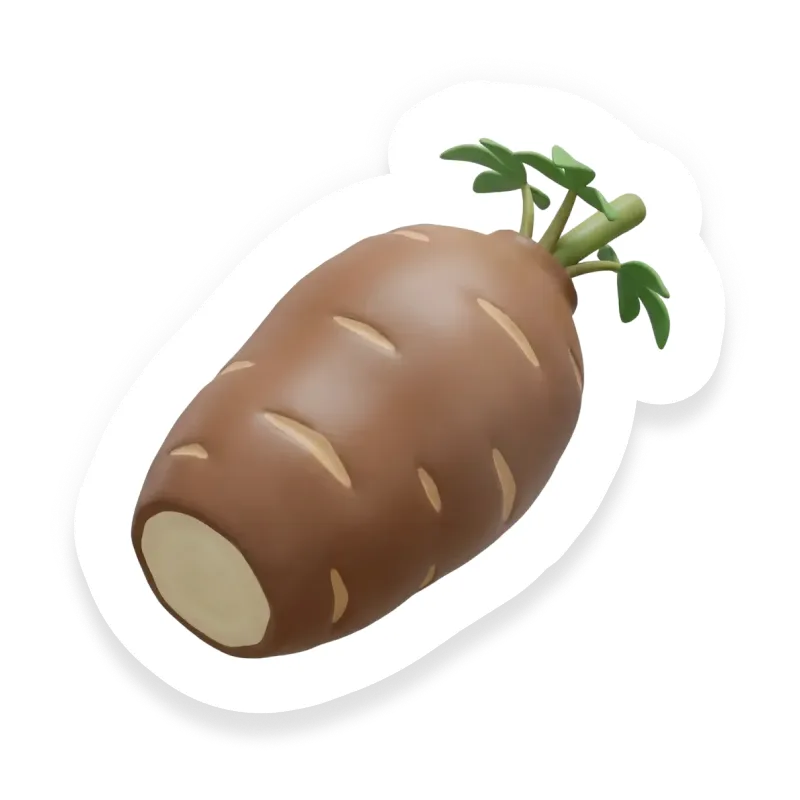
Cassava (Yuca)
Vegetable
Is Cassava (Yuca) Safe for Babies?
Yes, babies can eat cooked cassava as early as 6 months, ensuring it's thoroughly processed to remove natural toxins.
Yes, but there are some things to know
At a Glance
Cooked cassava is a starchy root that is high in fiber, which helps add bulk and makes stools softer and easier to pass. It also contains resistant starch content that feeds friendly gut bacteria and supports healthy digestion.
How Do You Serve Cassava (Yuca)?
- 1Serve large, soft pieces your baby can hold—thick sticks or wedges—so they can grasp and bring food to their mouth independently.
- 2Or offer mashed cassava that’s smooth enough to scoop with fingers or a preloaded spoon.
- 3Cook thoroughly by boiling, steaming, or pressure-cooking until the cassava is very tender; never serve raw or undercooked.
- 4After peeling, discard dark flesh or any streaks. Cut into sizes your baby can manage and let the food cool to lukewarm before serving.
Is Cassava (Yuca) a Common Allergen?
Cassava (yuca) is not a common food allergen and tapioca (processed cassava) is often used in hypoallergenic and gluten‑free diets, but rare allergic reactions have been reported and cassava can cross‑react with latex in people with latex allergy. The primary safety concern is cyanogenic glycosides in raw or improperly processed cassava—always use peeled, thoroughly cooked or commercially processed products and never give raw cassava to infants. If a child has known latex allergy or any history of food reactions, introduce cassava cautiously and seek medical advice for any hives, swelling, vomiting or breathing problems.
What Nutrients Does Cassava (Yuca) Have?
Cassava is primarily a starchy, high‑carbohydrate root that provides quick energy and is a good source of vitamin C (which supports immunity and helps iron absorption), with smaller amounts of potassium, calcium, and trace iron. It is low in protein, fat, and many other micronutrients, so for babies it’s best offered alongside iron- and protein-rich foods (e.g., legumes, meat, eggs, or fortified cereals) to support growth. Never serve raw or undercooked cassava due to natural toxins; occasional servings are fine, but relying on cassava as a dietary staple in large amounts can increase the risk of nutrient deficiencies and toxin-related harms, so aim for balanced variety.
Is Cassava (Yuca) a Choking Hazard?
Very Low Choking Risk
Cooked cassava is not commonly a choking hazard for babies, though processed forms like tapioca pearls (boba) can be. Be mindful that undercooked or very dense pieces could pose a risk, and always stay close and attentive during mealtimes. Know the difference between gagging and true choking and be prepared to respond if your child struggles.
Have More Questions?
Yes, you can store cooked cassava in an airtight container in the refrigerator for up to 3 days. For longer storage, freeze it in small portions for up to 2 months.
Yes, you can freeze cassava purees or cooked pieces in freezer-safe containers or bags for up to 2 months. Ensure it is cooled completely before freezing.
Yes, organic cassava is available and often preferred, but conventionally grown cassava is also safe for baby food as long as it is properly prepared and cooked.
Yes, you can combine cassava with other baby-friendly foods like vegetables or proteins to create nutritious mixed purees, ensuring balanced meals.
Typically, portion sizes for babies start with a few teaspoons of pureed cassava, gradually increasing as your baby tolerates and shows readiness for more solid textures.
Is Cassava (Yuca) safe for your baby?
Get personalized guidance on introducing Cassava (Yuca) — with prep tips, allergen alerts, and age-specific serving ideas.
Sources
- Konzo: a distinct neurological disease associated with food (cassava) cyanogenic poisoning doi.org
- Carotenoids retention in biofortified yellow cassava processed with traditional African methods doi.org
- Konzo: from poverty, cassava, and cyanogen intake to toxico-nutritional neurological disease doi.org
What Other Vegetable Can Babies Eat?
See all →
Backed by Science
Data you can trust.
Every food, guideline, and recommendation in Tummi is sourced from leading health institutions and peer-reviewed research.
 Centers for Disease Control and Prevention
Developmental milestones, nutrition guidelines, and allergen introduction timelines.
 American Academy of Pediatrics
Evidence-based feeding recommendations from the leading pediatric authority.
 National Institutes of Health
Peer-reviewed research on infant nutrition, allergies, and food safety.