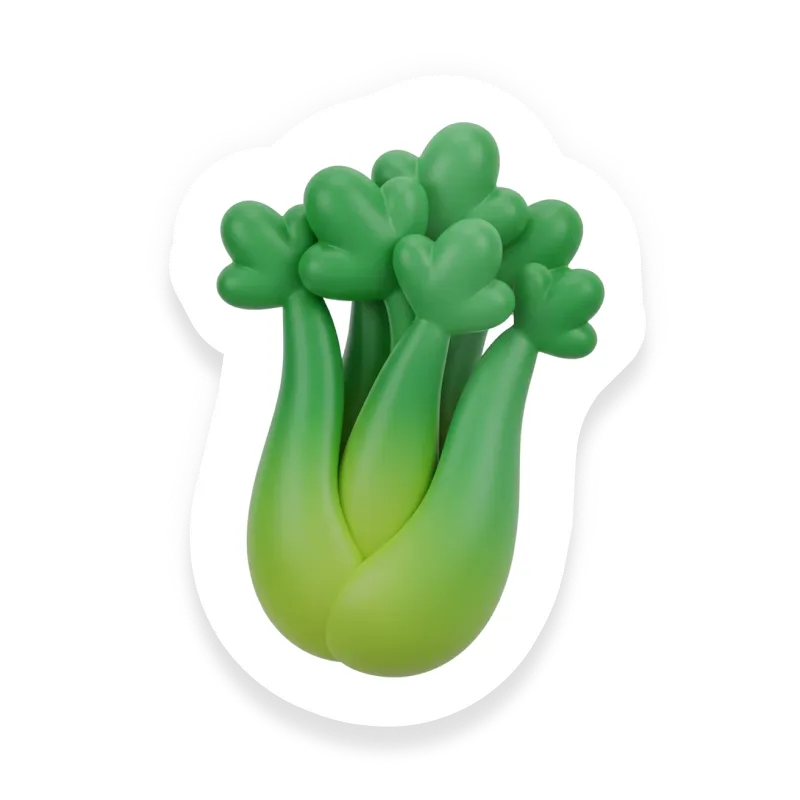
Celery
Vegetable
Is Celery Safe for Babies?
Yes, celery can be introduced around 6 months old, but serve it cooked and in an age-appropriate, chopped form to prevent choking.
Yes, but there are some things to know
At a Glance
Celery supports regular bowel movements because it is high in water and rich in fiber, which add bulk and soften stool. It also provides natural plant compounds and electrolytes that help digestion and hydration so stools move more easily.
How Do You Serve Celery?
- 1Slice a celery stalk crosswise into thin half‑moon slices, then simmer or steam until very soft so pieces mash easily between your fingers; mix into scoopable foods like stews, warm cereal, or yogurt so your baby can manage them.
- 2Offer a whole chilled or lightly frozen raw stalk as a teether and hold it for your baby — supervise closely to reduce choking risk.
- 3Remove tough strings and fibrous outer ribs by peeling or trimming, then finely chop, mash, or puree cooked celery if your baby is still learning to swallow lumps.
- 4Always sit your baby upright and offer small spoonfuls, check temperature and texture before serving, and stop feeding if coughing or gagging occurs; seek help immediately if choking happens.
Is Celery a Common Allergen?
Although celery is a common vegetable, it can cause true allergic reactions in some people—most often oral allergy syndrome (itching or swelling around the mouth) but occasionally more severe reactions including anaphylaxis. Cross‑reactivity with birch and mugwort pollens is common, so children with hayfever may react to celery. Celery (including celeriac) is a listed allergen in the UK/EU and may appear in processed foods, so always read labels and avoid feeding celery to a child with a known allergy. If you suspect an allergic reaction, seek medical advice promptly and follow any emergency plan (including epinephrine) prescribed by your clinician.
What Nutrients Does Celery Have?
Celery is low-calorie but nutrient-dense for babies — notable nutrients include vitamin K (important for blood clotting and bone health), folate (supports growth and development), carotenoids (beta‑carotene → vitamin A for vision and immune health), small amounts of vitamin C, potassium, fiber, and antioxidant/anti-inflammatory compounds. These nutrients can support bone development, growth, vision, and a healthy gut/immune system when served as part of a varied diet. Overconsumption from whole celery is unlikely, but celery contains naturally higher sodium than some vegetables and can have nitrates; juice (or large concentrated amounts) can be high in nitrates and is best avoided until after 12 months. Offer celery in age-appropriate forms and quantities as part of a balanced diet.
Is Celery a Choking Hazard?
Moderate Choking Risk
Raw celery is a high choking risk for babies because its firm, fibrous texture and long pieces can be hard to chew and may block the airway. Younger infants have limited oral-motor skills to break down or move these pieces, so the risk lessens as chewing ability develops. Stay within arm’s reach during meals and be ready to recognize and respond to choking.
Have More Questions?
Yes. While celery can be introduced around 6 months, always prepare it in a safe, age-appropriate way to minimize choking risk, such as cooking or pureeing.
It depends. Celery is healthy and provides vitamin K, folate, and carotenoids, but ensure it's prepared properly for your baby's age and chewing ability.
No. Celery allergies are uncommon, but some infants with pollen allergies or oral allergy syndrome may react; always introduce new foods cautiously.
Yes. Raw celery is a choking hazard for babies due to its firmness. Always cook or puree it for safe feeding in infancy.
It’s safe to serve cooked celery from 6 months, but avoid giving raw sticks until your toddler is older and can chew thoroughly.
Is Celery safe for your baby?
Get personalized guidance on introducing Celery — with prep tips, allergen alerts, and age-specific serving ideas.
Sources
- Celery and Celeriac: A Critical View on Present and Future Breeding doi.org
- Oral allergy syndrome doi.org
- American Academy of Allergy Asthma & Immunology - Oral Allergy Syndrome (OAS) aaaai.org
- Oral Allergy Syndrome: An Update for Stomatologists doi.org
- Food-dependent exercise-induced anaphylaxis in the celery-mugwort-birch-spice syndrome doi.org
- Celery-dependent exercise-induced anaphylaxis doi.org
- Phytophotodermatitis: the other 'lime' disease doi.org
- Nitrate in Leafy Green Vegetables and Estimated Intake doi.org
- Infant methemoglobinemia: the role of dietary nitrate in food and water doi.org
- EFSA Explains: Nitrites and Nitrates Added in Food efsa.europa.eu
- American Academy of Pediatrics - Where We Stand: Fruit Juice healthychildren.org
What Other Vegetable Can Babies Eat?
See all →
Backed by Science
Data you can trust.
Every food, guideline, and recommendation in Tummi is sourced from leading health institutions and peer-reviewed research.
 Centers for Disease Control and Prevention
Developmental milestones, nutrition guidelines, and allergen introduction timelines.
 American Academy of Pediatrics
Evidence-based feeding recommendations from the leading pediatric authority.
 National Institutes of Health
Peer-reviewed research on infant nutrition, allergies, and food safety.