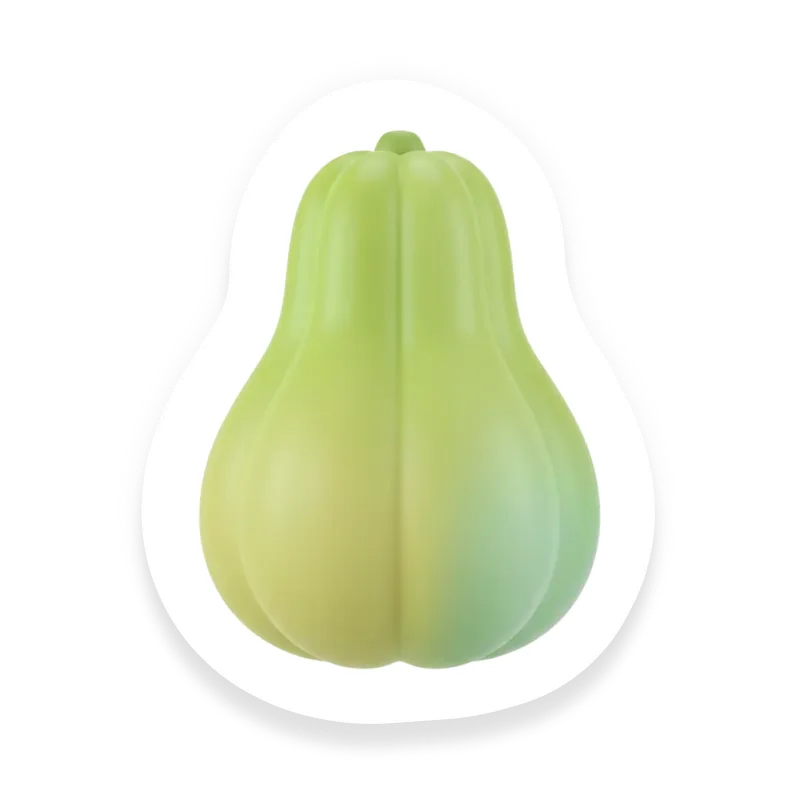
Chayote
Vegetable
Is Chayote Safe for Babies?
Yes, chayote can be introduced around 6 months of age when baby is ready for solids, prepared in an age-appropriate, cooked, and soft form.
Yes, but there are some things to know
At a Glance
Chayote is low in calories and rich in water and is high in fiber, which helps soften stool and keeps digestion moving. Its fiber, potassium and vitamin C, along with flavonoids, help feed healthy gut bacteria and support bowel regularity.
How Do You Serve Chayote?
- 1Peel the chayote, remove and discard the seed, then simmer or steam until very soft. Test with a fork— it should break apart easily.
- 2Serve either mashed for spoon-feeding or as a large, soft wedge the child can hold and gnaw; make wedges at least fist-sized so they can’t fit whole pieces in their mouth.
- 3Keep your hands and utensils out of the child’s mouth—allow them to chew or spit out large bites and gently guide rather than pry food out.
- 4Always stay within arm’s reach while they eat, check the food temperature before serving, and watch for any signs of choking.
Is Chayote a Common Allergen?
Chayote is not a common allergen and is not one of the major allergens (peanut, tree nut, dairy, egg, soy, wheat/gluten, fish, shellfish, sesame). Rare allergies to members of the Cucurbitaceae family or to fruit seeds have been reported, and the skin may contain latex-like compounds that can irritate sensitive skin — peeling or cooking the skin reduces this risk. If your child has a known latex allergy or prior reactions to squash/cucumber/melon, avoid chayote and consult an allergist before introducing it. Also watch for allergens added during preparation (e.g., butter, sauces).
What Nutrients Does Chayote Have?
Chayote is low in calories and a particularly good source of folate and vitamin C, with modest amounts of fiber, vitamin B6 and small amounts of iron, calcium and other trace minerals. For babies, folate supports neural development, vitamin B6 aids brain development, and vitamin C helps immunity and improves iron absorption; fiber supports regular stools. There’s no risk of toxic buildup from normal portions of chayote, though very large amounts could cause gas or loose stools; handle raw chayote carefully (it can irritate skin).
Is Chayote a Choking Hazard?
Moderate Choking Risk
Raw chayote is firm, slippery, and can be difficult for babies to chew, so it poses a higher choking risk than softer foods. Stay within arm’s reach during meals, be alert for signs of gagging or choking, and be prepared to respond quickly if needed.
Have More Questions?
Yes. Chayote can be stored in the refrigerator for up to 3-4 days when kept in a plastic bag or airtight container, making it convenient for batch cooking or preparing fresh portions for your baby.
Yes. You can freeze pureed chayote in an airtight container or freezer bag for up to 3 months, allowing you to prepare in advance and have healthy, ready-to-eat options for your baby.
Yes. Choosing organic chayote can reduce exposure to pesticides, though conventional chayote is also safe if washed thoroughly, as it is naturally free from many common allergens.
Yes. You can combine chayote with other vegetables or fruits to introduce new flavors and textures to your baby, as long as all ingredients are suitable for their age and dietary needs.
A typical portion size for a baby depends on their age and appetite, but start with 1-2 tablespoons of cooked, mashed chayote and adjust based on your baby's hunger and tolerance.
Is Chayote safe for your baby?
Get personalized guidance on introducing Chayote — with prep tips, allergen alerts, and age-specific serving ideas.
Sources
- Effect of Sechium edule var. nigrum spinosum (Chayote) on Oxidative Stress and Pro-Inflammatory Markers in Older Adults with Metabolic Syndrome: An Exploratory Study doi.org
- Chayote (Sechium edule): A review of nutritional composition, bioactivities and potential applications doi.org
- Modifications of allergenicity linked to food technologies pubmed.ncbi.nlm.nih.gov
- Butternut squash (Cucurbita moschata) dermatitis doi.org
- Allergy to pumpkin and crossreactivity to pollens and other foods doi.org
What Other Vegetable Can Babies Eat?
See all →
Backed by Science
Data you can trust.
Every food, guideline, and recommendation in Tummi is sourced from leading health institutions and peer-reviewed research.
 Centers for Disease Control and Prevention
Developmental milestones, nutrition guidelines, and allergen introduction timelines.
 American Academy of Pediatrics
Evidence-based feeding recommendations from the leading pediatric authority.
 National Institutes of Health
Peer-reviewed research on infant nutrition, allergies, and food safety.