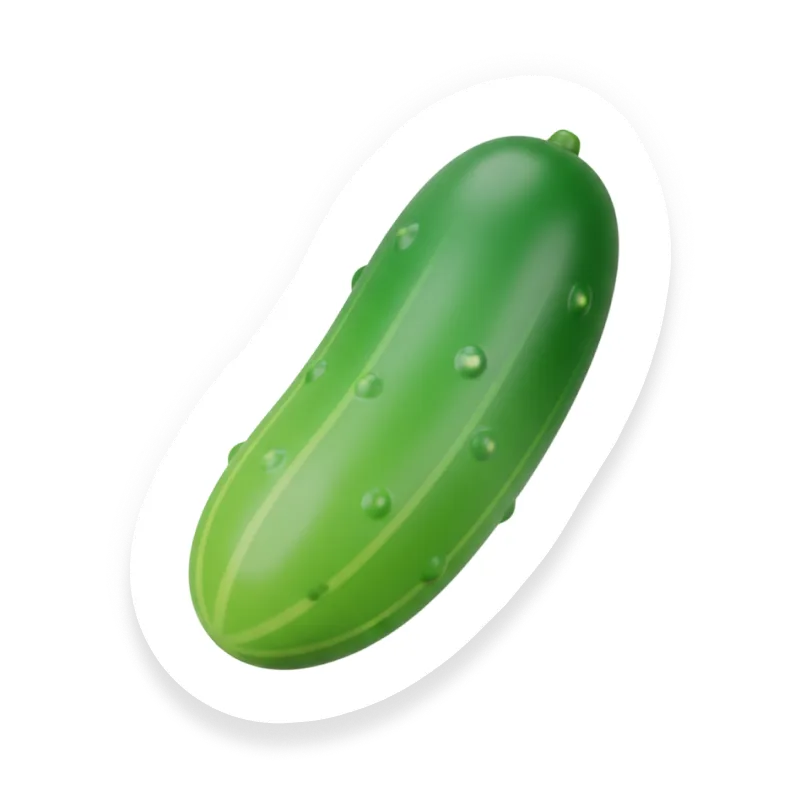
Cucumber
Vegetable
Is Cucumber Safe for Babies?
Yes, cucumbers can be introduced as soon as your baby is around 6 months old and ready for solids, prepared in an age-appropriate way.
Yes, but there are some things to know
At a Glance
Cucumbers have a high water content, which helps keep stools soft and supports gentle digestion. They also provide gentle dietary fiber and minerals that can promote more regular bowel movements.
How Do You Serve Cucumber?
- 1Wash the cucumber thoroughly under running water to remove dirt and any residue.
- 2Cut a large cucumber lengthwise into a "boat" so it’s easy to grasp; leave the skin on to improve grip and reduce slipperiness.
- 3For small cucumbers (Persian), trim the rounded ends and cut into finger-sized sticks; remove seeds only if they are large or watery, as they can make the pieces slippery.
- 4Grate or finely chop cucumber and mix into yogurt, mashed avocado, or a dip to create a scoopable texture.
- 5Always supervise while eating and offer appropriately sized pieces to reduce choking risk.
Is Cucumber a Common Allergen?
Cucumber is not a common food allergen, but children with pollen allergies (especially ragweed or birch) can develop oral allergy syndrome — mild itching or swelling in the mouth when eating raw cucumber. True IgE food allergy or contact reactions are rare. Always wash cucumbers and note that dressings or mixed dishes may contain common allergens (dairy, soy, sesame). For young children, remove skins/seeds and cut into age-appropriate pieces to reduce choking risk.
What Nutrients Does Cucumber Have?
Cucumber is mostly water and low in calories but does supply modest amounts of fiber and key micronutrients useful for babies—especially vitamin C (supports immunity and helps iron absorption) and vitamin K (helps blood clotting and bone health), along with small amounts of calcium, iron, folate, and zinc. Its high water content and gentle fiber can help hydration and promote regular stools, which is why it’s poop-friendly. Cucumbers aren’t a concentrated source of iron or other nutrients, so they shouldn’t replace more nutrient-dense first foods; avoid giving salty pickles (high sodium) to infants. Introduce cucumber in small amounts as you would any new food and watch for rare oral-allergy reactions.
Is Cucumber a Choking Hazard?
Moderate Choking Risk
Raw cucumber can be firm, slippery, and chewy, which raises the risk of choking if pieces lodge in the airway. Stay within arm’s reach and closely supervise your baby during meals so you can respond quickly if they gag or choke; gagging is common but be prepared to act and know basic choking first aid. Keep mealtimes calm and seated to reduce the chance of a dangerous incident.
Have More Questions?
Yes. You can store cucumber in the refrigerator for up to 1 week, preferably in a sealed container or wrapped tightly to maintain freshness.
Yes. Freezing cucumber puree is possible but may alter texture, making it softer and a bit mushy once thawed, suitable for baby food use.
It depends. Choosing organic cucumbers can reduce pesticide exposure, but conventional ones are also safe if thoroughly washed before preparation.
Yes. Combining cucumber with other baby-friendly vegetables, like carrots or avocado, can introduce new flavors and textures during feeding.
It depends. Portions should be appropriate for your baby’s age and hunger cues; start with small, manageable pieces or purees and observe their response.
Is Cucumber safe for your baby?
Get personalized guidance on introducing Cucumber — with prep tips, allergen alerts, and age-specific serving ideas.
Sources
- Oral Allergy Syndrome Symptoms, Diagnosis & Treatment | AAAAI aaaai.org
What Other Vegetable Can Babies Eat?
See all →
Backed by Science
Data you can trust.
Every food, guideline, and recommendation in Tummi is sourced from leading health institutions and peer-reviewed research.
 Centers for Disease Control and Prevention
Developmental milestones, nutrition guidelines, and allergen introduction timelines.
 American Academy of Pediatrics
Evidence-based feeding recommendations from the leading pediatric authority.
 National Institutes of Health
Peer-reviewed research on infant nutrition, allergies, and food safety.