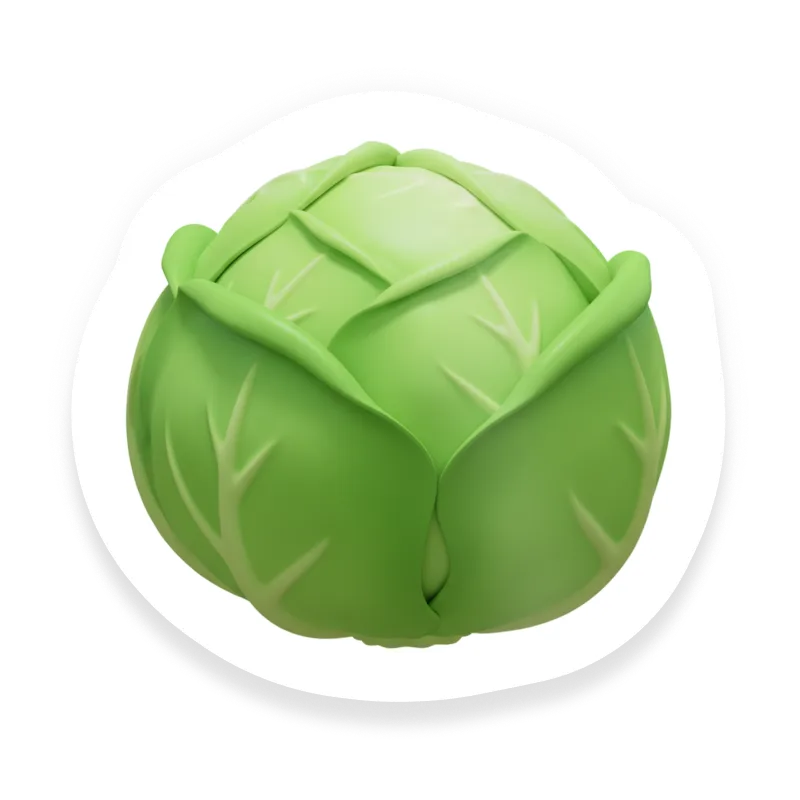
Iceberg Lettuce
Vegetable
Is Iceberg Lettuce Safe for Babies?
Yes, iceberg lettuce can be introduced around 6 months, but ensure it is chopped small and served soft to prevent choking.
Yes, but there are some things to know
At a Glance
Iceberg lettuce is mostly water and contains a small amount of dietary fiber, which can help soften stool and keep bowels regular. Adding it to salads or sandwiches is an easy, low‑calorie way to add high water content and some dietary fiber to meals.
How Do You Serve Iceberg Lettuce?
- 1Wash the head well and peel away any dirty or wilted outer leaves; offer a single thick, pale rib so baby can grasp and munch.
- 2Give the rib whole (do not slice) to encourage holding and chewing, but only if baby can sit steadily and handle finger foods.
- 3If small pieces break off, remove them immediately and supervise closely. Stay within arm’s reach.
- 4For a softer option, cook and finely shred the lettuce and mix it into spoonable foods, or steam until very tender and mash to reduce choking risk.
Is Iceberg Lettuce a Common Allergen?
Iceberg lettuce is not a common allergen for most children, but true lettuce allergies do occur (often related to lipid-transfer protein sensitization). Typical reactions are mild (oral allergy symptoms or contact dermatitis), though rare cases of severe reactions/anaphylaxis have been reported. If a child has known plant-food allergies or reacts after eating lettuce, seek evaluation from an allergist and follow an emergency plan for severe symptoms.
What Nutrients Does Iceberg Lettuce Have?
Iceberg lettuce is mostly water and low in calories but supplies baby-friendly nutrients including vitamin A (supports vision), folate (supports growth and healthy blood), vitamin K (blood clotting and bone/bone health), potassium, fiber, and antioxidant carotenoids lutein and zeaxanthin. These nutrients support hydration, vision development, digestion, and overall growth, though iceberg is less nutrient-dense than darker leafy greens so offer it alongside more nutrient-rich vegetables. Too much is unlikely to cause toxicity, but very large amounts may cause loose stools due to its high water and fiber content, and always wash well to reduce risk of foodborne illness.
Is Iceberg Lettuce a Choking Hazard?
Very Low Choking Risk
Iceberg lettuce isn’t commonly a choking hazard, but thin shreds can be aspirated and whole leaves may cling to a baby’s mouth and trigger gagging. Because the texture can be tricky for very young eaters, stay within arm’s reach and watch closely so you can remove any pieces that cause difficulty. If your baby has persistent coughing, choking, or any breathing trouble, seek medical help immediately.
Have More Questions?
Yes, babies can eat small amounts of iceberg lettuce as part of a balanced diet around 6 months old, but it's usually more suitable as a finger food due to its texture.
Yes, iceberg lettuce originates from the United States and is developed from Mediterranean varieties; it is a popular leafy green in salads and sandwiches.
Yes, iceberg lettuce can be part of a healthy diet for babies, providing hydration and some vitamins, but it should be served in age-appropriate textures to prevent gagging.
Yes, iceberg lettuce is not a common choking hazard for babies, but small shreds might pose a risk of aspiration; always supervise and serve in manageable pieces.
Yes, allergies to lettuce are rare in babies, but they can occur; start with small amounts and watch for any signs of adverse reactions.
Is Iceberg Lettuce safe for your baby?
Get personalized guidance on introducing Iceberg Lettuce — with prep tips, allergen alerts, and age-specific serving ideas.
Sources
- Centers for Disease Control — Lettuce, Other Leafy Greens, and Food Safety cdc.gov
- U.S. Food & Drug Administration — Selecting and serving produce safely fda.gov
- Muñoz-García et al. (2017) — Lettuce Allergy Is a Lipid Transfer Syndrome-Related Food Allergy doi.org
- Helbling et al. (1994) — Lettuce and carrot allergy: are they related? doi.org
- Canela (2015) — Oral allergy syndrome (World Allergy Organization Journal) doi.org
- Kashyap & Kashyap (2015) — Oral Allergy Syndrome: An Update for Stomatologists doi.org
- American Academy of Allergy Asthma & Immunology — Oral Allergy Syndrome (OAS) or Pollen Fruit Syndrome (PFS) aaaai.org
What Other Vegetable Can Babies Eat?
See all →


Backed by Science
Data you can trust.
Every food, guideline, and recommendation in Tummi is sourced from leading health institutions and peer-reviewed research.
 Centers for Disease Control and Prevention
Developmental milestones, nutrition guidelines, and allergen introduction timelines.
 American Academy of Pediatrics
Evidence-based feeding recommendations from the leading pediatric authority.
 National Institutes of Health
Peer-reviewed research on infant nutrition, allergies, and food safety.