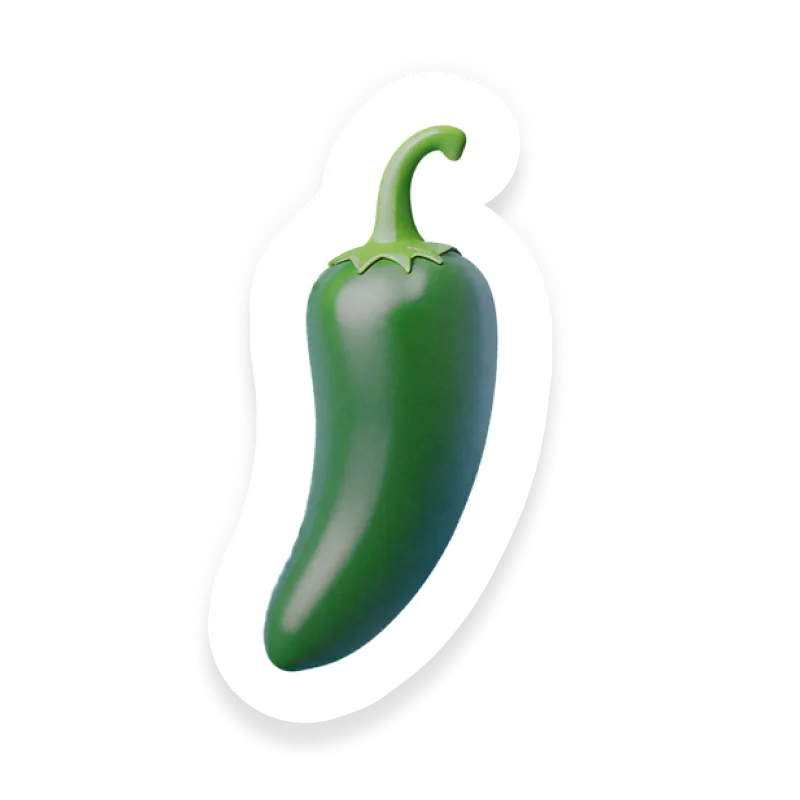
Jalapeño Pepper
Vegetable
Is Jalapeño Pepper Safe for Babies?
No, jalapeño peppers should be introduced cautiously around 6 months, ensuring they are prepared in a mild, well-cooked form to avoid irritation.
Yes, but there are some things to know
How Do You Serve Jalapeño Pepper?
- 1Offer a very small taste (about a pea-size) of a dish that contains a tiny amount of finely chopped jalapeño — never give the whole pepper itself.
- 2Mix the jalapeño into a creamy food like mashed avocado, plain yogurt, or full-fat pureed vegetables to blunt the heat and make swallowing easier.
- 3Remove seeds and inner membranes and cook briefly to reduce spice. Removing seeds lowers both the heat and choking risk.
- 4Start with a pea-sized portion mixed into food and wait 3–5 days before offering another new spicy item; watch for signs of intolerance such as rash, vomiting, diarrhea, or unusual fussiness.
- 5If there is a history of reflux, severe eczema, or food allergies in the family, check with your pediatrician before introducing spicy foods.
Is Jalapeño Pepper a Common Allergen?
Most people tolerate jalapeños, as true allergy to Capsicum (peppers) is uncommon. However, peppers can cause oral allergy syndrome in people with pollen allergies, and rare IgE‑mediated reactions have been reported; inhaled spice dust can also trigger symptoms. Some studies show cross-reactivity between chili/pepper proteins and other foods (including reported cross-reactivity with certain tree nuts), so avoid if a child has known pepper or related-food allergies. If a child develops hives, swelling, difficulty breathing, or other systemic symptoms after exposure, seek medical care promptly.
What Nutrients Does Jalapeño Pepper Have?
Jalapeños provide vitamin C (which supports immunity and helps iron absorption), small amounts of vitamin A and E, dietary fiber, and antioxidants—though in typical small servings for babies they are not a significant source of iron or most micronutrients. These nutrients can support immune health, antioxidant protection, and digestion, and offering tiny amounts can help broaden flavor exposure. Babies can’t get nutrient toxicity from normal amounts, but capsaicin can irritate the mouth, cause digestive upset or diaper rash, so introduce sparingly and balance with creamy foods.
Is Jalapeño Pepper a Choking Hazard?
Moderate Choking Risk
Jalapeño peppers are not a common choking hazard when they’re finely chopped, but their heat can trigger coughing, excessive saliva, and gagging which may make feeding more difficult. Those reactions can increase the chance of gagging, so stay within arm’s reach and be ready to intervene if your baby coughs or rubs their face or eyes. Monitor closely during the first tries and stop if the baby shows distress.
Have More Questions?
It depends. While jalapeños are rich in vitamin C and antioxidants, they are not typically given to babies in significant amounts and may cause digestive discomfort or skin irritation.
No, jalapeños are not usually associated with choking hazards when finely chopped, but their heat can cause coughing or gagging; always supervise your baby during eating.
No, jalapeño peppers are not common allergens, but they can irritate sensitive skin or cause a mild contact rash; use caution and observe your baby’s reactions.
It depends. While spicy peppers do not directly influence bowel movements, their capsaicin content can irritate the digestive system if consumed in excess, so introduce cautiously.
It depends. Jalapeños can be introduced around 6 months as part of a varied diet, but due to their spice, they should be served in a mild, adjusted form to prevent upset.
Is Jalapeño Pepper safe for your baby?
Get personalized guidance on introducing Jalapeño Pepper — with prep tips, allergen alerts, and age-specific serving ideas.
Sources
- Putting out the fire - Efficacy of common beverages in reducing oral burn from capsaicin (Physiology & Behavior, 2019) doi.org
- Bell Pepper Allergy: Different Sensitization Profiles (Journal of Investigational Allergology and Clinical Immunology, 2018) doi.org
- Anaphylactic reaction to bell pepper (Allergologia et Immunopathologia, 2014) doi.org
- Capsaicin: An Uncommon Exposure and Unusual Treatment (Clinical Practice and Cases in Emergency Medicine, 2019) doi.org
- Capsaicin: Current Understanding of Its Mechanisms and Therapy of Pain (Molecules, 2016) doi.org
- Allergic sensitization and clinical reactions to latex, food and pollen (Clinical and Experimental Allergy, 2000) doi.org
- Characterization of cross-reactive bell pepper allergens involved in the latex-fruit syndrome (Clinical and Experimental Allergy, 2004) doi.org
- Oral Allergy Syndrome: An Update for Stomatologists (Journal of Allergy, 2015) doi.org
- Mixed Spices at Culinary Doses Have Prebiotic Effects in Healthy Adults (Nutrients, 2019) doi.org
- The effects of capsaicin on reflux, gastric emptying and dyspepsia (Alimentary Pharmacology & Therapeutics, 2000) doi.org
What Other Vegetable Can Babies Eat?
See all →
Backed by Science
Data you can trust.
Every food, guideline, and recommendation in Tummi is sourced from leading health institutions and peer-reviewed research.
 Centers for Disease Control and Prevention
Developmental milestones, nutrition guidelines, and allergen introduction timelines.
 American Academy of Pediatrics
Evidence-based feeding recommendations from the leading pediatric authority.
 National Institutes of Health
Peer-reviewed research on infant nutrition, allergies, and food safety.