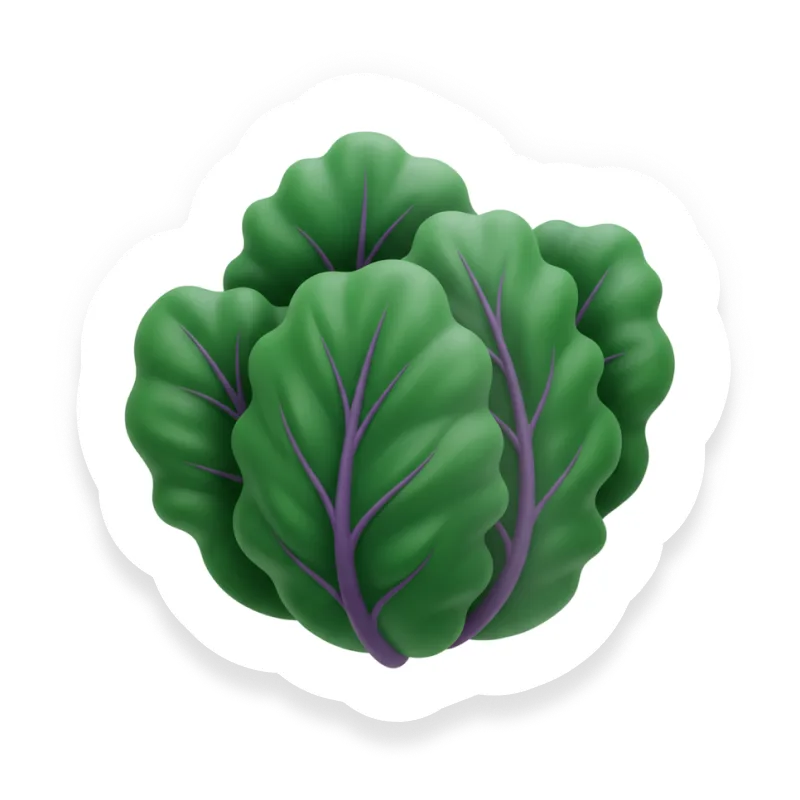
Kale
Vegetable
Is Kale Safe for Babies?
Yes, kale can be introduced around 6 months when your baby is ready for solids, prepared well to prevent choking.
Yes, but there are some things to know
At a Glance
Kale is high in fiber and water, which helps soften stool and support regular bowel movements. It also supplies vitamins and plant compounds that feed helpful bacteria, promoting a healthy gut balance and easier passage.
How Do You Serve Kale?
- 1Cook until very soft: Steam or simmer kale 10–15 minutes, then finely chop or shred and mix into mashed vegetables, porridge, or other soft, scoopable foods so pieces don’t cling to the tongue.
- 2Remove thick stems: Cut out or very finely mince tough stems to avoid stringy bits that are hard to swallow.
- 3Soften and thin for scoopability: Thin with a little breastmilk, formula, or broth and mash or briefly blend to make a smooth, scoopable texture.
- 4Supervised teether option: Offer a thick, well-washed raw kale stem for brief, supervised chewing to encourage mouth exploration—stop immediately if large pieces come off.
Is Kale a Common Allergen?
Kale is not one of the common (top‑9) food allergens, but raw kale can trigger oral allergy syndrome (itchy mouth or throat) in people with pollen allergies—especially birch‑pollen sensitive individuals. For babies and young children, serve kale cooked and well‑pureed (steam/boil) to soften fibers and reduce potential irritants and oxalates; avoid giving large amounts raw. Wash thoroughly to reduce pesticide residue. If your child develops itching, swelling, hives, vomiting, or breathing difficulty after eating kale, stop and seek medical care.
What Nutrients Does Kale Have?
Kale is nutrient-dense for babies — it provides vitamins A, C, and K, folate, iron, calcium, fiber, and antioxidants (glucosinolates). These nutrients support vision and immune function (A, C), bone and blood health (vitamin K, calcium, iron), iron absorption (vitamin C helps), and gut health (fiber). Offer in small amounts as part of a varied diet; avoid feeding large amounts of concentrated kale puree stored for long periods because nitrates/oxalates can accumulate, but when prepared and served appropriately kale is safe and beneficial.
Is Kale a Choking Hazard?
Low Choking Risk
Kale is generally a low choking risk when offered in an age-appropriate way, but its leaves can cling to the tongue or roof of the mouth and cause gagging or coughing. Stay within arm’s reach during meals and have an open cup available to help wash pieces down if needed. Familiarize yourself with infant choking first aid so you can respond quickly if a true choking emergency occurs.
Have More Questions?
No, kale can be stored in the refrigerator for up to 3-5 days, preferably in a perforated bag or container with a paper towel to absorb excess moisture.
It depends on how you prepare and freeze it. Freezing pureed kale in ice cube trays allows for easy portioning and can last up to 3 months for convenient feeding.
Yes, choosing organic kale minimizes pesticide exposure, though conventional kale is also safe if thoroughly washed.
It depends on the combo. Kale can be mixed with fruits or other vegetables to introduce new flavors gradually, as long as the textures are appropriate for your baby's age.
Portion sizes vary by age; start with 1-2 teaspoons for a 6-month-old and gradually increase as tolerated, based on your baby’s appetite and response.
Is Kale safe for your baby?
Get personalized guidance on introducing Kale — with prep tips, allergen alerts, and age-specific serving ideas.
Sources
- Blaiss MS., McCants ML., Lehrer SB. (1987). Anaphylaxis to cabbage. Ann Allergy Asthma Immunology, 58(4):248-50.
- Hermanides HK., Laheÿ-de Boer AM., Zuidmeer L., Guikers C., van Ree R., et al. (2006). Brassica oleracea pollen, a new source of occupational allergens. Allergy, 61(4):498–502. DOI:10.1111/j.1398-9995.2006.01055.x.
- American Academy of Allergy Asthma & Immunology. Oral Allergy Syndrome (OAS) or Pollen Fruit Syndrome (PFS).
- Kashyap RR., Kashyap RS. (2015). Oral Allergy Syndrome: An Update for Stomatologists. Journal of allergy, 2015, 543928. DOI:10.1155/2015/543928.
- Brkić D., Bošnir J., Bevardi M., Bošković AG., Miloš S., et al. (2017). NITRATE IN LEAFY GREEN VEGETABLES AND ESTIMATED INTAKE. African Journal of Traditional, Complementary, and Alternative Medicines, 14(3):31–41. DOI:10.21010/ajtcam.v14i3.4.
- Filer LJ., Lowe CJ., Barness LA., Goldbloom RB., Heald FP., et al. (1970). Infant Methemoglobinemia: The Role of Dietary Nitrate. Pediatrics, 46(3):475-478.
- European Food Safety Authority. (2017). EFSA Explains Risk Assessment: Nitrites and Nitrates Added in Food.
- Harvard T.H. Chan School of Public Health. Are Anti-Nutrients Harmful?
- Grases F., Costa-Bauza A., Prieto RM. (2006). Renal lithiasis and nutrition. Nutrition Journal, 5:23. DOI:10.1186/1475-2891-5-23.
What Other Vegetable Can Babies Eat?
See all →
Backed by Science
Data you can trust.
Every food, guideline, and recommendation in Tummi is sourced from leading health institutions and peer-reviewed research.
 Centers for Disease Control and Prevention
Developmental milestones, nutrition guidelines, and allergen introduction timelines.
 American Academy of Pediatrics
Evidence-based feeding recommendations from the leading pediatric authority.
 National Institutes of Health
Peer-reviewed research on infant nutrition, allergies, and food safety.