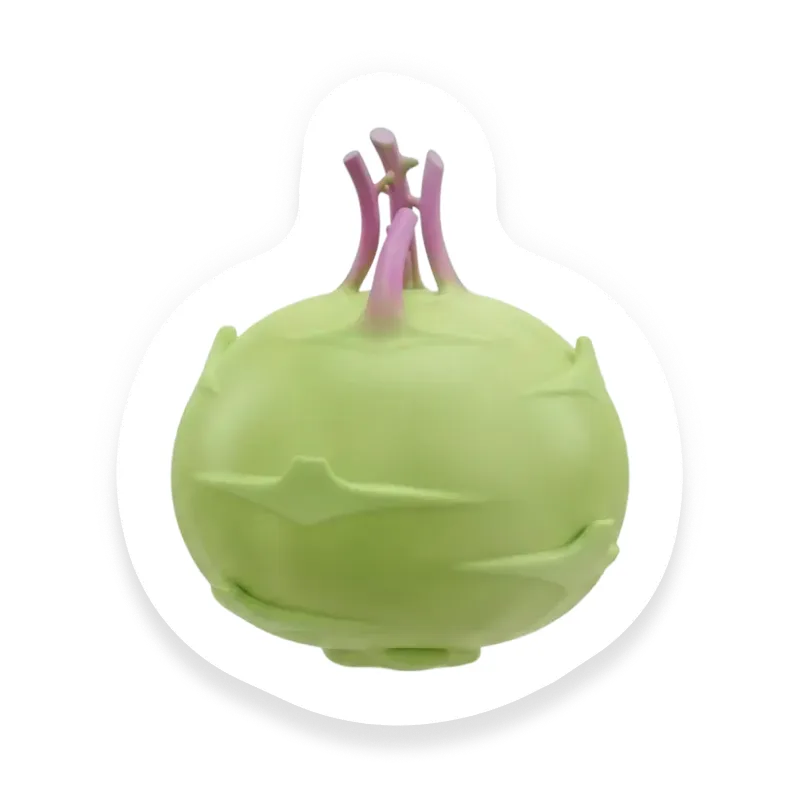
Kohlrabi
Vegetable
Is Kohlrabi Safe for Babies?
Yes, babies can eat cooked and soft kohlrabi starting at around 6 months of age when beginning solids.
Yes, but there are some things to know
At a Glance
Kohlrabi is high in fiber and water, which help your digestive system move food along and make stools easier to pass. Its fiber content adds stool bulk and supports regular bowel movements, while vitamin C and other nutrients help overall gut health.
How Do You Serve Kohlrabi?
- 1Steam or simmer kohlrabi pieces until very soft (about 10–15 minutes for bite-sized cubes); peel larger bulbs first if the skin feels tough.
- 2Cut cooked kohlrabi into thick wedges or sticks your baby can grasp and gnaw. Remove any tough strings or skin and always test softness by mashing with a fork.
- 3For spoon feeding, mash or lightly puree cooked kohlrabi to a scoopable texture, thinning with breastmilk, formula, or cooking water as needed.
- 4Finely chop cooked kohlrabi leaves and stir in sparingly for extra flavor and nutrients, introducing new greens slowly and watching for reactions.
Is Kohlrabi a Common Allergen?
Kohlrabi (a cruciferous vegetable) is not a common food allergen and is generally considered safe in normal food amounts. Allergic reactions are rare, though people with pollen-food allergy/oral allergy syndrome or sensitivities to other mustard/cruciferous family plants could experience mild mouth itching or similar reactions. As with any new food, introduce kohlrabi in small amounts, watch for hives, swelling, vomiting, or breathing problems, and seek immediate care for severe reactions. Consult your pediatrician before introducing if your child has known food allergies.
What Nutrients Does Kohlrabi Have?
Kohlrabi is rich in vitamin C (helps immunity and enhances iron absorption), vitamin B6 (supports brain and muscle development), potassium, and is an excellent source of fiber to support digestion and regular stools. It also contains glucosinolates and phenolic compounds that may support gut health when consumed in moderation. Typical serving sizes appropriate for age are safe; large amounts—especially raw—can cause gas or digestive upset and, rarely, very excessive intake of crucifers can affect thyroid function, so introduce gradually and cook for younger infants. Pairing kohlrabi with iron-rich foods helps maximize iron absorption in plant-forward diets.
Is Kohlrabi a Choking Hazard?
Low Choking Risk
Kohlrabi can be a choking hazard for young children—raw, firm pieces are especially risky for those under five. Closely supervise babies when they’re eating and watch for signs of true airway obstruction (persistent coughing, inability to breathe, or blue lips); seek emergency help immediately if these occur. Caregivers should be familiar with infant/child choking first aid and have a plan in case of an emergency.
Have More Questions?
Yes, you can store cooked or pureed kohlrabi in an airtight container in the refrigerator for up to 24-48 hours. For longer storage, freeze in small portions for up to 3 months.
Yes, you can freeze fresh kohlrabi, but it's best to peel and chop it first, then blanch briefly before freezing to preserve flavor and texture.
It depends. Organic kohlrabi may have fewer pesticides, but all vegetables should be thoroughly washed and peeled to reduce pesticide residue and dirt before preparing for your baby.
Yes, combining kohlrabi with other vegetables like carrots or sweet potatoes can introduce your baby to new flavors and textures while increasing nutrient variety.
It depends. For portion sizes, start with 1-2 tablespoons of cooked, mashed kohlrabi and gradually increase based on your baby's appetite and developmental stage.
Is Kohlrabi safe for your baby?
Get personalized guidance on introducing Kohlrabi — with prep tips, allergen alerts, and age-specific serving ideas.
Sources
- Anti‑Diabetic and Anti‑Inflammatory Effects of Green and Red Kohlrabi Cultivars (Preventive Nutrition and Food Science, 2014) doi.org
- Identification and expression analysis of glucosinolate biosynthetic genes (Molecules, 2015) doi.org
- Volatile Compounds of Selected Raw and Cooked Brassica Vegetables (Molecules, 2019) doi.org
- The Metabolism of Glucosinolates by Gut Microbiota (Nutrients, 2021) doi.org
- Kohlrabi, raw (USDA FoodData Central) fdc.nal.usda.gov
- Characterization of dietary fiber lignins from fruits and vegetables (Journal of Agricultural and Food Chemistry, 2005) doi.org
- Brassica oleracea pollen, a new source of occupational allergens (Allergy, 2006) doi.org
- Oral Allergy Syndrome: An Update for Stomatologists (Journal of Allergy, 2015) doi.org
What Other Vegetable Can Babies Eat?
See all →
Backed by Science
Data you can trust.
Every food, guideline, and recommendation in Tummi is sourced from leading health institutions and peer-reviewed research.
 Centers for Disease Control and Prevention
Developmental milestones, nutrition guidelines, and allergen introduction timelines.
 American Academy of Pediatrics
Evidence-based feeding recommendations from the leading pediatric authority.
 National Institutes of Health
Peer-reviewed research on infant nutrition, allergies, and food safety.