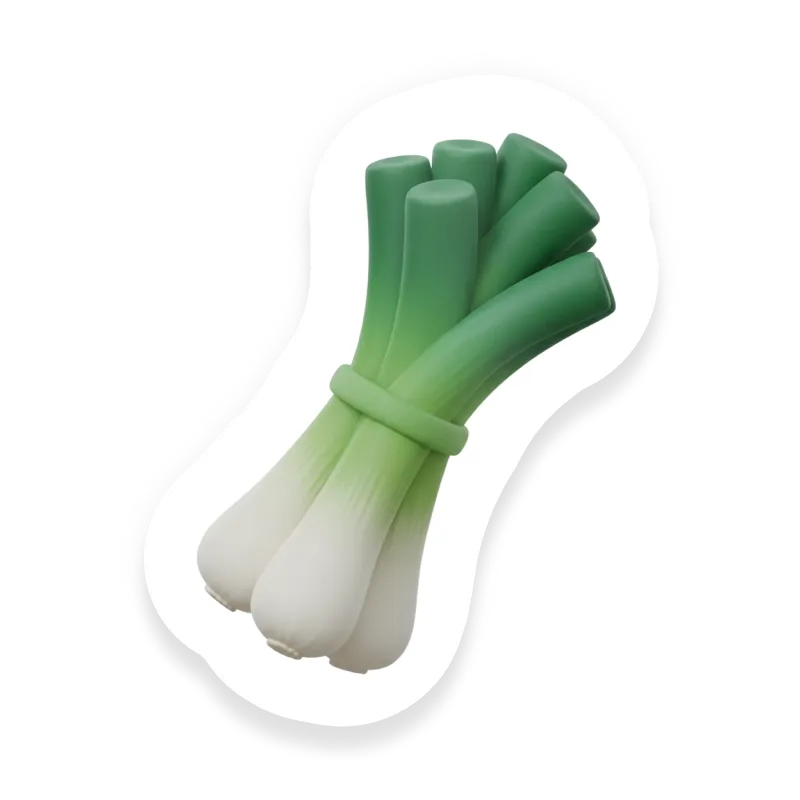
Leek
Vegetable
Is Leek Safe for Babies?
Yes, babies can eat leeks from around 6 months old, when they start solids, cooked until soft and appropriately prepared.
Yes, but there are some things to know
At a Glance
Leeks contain prebiotic inulin and dietary fiber that feed helpful gut bacteria. These nutrients help soften stool and support regular bowel movements.
How Do You Serve Leek?
- 1Rinse leeks well to remove grit, slice the white and light-green parts, then simmer or steam until very soft—check by mashing with a fork.
- 2For a smooth puree: blend cooked leeks with a little cooking water, breastmilk, or formula until smooth; strain if needed for extra silkiness.
- 3For scoopable finger food: finely chop the soft leeks and mix into thin egg strips, large soft meatballs, cooked pasta, or cooked grains so the mixture holds together and can be scooped.
- 4Check texture and temperature before serving—serve thick enough to stay on the spoon and cool to touch; do not add salt or strong spices, and consider pre-loading the spoon if spoon-feeding.
Is Leek a Common Allergen?
Leeks are part of the Allium family (onions, garlic, chives) and are not a common food allergen for most children, but they can cause reactions in sensitive people. Leeks contain compounds (e.g., diallyl disulfide) associated with contact allergic dermatitis and rare food allergy cases — including reported anaphylaxis/food‑dependent exercise‑induced anaphylaxis. If your child has a known onion or garlic allergy, avoid leeks and consult an allergist before offering them; seek immediate care for severe symptoms (hives, swelling, difficulty breathing).
What Nutrients Does Leek Have?
Leeks are low‑calorie, nutrient‑dense vegetables that provide fiber (including soluble, prebiotic fiber), folate (vitamin B9), vitamins A (beta‑carotene), C, and K, plus potassium, magnesium, small amounts of iron and vitamin B6, and carotenoids like lutein and zeaxanthin. For babies these nutrients support gut health and regular stools (fiber), brain and neural development (folate), vision (lutein/zeaxanthin), immune support (vitamin C) and bone health/blood clotting (vitamin K). Toxicity is unlikely from normal feeding—excessive amounts may cause gas or GI upset and rare onion‑family sensitivities; introduce cooked, well‑softened leeks in small amounts and consult a clinician if your baby has a medical condition or is on blood‑thinning medication.
Is Leek a Choking Hazard?
Moderate Choking Risk
Cooked leeks are generally low risk for choking, but any food can become a hazard depending on a child’s chewing and swallowing abilities. Stay within arm’s reach during meals, watch closely for gagging or signs of distress, and be ready to respond if choking occurs. If your baby has known feeding or swallowing difficulties or you’re concerned, contact your pediatrician.
Have More Questions?
Yes. Leeks can be introduced to babies around 6 months old when they are ready for solids. They are a milder allium, making them suitable for babies' developing digestive systems.
Yes. Leeks are nutritious and provide essential vitamins, minerals, and plant compounds that support a baby’s growth, immunity, and development.
No. Leeks are not commonly allergenic, but some children sensitive to the onion family may react. Always introduce new foods gradually and monitor for reactions.
No. Properly cooked leeks are soft and safe for babies to eat and pose a low choking risk when prepared appropriately for their age.
Yes. Leeks can be stored in an airtight container in the refrigerator for about 3-4 days. They can also be frozen in pureed form for longer storage.
Is Leek safe for your baby?
Get personalized guidance on introducing Leek — with prep tips, allergen alerts, and age-specific serving ideas.
Sources
- Kothari D., Lee W.-D., & Kim S.-K. (2020). Allium Flavonols: Health Benefits, Molecular Targets, and Bioavailability. Antioxidants, 9(9), 888. pmc.ncbi.nlm.nih.gov
- Fattorusso E., Lanzotti V., Taglialatela-Scafati O., & Cicala C. (2001). The flavonoids of leek, Allium porrum. Phytochemistry, 57(4), 565–569. pubmed.ncbi.nlm.nih.gov
- Cantisani C., Visconti B., Paolino G., Frascani F., Tofani S., et al. (2014). Unusual food allergy: Alioidea allergic reactions overview. Recent Patents on Inflammation & Allergy Drug Discovery, 8(3):178-84. pubmed.ncbi.nlm.nih.gov
- Armentia A., Martín-Armentia S., Pineda F., Martín-Armentia B., Castro M., Fernández S., et al. (2020). Allergic hypersensitivity to garlic and onion in children and adults. Allergol Immunopathol (Madr). 48(3):232-236. pubmed.ncbi.nlm.nih.gov
- American Academy of Allergy, Asthma & Immunology. Oral Allergy Syndrome (OAS) or Pollen-Food Syndrome (PFS). aaaai.org
What Other Vegetable Can Babies Eat?
See all →
Backed by Science
Data you can trust.
Every food, guideline, and recommendation in Tummi is sourced from leading health institutions and peer-reviewed research.
 Centers for Disease Control and Prevention
Developmental milestones, nutrition guidelines, and allergen introduction timelines.
 American Academy of Pediatrics
Evidence-based feeding recommendations from the leading pediatric authority.
 National Institutes of Health
Peer-reviewed research on infant nutrition, allergies, and food safety.