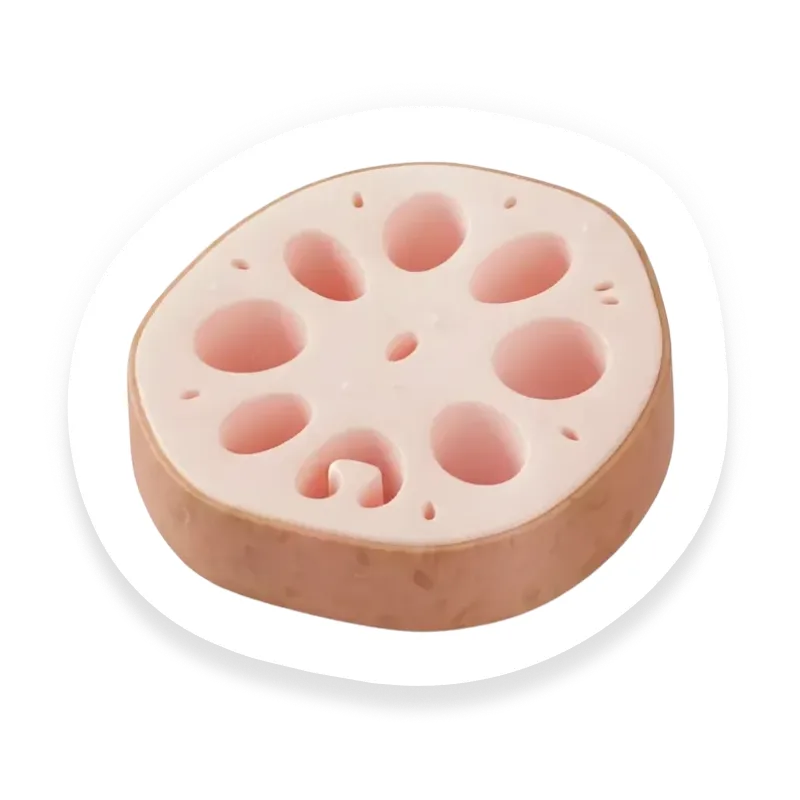
Lotus Root
Vegetable
Is Lotus Root Safe for Babies?
Yes, cooked lotus root can be introduced around 6 months of age when starting solids, ensuring it is properly cooked and served in small, manageable pieces.
Yes, but there are some things to know
At a Glance
Lotus root is high in fiber, which adds bulk and helps keep bowel movements regular. It also contains vitamin C, potassium and forms of resistant starch that together support healthy digestion by feeding beneficial gut bacteria.
How Do You Serve Lotus Root?
- 1Peel the lotus root and simmer until a fork slides into the thickest part easily to ensure it's cooked through.
- 2Slice the cooked root very thinly or grate it. Stays firm, so thin pieces or grated lotus root reduce choking risk.
- 3Cool pieces to a safe temperature before serving and hold them on your palm if baby needs help picking them up.
- 4Never serve raw lotus root and always supervise meals; avoid large or thick chunks and stop if you see gagging.
Is Lotus Root a Common Allergen?
Lotus root is not a common major allergen, but rare allergic reactions (including contact urticaria) and at least one novel food allergen have been reported, so watch for hives, swelling, vomiting, or breathing difficulty. Raw lotus can irritate some people due to latex-like compounds and should be cooked; dried lotus products have been recalled for undeclared sulfites, which can trigger reactions in sulfite-sensitive children. Introduce cooked lotus root when a baby is ready for solids and monitor closely; consult an allergist if there is a history of plant/seed allergies or any concerning symptoms.
What Nutrients Does Lotus Root Have?
Cooked lotus root supplies potassium, B vitamins (notably B6), vitamin C, soluble fiber, and antioxidant polyphenols (e.g., quercetin), supporting heart health, brain development, iron absorption from plant foods, and digestive regularity in babies. It is not a reliable source of iron, so continue to offer iron-rich foods and iron-fortified cereals as needed. Offer moderate portions and only cooked, appropriately textured pieces—excessive fiber can cause loose stools, and canned or pickled lotus root may be high in sodium.
Is Lotus Root a Choking Hazard?
Low Choking Risk
Lotus root is firm and challenging to chew, making it a notable choking hazard for infants and toddlers. It often retains a firm texture and may not break down easily in the mouth, so pieces can become stuck. Always supervise closely during meals, stay within arm’s reach, and be prepared to respond with infant choking first-aid if needed.
Have More Questions?
Yes. Cooked lotus root can be introduced as soon as your baby is ready for solids, typically around 6 months, but avoid raw to prevent foodborne illness.
Yes. Lotus root is nutritious for babies, providing vitamins, fiber, and antioxidants. Ensure it is thoroughly cooked before serving.
Yes. Lotus root is firm and can pose a choking risk if not prepared properly. Slice thinly and cook until soft to minimize danger.
No. Allergies to lotus root are rare, but some children sensitive to grass pollen or related foods may react. Start with small amounts and observe.
Yes. Its high soluble fiber content can support healthy digestion and regular bowel movements in babies. Always consult with your pediatrician if concerned.
Is Lotus Root safe for your baby?
Get personalized guidance on introducing Lotus Root — with prep tips, allergen alerts, and age-specific serving ideas.
Sources
- Development of lotus root fermented sugar syrup as a functional food supplement/condiment and evaluation of its physicochemical, nutritional and microbiological properties doi.org
- Phenolic Profiles and Antioxidant Activity of Lotus Root Varieties doi.org
- Phytochemical Profile and Biological Activity of Nelumbo nucifera doi.org
- Pollen-Food Allergy Syndrome in Korean Pollinosis Patients: A Nationwide Survey doi.org
- Soluble dietary fiber and polyphenol complex in lotus root: Preparation, interaction and identification doi.org
- Comprehensive characterization of lotus root polysaccharide-phenol complexes doi.org
- Lotus Flavonoids and Phenolic Acids: Health Promotion and Safe Consumption Dosages doi.org
- Oral Allergy Syndrome (OAS) or Pollen Fruit Syndrome (PFS) - American Academy of Allergy Asthma & Immunology aaaai.org
What Other Vegetable Can Babies Eat?
See all →
Backed by Science
Data you can trust.
Every food, guideline, and recommendation in Tummi is sourced from leading health institutions and peer-reviewed research.
 Centers for Disease Control and Prevention
Developmental milestones, nutrition guidelines, and allergen introduction timelines.
 American Academy of Pediatrics
Evidence-based feeding recommendations from the leading pediatric authority.
 National Institutes of Health
Peer-reviewed research on infant nutrition, allergies, and food safety.