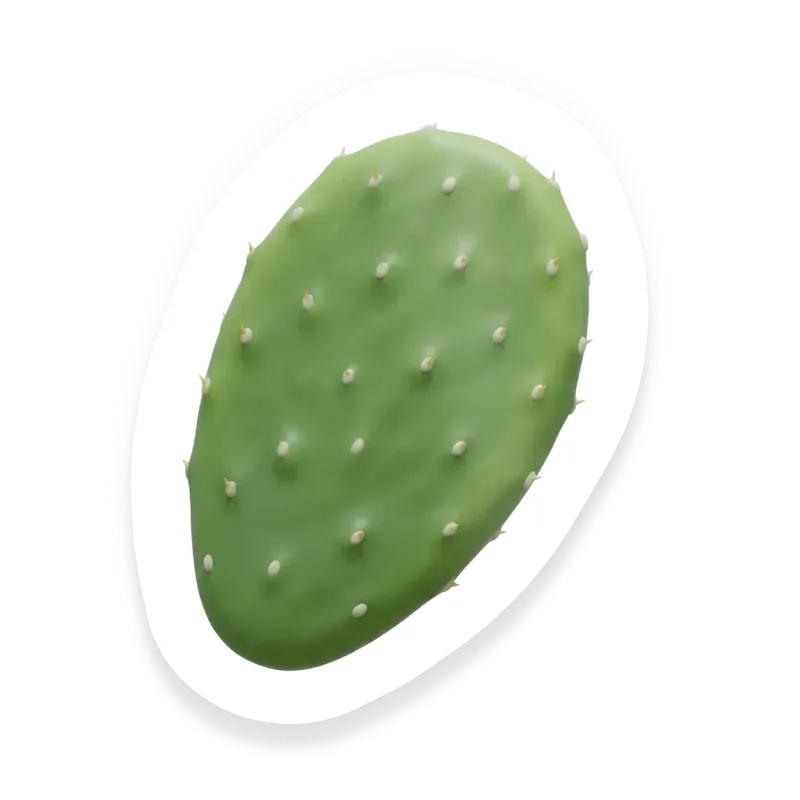
Nopales (Prickly Pear Cactus)
Vegetable
Is Nopales (Prickly Pear Cactus) Safe for Babies?
Yes, nopal cactus pads can be introduced around 6 months of age once baby is ready to start solids, ensuring they are properly cooked and sliced into manageable pieces.
Yes, but there are some things to know
How Do You Serve Nopales (Prickly Pear Cactus)?
- 1Remove all spines and wash pads thoroughly under running water; trim any tough edges or discolored spots.
- 2Cook the pads in salted boiling water until very tender (about 20–30 minutes), or pressure-cook for 8–10 minutes; drain and cool.
- 3Slice cooked nopales into long strips roughly twice the width of an adult finger for easy grasping, or finely chop to fold into soft dishes.
- 4Offer feeding options: place a strip upright so the baby can hold and bite, give a whole cooked pad to gnaw on while supervised, or mix finely chopped nopales into eggs or other soft foods. Supervise closely during feeding.
Is Nopales (Prickly Pear Cactus) a Common Allergen?
Nopales (prickly pear cactus pads) are not a common food allergen and do not contain major allergens like milk, eggs, peanuts, tree nuts, soy, wheat, fish, shellfish, or sesame. Rare allergic reactions to cactus have been reported, and tiny barbed hairs (glochids) can cause skin or eye irritation if pads/fruit aren’t thoroughly cleaned and prepared. For children, remove all spines/glochids and cook well; also watch for cross-contamination from sauces or dressings that may contain common allergens. If your child has plant/latex sensitivities or a history of food allergies, introduce a small amount first and monitor for reactions.
What Nutrients Does Nopales (Prickly Pear Cactus) Have?
Nutrient snapshot: Nopales provide soluble fiber (pectin), vitamin B6, vitamin C and minerals (e.g., calcium, magnesium) along with polyphenol antioxidants. For babies, the fiber supports digestion and microbiome development, vitamin B6 supports neurological development, and antioxidants contribute to immune and heart-health benefits. Introduce in small amounts—excess can cause loose stools, nausea, or headache and prickly spines can cause contact dermatitis; allergies are rare but monitor for reactions.
Is Nopales (Prickly Pear Cactus) a Choking Hazard?
Elevated Choking Risk
Raw nopales can be tough and difficult to chew, so they may pose a choking hazard for infants. Softened (cooked) nopales are less likely to cause choking, but caregivers should stay within arm’s reach and be ready to respond to gagging or choking. Be extra cautious about any remaining spines or fibrous bits, as unexpected textures increase the risk.
Have More Questions?
Yes, parents can store cooked or prepared nopales in an airtight container in the refrigerator for up to 2-3 days, making meal prep more convenient.
Yes, freezing pureed or cooked nopales in ice cube trays is a good way to preserve them for up to 3 months, helping with batch feeding.
It depends. Choosing organic nopales means they are grown without synthetic pesticides, which is preferred for babies, but conventional ones are also safe if thoroughly cleaned.
Yes, you can combine cooked nopales with other compatible baby foods like mild vegetables or grains to introduce new flavors and textures.
It depends. Typical portion sizes for babies start around 1-2 teaspoons of cooked or pureed foods, gradually increasing as they gain more eating experience.
Is Nopales (Prickly Pear Cactus) safe for your baby?
Get personalized guidance on introducing Nopales (Prickly Pear Cactus) — with prep tips, allergen alerts, and age-specific serving ideas.
Sources
- Effects of the Consumption of Prickly Pear Cacti (Opuntia spp.) and its Products on Blood Glucose Levels and Insulin: A Systematic Review mdpi.com
- Sabra dermatitis: Combined features of delayed hypersensitivity and foreign body reaction to implanted glochidia pubmed.ncbi.nlm.nih.gov
What Other Vegetable Can Babies Eat?
See all →
Backed by Science
Data you can trust.
Every food, guideline, and recommendation in Tummi is sourced from leading health institutions and peer-reviewed research.
 Centers for Disease Control and Prevention
Developmental milestones, nutrition guidelines, and allergen introduction timelines.
 American Academy of Pediatrics
Evidence-based feeding recommendations from the leading pediatric authority.
 National Institutes of Health
Peer-reviewed research on infant nutrition, allergies, and food safety.