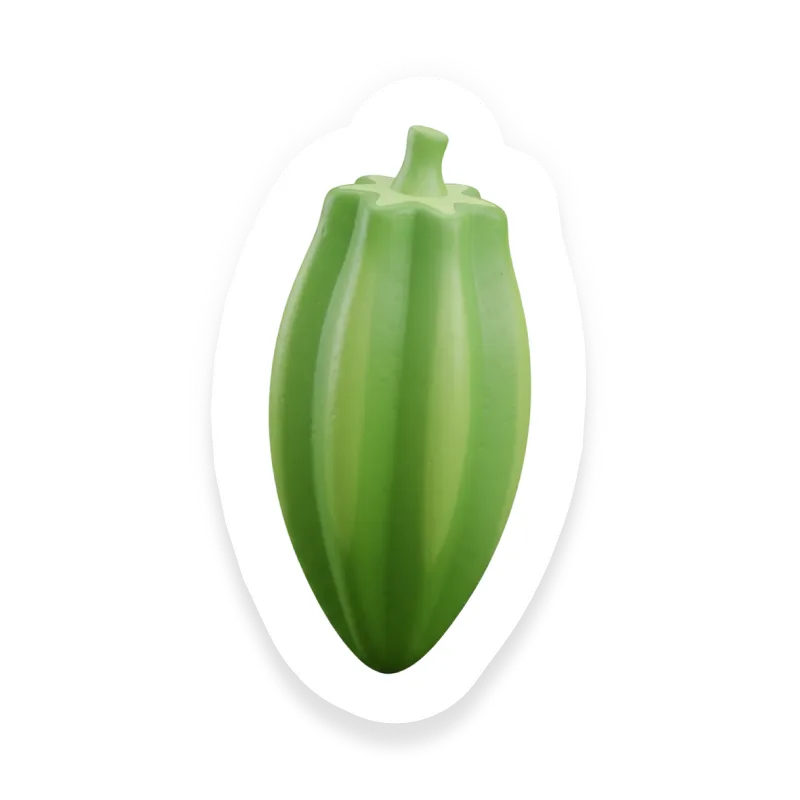
Okra
Vegetable
Is Okra Safe for Babies?
Yes, babies can eat cooked, tender okra starting at around 6 months old as part of solid foods.
Yes, but there are some things to know
How Do You Serve Okra?
- 1Cook okra until very soft so it can be mashed easily between your thumb and forefinger.
- 2Chop and mix into scoopable foods like porridge, thick soups, or stews so textures blend.
- 3Or serve a whole large cooked pod with the stem removed; check softness and slice or mash the pod if needed.
- 4If you prefer a smoother texture, split and press the pod to remove seeds — seeds are generally low choking risk but removing them can make the bite easier.
Is Okra a Common Allergen?
Okra is not a common food allergen and is not one of the major allergens, but rare IgE‑mediated allergies and contact/occupational skin reactions have been reported. People with pollen-related oral allergy syndrome may get mouth or throat itching from raw okra; cooking usually reduces this risk. Watch for typical allergy signs (hives, swelling, vomiting, difficulty breathing) after first exposures and seek medical care for severe reactions.
What Nutrients Does Okra Have?
Okra is hydrating and nutrient-dense, providing fiber plus key micronutrients—especially folate, vitamin C, vitamin K, vitamin B6, magnesium, potassium, and zinc—that support infant growth, neurodevelopment, immune function, electrolyte balance, and healthy blood clotting. Its soluble fiber and mucilage help support a developing gut microbiome and stool consistency, though large amounts may cause fullness or gas. Vitamin C aids iron absorption, making okra a helpful complement to iron-rich foods, while folate and B6 support rapid growth and brain development. Serve as part of a varied diet and avoid over-reliance on any single food; consult a clinician if baby is on blood-thinning medication because of vitamin K.
Is Okra a Choking Hazard?
Moderate Choking Risk
Okra can be round, firm, and fibrous, which may make it harder for babies to chew and increases the risk of choking. Its seeds can scatter in the mouth and feel confusing for a baby, even though they pose a low choking risk. Stay within arm’s reach during meals and be prepared to respond quickly if your baby gags or chokes—practicing rescue maneuvers beforehand can help you feel ready.
Have More Questions?
Yes. Okra can be stored in the refrigerator for up to 2-3 days if kept in a plastic bag or container, but it's best to serve it fresh for optimal taste and texture.
Yes. You can freeze cooked okra purees or cooked pods, typically for up to 2-3 months, after thorough cooling and storage in an airtight container or freezer bag.
It depends. Choosing organic okra can reduce pesticide exposure, but conventional okra is also safe; wash thoroughly regardless of the type.
Yes. Combining okra with other baby-friendly vegetables or grains can introduce a variety of flavors and nutrients, but ensure textures are appropriate for your baby's eating stage.
It depends. Portion sizes vary by age and appetite, but start with small servings, such as 1-2 tablespoons for younger babies, gradually increasing as they grow and show interest.
Is Okra safe for your baby?
Get personalized guidance on introducing Okra — with prep tips, allergen alerts, and age-specific serving ideas.
Sources
- Delayed presentation of food protein-induced enterocolitis syndrome (FPIES) to okra in a toddler aacijournal.biomedcentral.com
- Occupational dermatoses in farmers growing okra (Hibiscus esculentus L.) pubmed.ncbi.nlm.nih.gov
What Other Vegetable Can Babies Eat?
See all →

Backed by Science
Data you can trust.
Every food, guideline, and recommendation in Tummi is sourced from leading health institutions and peer-reviewed research.
 Centers for Disease Control and Prevention
Developmental milestones, nutrition guidelines, and allergen introduction timelines.
 American Academy of Pediatrics
Evidence-based feeding recommendations from the leading pediatric authority.
 National Institutes of Health
Peer-reviewed research on infant nutrition, allergies, and food safety.