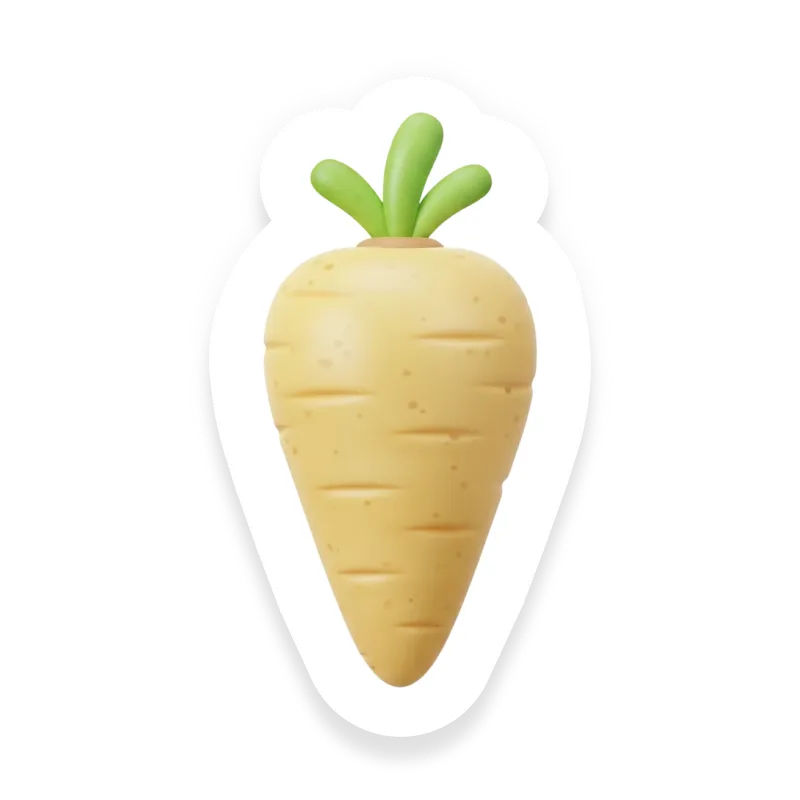
Parsnip
Vegetable
Is Parsnip Safe for Babies?
Yes, babies can eat cooked, pureed parsnips starting at 6 months when they begin solids.
Yes, but there are some things to know
At a Glance
Parsnips are high in fiber, so they add bulk to stool and help keep bowel movements regular. They also provide potassium and vitamins and both soluble and insoluble fiber that support digestive health.
How Do You Serve Parsnip?
- 1Cook parsnips until very soft (fork-tender); cut into long, lengthwise spears so your baby can grasp and gum them — avoid small pieces that could be swallowed whole.
- 2For a smoother option, mash cooked parsnip with a little unsalted butter, breastmilk, formula, or a neutral oil. Aim for a spreadable, lump-free texture.
- 3Serve warm, not hot; always test the temperature yourself before offering.
- 4Skip added salt or sugar; if desired, add a tiny pinch of mild cinnamon or vanilla for gentle flavor.
Is Parsnip a Common Allergen?
Parsnips are not a common food allergen, but because they’re in the Apiaceae family (related to carrots and celery) people with celery or carrot allergies — or pollen‑food cross‑reactivity (e.g., birch pollen) — may rarely react (itchy mouth/throat or oral allergy syndrome). Also note: wild parsnip sap can cause phytophotodermatitis (a non‑allergic skin burn/rash when plant juice contacts skin and is exposed to sunlight), so avoid handling raw sap without gloves. If your child has known vegetable or pollen allergies, introduce parsnip cautiously and talk to your pediatrician or an allergist for personalized advice.
What Nutrients Does Parsnip Have?
Parsnips are nutrient‑dense root vegetables offering complex carbohydrates and a good amount of fiber plus notable vitamin C, folate and vitamin K, and small amounts of minerals such as manganese, copper and iron. For babies these nutrients support energy and growth, immune function and iron absorption (vitamin C), healthy cell/tissue development (folate), and regular bowel movements (fiber). When served cooked and appropriately sized, parsnips are safe as part of a varied diet—there’s little risk of toxicity, though very large amounts could add excess fiber and bulk, which may reduce appetite or loosen stools.
Is Parsnip a Choking Hazard?
Low Choking Risk
Raw parsnips can be a choking hazard for babies. Cooked parsnips are safer, but pieces that are small, round, or firm can still pose a risk, so avoid coin-shaped pieces and supervise closely. Be ready to respond if your baby gags or shows signs of choking.
Have More Questions?
Yes, you can store cooked parsnips in an airtight container in the refrigerator for up to 3 days or freeze puree for longer storage.
Yes, it is safe to prepare parsnip purees and store them in the freezer in small portions for up to 3 months.
It depends. Organic parsnips may be free from pesticides, but always wash thoroughly to reduce any pesticide residues or dirt.
It depends. Combining parsnips with compatible foods can introduce new flavors and nutrients, but introduce new foods one at a time and watch for reactions.
It depends. Serving sizes for babies vary, but typically 1-2 tablespoons of mashed or pureed parsnips are appropriate for a starting portion for infants.
Is Parsnip safe for your baby?
Get personalized guidance on introducing Parsnip — with prep tips, allergen alerts, and age-specific serving ideas.
Sources
What Other Vegetable Can Babies Eat?
See all →
Backed by Science
Data you can trust.
Every food, guideline, and recommendation in Tummi is sourced from leading health institutions and peer-reviewed research.
 Centers for Disease Control and Prevention
Developmental milestones, nutrition guidelines, and allergen introduction timelines.
 American Academy of Pediatrics
Evidence-based feeding recommendations from the leading pediatric authority.
 National Institutes of Health
Peer-reviewed research on infant nutrition, allergies, and food safety.