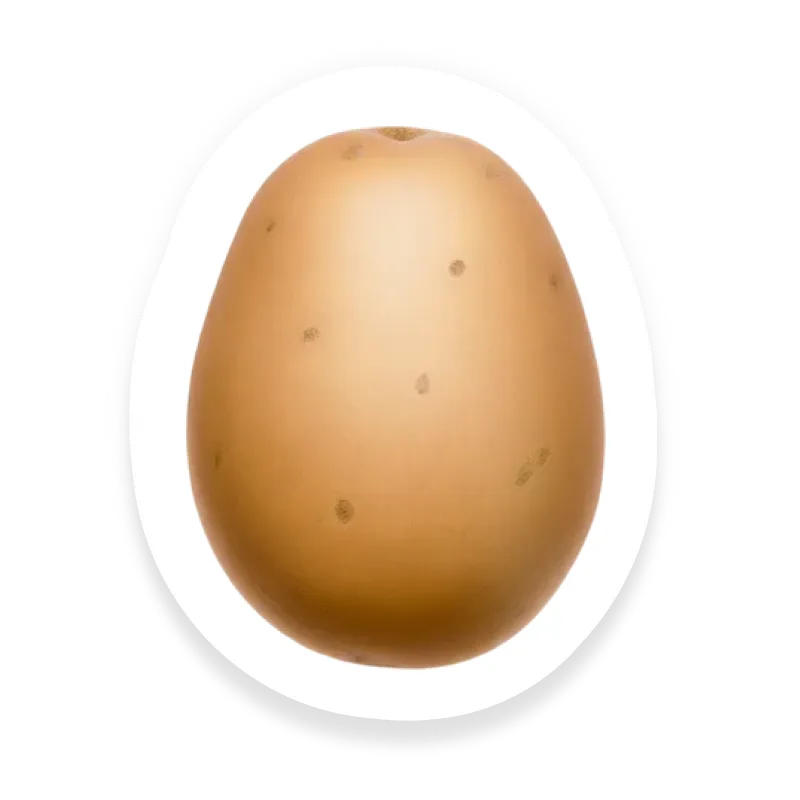
Potato
Vegetable
Is Potato Safe for Babies?
Yes, potatoes can be introduced around 6 months of age when your baby is ready to start solids, prepared plain and cooked thoroughly.
Yes, but there are some things to know
How Do You Serve Potato?
- 1Serve large, soft potato pieces (long wedges or a small whole, cooked potato) that your baby can grasp — avoid small cubes that could be a choking hazard.
- 2Cook until very soft: the potato should mash easily when pressed between two fingers to ensure it’s safe to gum and swallow.
- 3If offering mashed potato, thin it to a smooth, spoonable texture with breast milk, formula, or yogurt so your baby can scoop and swallow easily.
- 4Add a small drizzle of oil or a tiny amount of finely ground nut for extra calories and creaminess; avoid added salt or sugar.
- 5Always check the temperature and supervise each bite to reduce choking risk.
Is Potato a Common Allergen?
Potatoes are not a common food allergen and are generally safe for most children. Rare allergic reactions to potato can occur, and some people with sensitivity to nightshade vegetables (tomatoes, peppers, eggplant) may react. Be cautious with prepared potato products—fries, mashed potatoes, or boxed mixes can contain or be contaminated with milk, butter, eggs, wheat (gluten), or nut-based oils. If your child has a known food allergy or shows unexplained reactions after eating potatoes, consult your pediatrician or an allergist.
What Nutrients Does Potato Have?
Potatoes are an energy-dense, baby-friendly food that supply folate, modest iron, vitamin B6, zinc, other B vitamins, vitamin C, and choline—nutrients that support growth, immune health, and brain development. Their resistant starch feeds beneficial gut bacteria and mashed or soft-cooked potatoes are an easy way to boost calories and nutrition for infants. Avoid fried/salty preparations, don’t over-rely on potatoes at the expense of variety, and discard sprouted or green potatoes due to solanine; offer as part of a balanced diet.
Is Potato a Choking Hazard?
Moderate Choking Risk
Cooked potato is generally low risk for choking when it matches your baby’s developmental abilities, but any food can pose a risk. Always stay within arm’s reach during meals, keep mealtimes calm and supervised, and watch for signs that a child is struggling to breathe or swallow. Caregivers should learn basic infant choking first aid/CPR and keep emergency numbers easily accessible.
Have More Questions?
Yes. Potatoes can be stored in a cool, dark place for a few weeks, but for longer storage, refrigerate cooked purees in airtight containers for up to 48 hours.
Yes. You can freeze potato purees in an airtight container or freezer bag for up to 3 months, which makes meal prep easier.
Yes. Organic potatoes may have fewer pesticides, but both organic and conventional potatoes are safe for babies when thoroughly washed and prepared.
Yes. Combining potato with other vegetables or proteins can introduce new flavors and nutrients to your baby’s diet, as long as the textures are age-appropriate.
Yes. Portion sizes should start small, about 1-2 tablespoons for younger babies, and gradually increase as they grow and develop better eating skills.
Is Potato safe for your baby?
Get personalized guidance on introducing Potato — with prep tips, allergen alerts, and age-specific serving ideas.
Sources
- Nutritional Gaps and Supplementation in the First 1000 Days doi.org
- Micronutrient Intake in Healthy Toddlers: A Multinational Perspective doi.org
- Phenolic Compounds in the Potato and Its Byproducts: An Overview doi.org
- Starchy Carbohydrates in a Healthy Diet: The Role of the Humble Potato doi.org
- Biomarkers of tuber intake doi.org
- Anaphylaxis to raw potato doi.org
- Clinical features of potato sensitivity in children with allergic disease doi.org
- Diagnosis and natural course of allergy to cooked potatoes in children doi.org
- Prevalence of sensitization and allergy to potato in a large population doi.org
What Other Vegetable Can Babies Eat?
See all →
Backed by Science
Data you can trust.
Every food, guideline, and recommendation in Tummi is sourced from leading health institutions and peer-reviewed research.
 Centers for Disease Control and Prevention
Developmental milestones, nutrition guidelines, and allergen introduction timelines.
 American Academy of Pediatrics
Evidence-based feeding recommendations from the leading pediatric authority.
 National Institutes of Health
Peer-reviewed research on infant nutrition, allergies, and food safety.