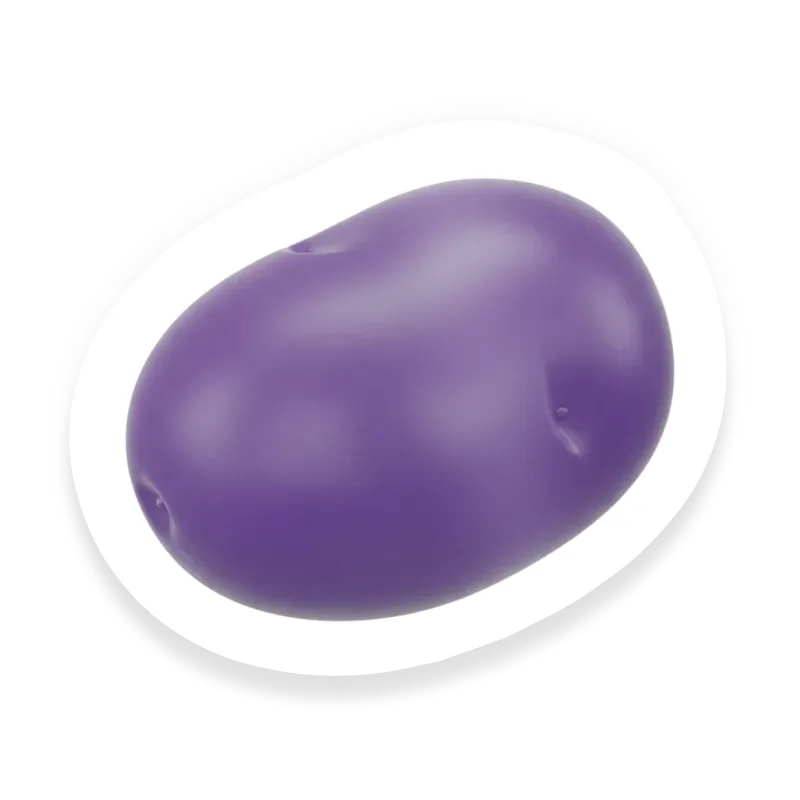
Purple Potatoes
Vegetable
Is Purple Potatoes Safe for Babies?
Yes, babies can eat purple potatoes starting around 6 months when they are cooked and mashed to ensure safe, easy consumption.
Yes, but there are some things to know
How Do You Serve Purple Potatoes?
- 1Boil or steam purple potatoes until very soft, then mash and thin with breastmilk, formula, or water so the texture is easy for baby to scoop.
- 2Serve the mash in a suctioned bowl or place a pre-loaded spoon in your baby’s hand to encourage self-feeding and practice scooping.
- 3If offering fries, cut into long, thick spears and cook until fork-tender and very soft; Expect some spitting as babies learn to manage new textures.
- 4Always supervise meals, offer small amounts, and wait several days after a new food to watch for any reactions.
Is Purple Potatoes a Common Allergen?
Purple potatoes are not a common food allergen, though rare potato allergy can occur (potato proteins such as patatin and compounds like solanine can trigger reactions). They are not one of the major listed food allergens, but cross-contact is possible if prepared with dairy (butter/cream), wheat coatings, or fried in shared oil—so check preparation methods. If your child has a history of food allergies or has reacted to potatoes before, avoid them and consult an allergist.
What Nutrients Does Purple Potatoes Have?
Purple potatoes provide potassium and vitamins B6 and C and are rich in anthocyanin antioxidants, which may support brain and vision development and immune health. They supply complex carbohydrates for energy but are low in iron and are not commonly allergenic. Offer peeled, well-cooked portions without added salt or excess frying; avoid green or sprouted potatoes and feed in moderation so starchy potato doesn’t displace iron-rich foods.
Is Purple Potatoes a Choking Hazard?
Moderate Choking Risk
Purple potatoes can pose a choking risk if pieces are large or firm, so closely watch your baby the first few times they try this new texture. Gagging is common and part of learning to manage food, but if your baby has persistent coughing, struggles to breathe, turns pale or blue, or cannot make sounds, seek emergency help immediately. Stay within arm’s reach during feeds so you can respond quickly to any signs of trouble.
Have More Questions?
Yes, purple potatoes can be stored in an airtight container in the refrigerator for up to 2 days when cooked, but it's best to serve them fresh for optimal flavor and texture.
Yes, you can freeze mashed purple potatoes in a suitable container for up to 3 months; just make sure they are cooled and stored in small portions.
Yes, organic purple potatoes are generally better for babies as they are grown without synthetic pesticides or fertilizers, though both organic and conventional are safe if washed thoroughly.
Yes, combining purple potatoes with vegetables like carrots or peas is a good way to introduce new flavors and nutrients to your baby at the same time.
Yes, typical portion size for babies is around 2-4 tablespoons of pureed purple potatoes per feeding, depending on your child's age and appetite.
Is Purple Potatoes safe for your baby?
Get personalized guidance on introducing Purple Potatoes — with prep tips, allergen alerts, and age-specific serving ideas.
Sources
- How to Use Purple Potatoes - America's Test Kitchen (Cooks Illustrated) americastestkitchen.com
- Anthocyanidins and anthocyanins: Colored pigments as food, pharmaceutical ingredients, and the potential health benefits - NCBI (PubMed Central) pmc.ncbi.nlm.nih.gov
What Other Vegetable Can Babies Eat?
See all →
Backed by Science
Data you can trust.
Every food, guideline, and recommendation in Tummi is sourced from leading health institutions and peer-reviewed research.
 Centers for Disease Control and Prevention
Developmental milestones, nutrition guidelines, and allergen introduction timelines.
 American Academy of Pediatrics
Evidence-based feeding recommendations from the leading pediatric authority.
 National Institutes of Health
Peer-reviewed research on infant nutrition, allergies, and food safety.