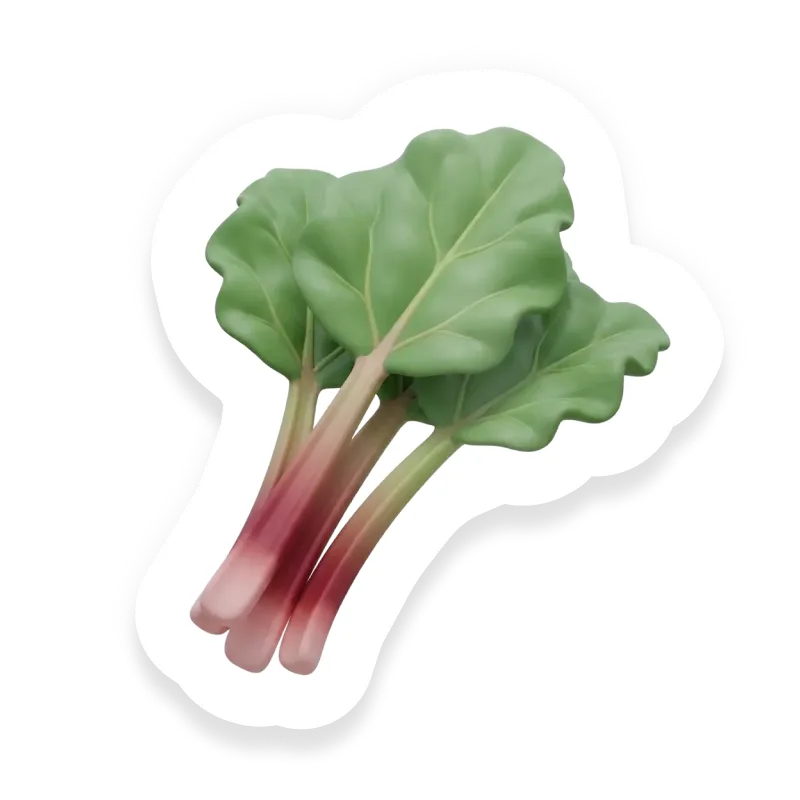
Rhubarb
Vegetable
Is Rhubarb Safe for Babies?
No, rhubarb should not be given to babies due to its potential toxicity and high acidity, which can cause digestive issues and nutrient absorption problems.
Yes, but there are some things to know
At a Glance
Rhubarb contains dietary fiber that helps keep the digestive system moving. It also has natural laxative compounds (sennosides/anthraquinones) that can stimulate bowel movements.
How Do You Serve Rhubarb?
- 1Use only rhubarb stalks — never the leaves; discard leaves before cooking.
- 2Cook stalks in a little water until very soft (about 10–15 minutes), then drain and cool.
- 3Puree or finely mash to a smooth, scoopable texture; stir into warm cereal, yogurt, or ricotta to mellow the tartness.
- 4Offer a small amount at first, watch for any reaction over 2–3 days, and limit added sugar — pair with mashed apple or pear if you want it sweeter.
Is Rhubarb a Common Allergen?
Rhubarb stalks are not a common major allergen (not milk, egg, peanut, tree‑nut, soy, fish, shellfish, sesame or gluten), but people with pollen allergies—especially birch—can get oral allergy syndrome (itchy or tingly mouth/throat) from raw rhubarb; cooking usually reduces this risk. Important safety note: rhubarb leaves are poisonous (high in oxalates) and must never be eaten or given to children. If your child has a history of severe food or pollen allergies, offer cooked rhubarb first and check with your pediatrician before introducing it.
What Nutrients Does Rhubarb Have?
Rhubarb stalks are low-calorie and provide vitamin K (important for blood clotting), potassium (for muscle and nerve function), and dietary fiber that supports digestion and the developing microbiome; they also contain polyphenols with antioxidant benefits. Cooked rhubarb reduces oxalates, but the plant is relatively high in oxalates which can interfere with calcium and iron absorption and may stress kidneys if consumed excessively—serve in moderation and avoid leaves. For babies, small amounts of cooked rhubarb can add nutrients and flavor; avoid sugary preparations before age 2 and consult a pediatrician for infants with kidney issues.
Is Rhubarb a Choking Hazard?
Moderate Choking Risk
Cooked rhubarb is not usually a choking hazard, but raw stalks can be stringy and firm and may pose a risk. To reduce choking risk, ensure pieces are soft and appropriately sized for your child’s chewing ability, and stay within arm’s reach and attentive during meals. Watch for fibrous strands or thick sections that can be hard to manage and remove or further soften them before offering.
Have More Questions?
Yes. Rhubarb stalks can be introduced to babies around 6 months old once they are ready for solids, but ensure they are cooked to reduce texture risks.
No, the color doesn't matter. Both green and red rhubarb stalks are edible, with the main consideration being freshness and flavor, not hue.
Yes, in moderation. Rhubarb contains nutrients and antioxidants beneficial for babies, but excessive consumption can harm liver and kidney health due to high oxalate levels.
No. Cooked rhubarb is generally safe for babies, while raw rhubarb could pose a choking hazard. Always cook thoroughly and supervise eating.
No, rhubarb is not a common allergen, but start with small amounts and observe for any reactions, especially during initial introduction.
Is Rhubarb safe for your baby?
Get personalized guidance on introducing Rhubarb — with prep tips, allergen alerts, and age-specific serving ideas.
Sources
- What we already know about rhubarb: a comprehensive review (Xiang et al., 2020) doi.org
- Update on oxalate crystal disease (Lorenz et al., 2013) doi.org
- Oxalate content of foods and its effect on humans (Noonan & Savage, 1999) pubmed.ncbi.nlm.nih.gov
- Effect of different cooking methods on vegetable oxalate content (Chai & Liebman, 2005) doi.org
- Rhubarb and oxalosis (Barceloux, 2009) doi.org
- Antioxidant activity, phenolic and anthocyanin contents of various rhubarb varieties (Takeoka et al., 2012) doi.org
- Sugar in Infants, Children and Adolescents: Position Paper (Fidler Mis et al., 2017) doi.org
- Phytodermatitis in East and southeast of Turkey: A prospective study (An & Ozturk, 2019) doi.org
- Allergen of the Month--Monk's Rhubarb (Weber, 2015) doi.org
What Other Vegetable Can Babies Eat?
See all →
Backed by Science
Data you can trust.
Every food, guideline, and recommendation in Tummi is sourced from leading health institutions and peer-reviewed research.
 Centers for Disease Control and Prevention
Developmental milestones, nutrition guidelines, and allergen introduction timelines.
 American Academy of Pediatrics
Evidence-based feeding recommendations from the leading pediatric authority.
 National Institutes of Health
Peer-reviewed research on infant nutrition, allergies, and food safety.