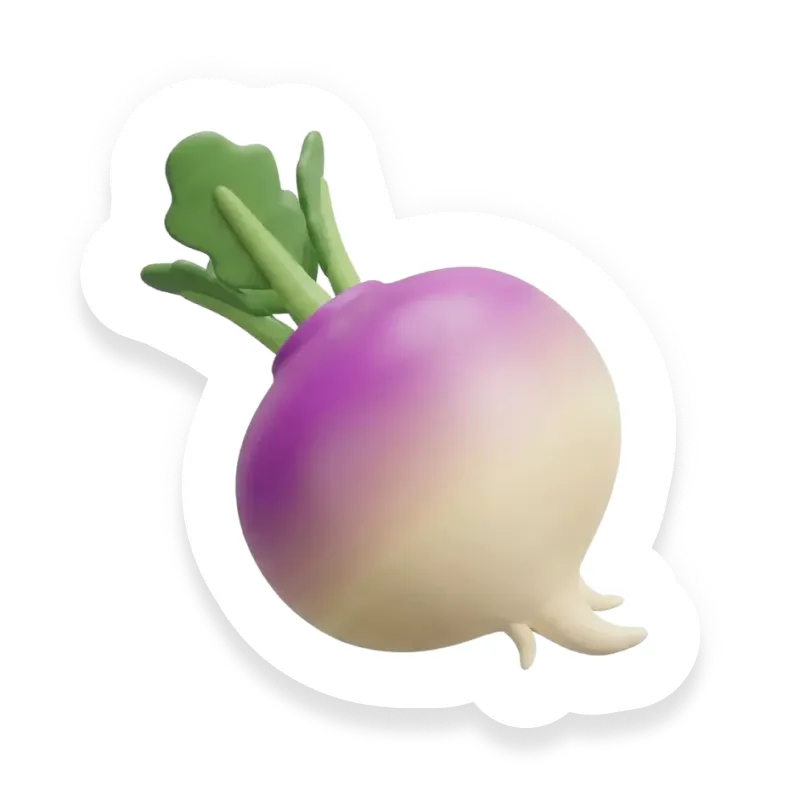
Rutabaga (Swede)
Vegetable
Is Rutabaga (Swede) Safe for Babies?
Yes, babies can eat cooked and pureed rutabaga starting around 6 months of age when they are ready for solids.
Yes, but there are some things to know
At a Glance
Rutabaga (swede) is high in fiber, which adds bulk and helps keep bowel movements regular. The fiber and water in rutabaga feed gut bacteria and support healthy digestion.
How Do You Serve Rutabaga (Swede)?
- 1Peel and cut rutabaga into bite-sized chunks, then cook (steam or boil) until very soft and fork-tender so the flesh squashes easily.
- 2For self-feeding, offer thicker mashable wedges the baby can hold and gnaw; ensure pieces are soft enough to mash with gums and supervise while eating.
- 3For spoon-feeding, mash to a smooth or slightly textured consistency and stir into cooked grains, lentils, or mashed beans to add flavor and nutrients.
- 4If using young rutabaga greens, cook them well and finely chop before mixing into mashed root or egg dishes; a well-cooked whole leaf may be given briefly as a supervised teether but should not be expected to be eaten.
Is Rutabaga (Swede) a Common Allergen?
Rutabaga (swede) is not a common allergen and is generally safe for most people, including infants. It contains no dairy, egg, soy, gluten, nuts, peanuts, sesame, fish, or shellfish, though individuals with sensitivities to cruciferous/root vegetables may experience digestive upset or rare allergic reactions. Introduce gradually per feeding guidelines and watch for any individual adverse response.
What Nutrients Does Rutabaga (Swede) Have?
Rutabaga is a low‑calorie, water‑rich root vegetable that supplies vitamin C (supports immunity and helps iron absorption), potassium (electrolyte balance), dietary fiber (supports digestion and regular stools), folate and vitamin B6 (support growth and brain development), plus small amounts of calcium and magnesium for bone health. It also contains glucosinolates—beneficial plant compounds that may cause gas and, in very large raw amounts, can have goitrogenic effects; cooking reduces these compounds. Rutabaga is not a significant source of iron, and there’s no toxicity risk from normal servings—offer it as part of a varied diet and introduce gradually to monitor tolerance.
Is Rutabaga (Swede) a Choking Hazard?
Low Choking Risk
Rutabaga can be a choking hazard because raw or undercooked root is very firm and difficult to chew. Keep baby within arm’s reach and closely supervise all meals, watching for signs of gagging or choking. Be prepared to act quickly and review infant choking first aid so you can respond if needed.
Have More Questions?
Yes. Rutabaga can be stored in a cool, dark place for several weeks or in the refrigerator for up to a week, making it convenient for meal prep.
Yes. Freezing pureed rutabaga is a good way to prepare in advance; just ensure it's cooled completely before transferring to an airtight container or freezer bag.
It depends. Organic rutabaga may have fewer pesticide residues, but both organic and conventional rutabaga are safe for babies when prepared properly.
Yes. Combining rutabaga with other vegetables or grains can create varied flavors and textures, supporting baby’s interest and dietary diversity.
It depends. Typically, starting with about 1-2 tablespoons per feeding is appropriate for babies beginning solids, but portion size can increase as baby grows and shows appetite.
Is Rutabaga (Swede) safe for your baby?
Get personalized guidance on introducing Rutabaga (Swede) — with prep tips, allergen alerts, and age-specific serving ideas.
Sources
- Bitter taste of Brassica vegetables: The role of genetic factors, receptors, isothiocyanates, glucosinolates, and flavor context doi.org
- Phytotherapy and food applications from Brassica genus doi.org
- Anaphylaxis to cabbage: detection of allergens pubmed.ncbi.nlm.nih.gov
- Brassica oleracea pollen, a new source of occupational allergens doi.org
What Other Vegetable Can Babies Eat?
See all →
Backed by Science
Data you can trust.
Every food, guideline, and recommendation in Tummi is sourced from leading health institutions and peer-reviewed research.
 Centers for Disease Control and Prevention
Developmental milestones, nutrition guidelines, and allergen introduction timelines.
 American Academy of Pediatrics
Evidence-based feeding recommendations from the leading pediatric authority.
 National Institutes of Health
Peer-reviewed research on infant nutrition, allergies, and food safety.