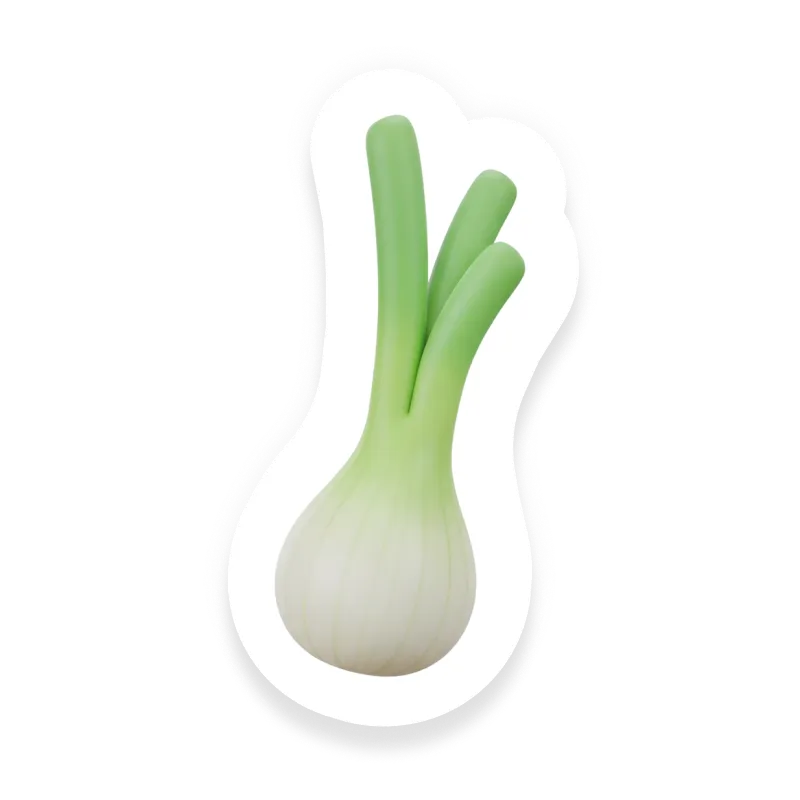
Scallion (Green Onion)
Vegetable
Is Scallion (Green Onion) Safe for Babies?
Yes, scallions can be introduced around 6 months of age once babies are ready for solids, typically as a seasoning in small amounts.
Yes, but there are some things to know
How Do You Serve Scallion (Green Onion)?
- 1Finely chop scallions (use both green and white parts) and mix into soft, scoopable foods like congee, mashed vegetables, yogurt, or soft egg dishes so pieces are very small and easy to swallow.
- 2If cooking, gently sauté or simmer scallions until soft to mellow the flavor and reduce any fibrous texture.
- 3You can offer a whole raw scallion as a supervised teether. Present it bulb-side up after removing the roots so the baby can gnaw and scrape off tiny pieces.
- 4Start with small amounts when introducing scallions and watch for any reactions; always supervise feeding.
Is Scallion (Green Onion) a Common Allergen?
Scallions (green onions) are not among the common top allergens (milk, egg, peanut, tree nut, soy, wheat, fish, shellfish). However, people with an onion/allium allergy or those with pollen‑related oral allergy syndrome may get itching, tingling or mild swelling in the mouth after eating raw scallions; cooking often reduces this risk. Rarely, contact dermatitis or true allergic reactions to onions can occur. If a child has a known onion/allium or pollen allergy, introduce cautiously and consult their healthcare provider.
What Nutrients Does Scallion (Green Onion) Have?
Scallions are low-calorie but nutrient-dense for babies: they supply vitamin A (vision and growth), vitamin C (immune support and helps iron absorption), folate (cell growth and development), vitamin K (blood clotting and bone health), small amounts of iron, calcium and copper, plus fiber and beneficial plant compounds like kaempferol. These nutrients support immune function, healthy growth and development, and may enhance iron utilization when paired with vitamin C–rich foods. Overconsumption is unlikely but large amounts may cause stomach upset or mouth irritation in sensitive children; cooking softens flavor and reduces irritants. Introduce in small amounts and age-appropriate textures so baby gets these nutrients without digestive or sensory issues.
Is Scallion (Green Onion) a Choking Hazard?
Low Choking Risk
Scallions are generally a low choking risk when offered in an age- and developmentally appropriate way, but any food can cause choking. Always stay within arm’s reach during meals and watch for signs of gagging or difficulty breathing. Be prepared to respond — familiarize yourself with infant/toddler choking first aid and call emergency services if you suspect choking.
Have More Questions?
Yes. Scallions can be introduced to babies around 6 months old since they are part of the early solid foods. Serve them in a finely chopped, cooked, or pureed form suitable for your baby’s developmental stage.
Yes. It depends on the baby's readiness. Lightly cooked or finely chopped scallions are often easier for babies to digest and less irritating, but always tailor the texture to their chewing ability.
Yes. You can store leftover cooked scallions in an airtight container in the refrigerator for up to 2 days, and reheat thoroughly before serving to your baby.
It depends on your baby's preferences and tolerance. Some babies enjoy the flavor, but it's best to introduce gradually and observe for any sensitivities when combining scallions with other foods.
Most babies at 6 months do well with small portions, typically starting with 1-2 teaspoons of finely chopped or pureed scallions and increasing as they show acceptance.
Is Scallion (Green Onion) safe for your baby?
Get personalized guidance on introducing Scallion (Green Onion) — with prep tips, allergen alerts, and age-specific serving ideas.
Sources
- Kaempferol: A Key Emphasis to Its Anticancer Potential doi.org
- Simple saponification method for the quantitative determination of carotenoids in green vegetables doi.org
- Evaluation and comparison of the content of total polyphenols and antioxidant activity of selected species of the genus Allium doi.org
- Immunological characterization of onion (Allium cepa) allergy doi.org
- Oral Allergy Syndrome: An Update for Stomatologists doi.org
What Other Vegetable Can Babies Eat?
See all →
Backed by Science
Data you can trust.
Every food, guideline, and recommendation in Tummi is sourced from leading health institutions and peer-reviewed research.
 Centers for Disease Control and Prevention
Developmental milestones, nutrition guidelines, and allergen introduction timelines.
 American Academy of Pediatrics
Evidence-based feeding recommendations from the leading pediatric authority.
 National Institutes of Health
Peer-reviewed research on infant nutrition, allergies, and food safety.