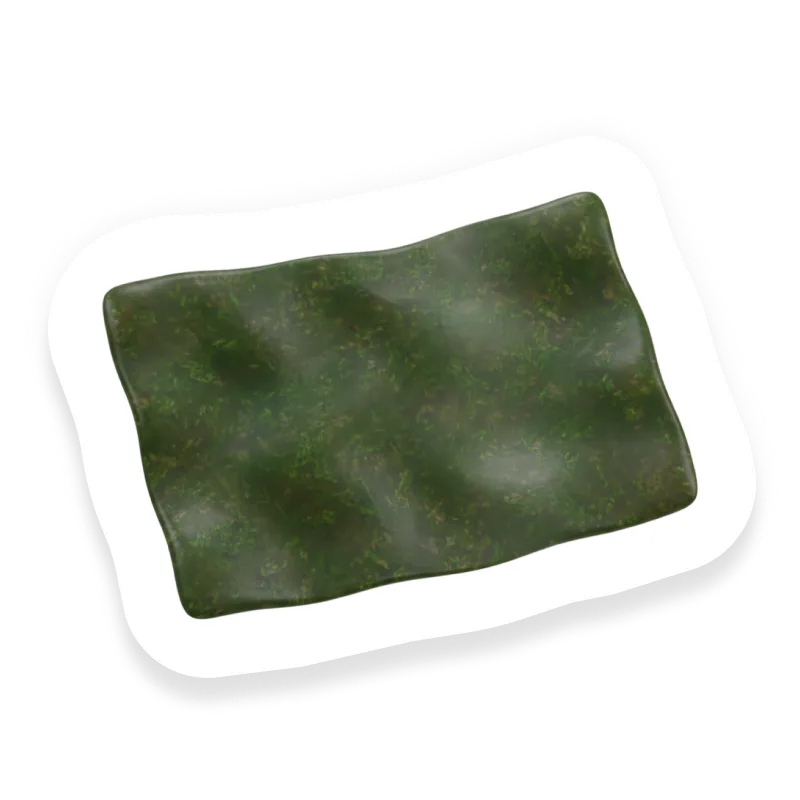
Nori
Vegetable
Is Nori Safe for Babies?
Yes, nori can be introduced to babies around 6 months as part of a varied diet, in moderation, due to its rich iodine content.
Yes, but there are some things to know
How Do You Serve Nori?
- 1Toast nori lightly until crisp, then crumble or finely chop into very small flakes so pieces are easy to pick up and swallow.
- 2Stir into scoopable foods like mashed avocado, rice porridge, or rice balls to help baby pick up and eat safely.
- 3Offer only a small amount because nori contains iodine; avoid seaweed powders or supplements.
- 4Always supervise closely during feeding and watch for gagging or pieces sticking to the mouth; discard any large or wet clumps.
Is Nori a Common Allergen?
Nori (dried seaweed) is not a common food allergen and rarely causes typical childhood food allergies. However, rare allergic reactions to seaweed or contaminants (e.g., amphipods/crustaceans) have been reported, so check history of severe seafood allergy. Packaged nori may be processed on equipment that also handles fish, shellfish, soy, or sesame—always read labels for 'may contain' or cross-contact warnings. Nori is high in iodine, so parents of children with thyroid disease or iodine sensitivity should consult a clinician before regular use.
What Nutrients Does Nori Have?
Nutrient snapshot: Nori is low in calories but supplies several important micronutrients for babies — notably iodine (supports thyroid and brain development), folate, vitamin A, zinc, calcium, potassium, and a small amount of protein. It also contains phytonutrients that may support immune function. Because iodine levels can be high and variable, avoid seaweed powders/supplements and serve nori sparingly as part of a varied diet to prevent iodine excess.
Is Nori a Choking Hazard?
Low Choking Risk
Dry nori sheets become sticky and gummy when they contact saliva, which can cause pieces to cling to the roof of the mouth or throat and increase the risk of choking. Expect harmless gagging as babies learn to manage this texture, but always stay within arm’s reach and watch closely during first tries in case a piece becomes lodged. Know basic infant choking first aid so you can act quickly if needed.
Have More Questions?
Yes, nori can be given to babies around 6 months old once they are developing solids, but serve in moderation due to high iodine levels.
Yes, nori is generally healthy for babies when fed in moderation, offering essential minerals and vitamins, but avoid seaweed powders or supplements which may have excessive iodine.
No, nori is not a common allergen, and most babies can eat it unless they have specific allergies to fish or shellfish, but watch out for processed types with sesame or wheat.
Yes, because dried and toasted nori sheets can be sticky and gummy, increasing choking risk. Prepare and serve appropriately for your baby's age and safety.
Not all seaweeds are safe for babies; some like kelp or kombu contain high iodine levels and should be avoided, but nori is safer when introduced in small amounts.
Is Nori safe for your baby?
Get personalized guidance on introducing Nori — with prep tips, allergen alerts, and age-specific serving ideas.
Sources
- Iodine - Drugs and Lactation Database (LactMed®) - NCBI Bookshelf ncbi.nlm.nih.gov
- Seaweed - Drugs and Lactation Database (LactMed®) - NCBI Bookshelf ncbi.nlm.nih.gov
- A role for dietary macroalgae in the amelioration of certain risk factors associated with cardiovascular disease - Phycologia (Cornish et al., 2015) tandfonline.com
What Other Vegetable Can Babies Eat?
See all →





Backed by Science
Data you can trust.
Every food, guideline, and recommendation in Tummi is sourced from leading health institutions and peer-reviewed research.
 Centers for Disease Control and Prevention
Developmental milestones, nutrition guidelines, and allergen introduction timelines.
 American Academy of Pediatrics
Evidence-based feeding recommendations from the leading pediatric authority.
 National Institutes of Health
Peer-reviewed research on infant nutrition, allergies, and food safety.