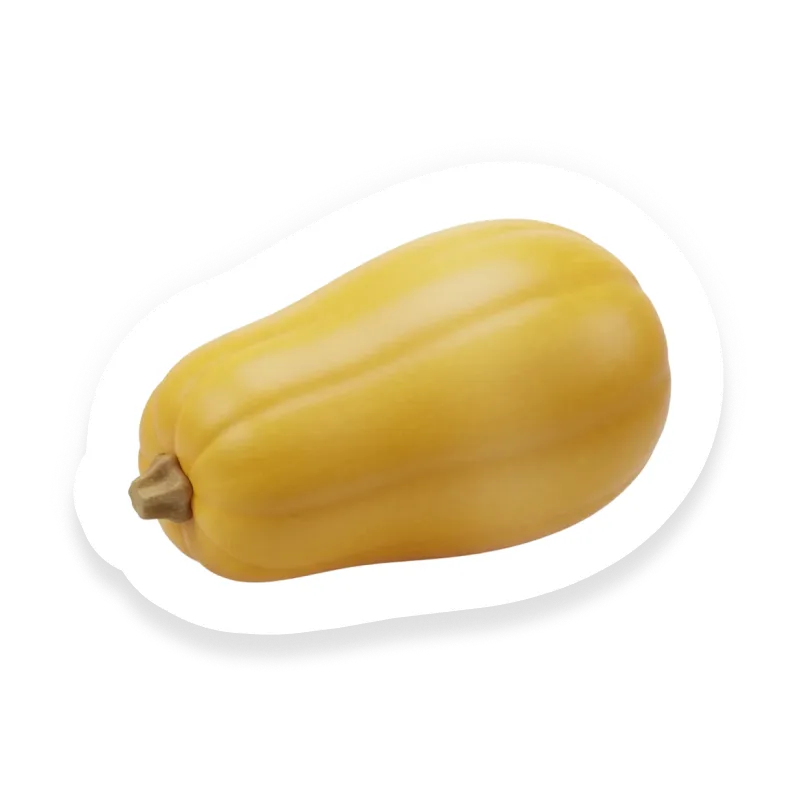
Spaghetti Squash
Vegetable
Is Spaghetti Squash Safe for Babies?
Yes, spaghetti squash can be introduced around 6 months old when solids are suitable, prepared by cooking and pulling apart the flesh into noodle-like strands.
Yes, but there are some things to know
At a Glance
Spaghetti squash is rich in fiber, with water and both soluble and insoluble fibers that help gentle digestion. That fiber and moisture work together to aid regularity and keeps stools soft, while its vitamins and potassium support healthy gut function.
How Do You Serve Spaghetti Squash?
- 1Cook the squash until very tender (roasted or steamed), scrape the strands, then finely chop the strands into short pieces so baby can easily pick them up.
- 2Serve in a shallow bowl for scooping and lightly toss with olive oil or a mild sauce to add flavor and prevent sticking.
- 3If the strands cause gagging, mix the chopped squash into scoopable foods (mashed vegetables, yogurt, or applesauce) or pre-load a spoon to model feeding.
- 4For a larger finger food, fold the chopped strands into beaten eggs or batter and cook as soft patties or fritters; cut into manageable pieces.
- 5Ensure pieces are soft and cooled to a safe temperature, offer appropriately sized portions, and always supervise while baby is eating.
Is Spaghetti Squash a Common Allergen?
Spaghetti squash itself is not a common food allergen and is generally safe for children. Allergic reactions to squash are rare, but children with known vegetable allergies, pollen-food (oral allergy) syndrome, or latex-fruit cross-reactivity should take caution and consult their pediatrician. Be aware that preparation can introduce allergens (e.g., butter/cheese, nuts, soy sauce, or gluten-containing sauces). Serve in age-appropriate soft pieces to avoid choking.
What Nutrients Does Spaghetti Squash Have?
Spaghetti squash is low-calorie and rich in water and fiber, and supplies micronutrients important for infants including vitamin A (from carotenoids), vitamin C, vitamin B6, vitamin K, and magnesium. The carotenoids convert to vitamin A, supporting visual development and providing antioxidant benefits, while fiber can help regulate stools. Typical serving sizes pose little risk of nutrient excess—beta‑carotene from squash is converted as needed—though introduce any new food slowly and watch for rare sensitivities or oral-allergy reactions. Serve in age-appropriate textures to reduce choking risk.
Is Spaghetti Squash a Choking Hazard?
Low Choking Risk
Yes — spaghetti squash can be a choking hazard. Raw or undercooked squash is very firm and difficult to chew, and even soft strands or pieces can spread on the tongue and stick in the mouth, which may trigger gagging or increase choking risk. Keep a close, attentive presence during feeds so you can respond quickly if baby gags or chokes.
Have More Questions?
Yes. Spaghetti squash can be stored in an airtight container in the refrigerator for 3-5 days after cooking, ensuring it stays fresh for your baby's meals.
Yes. You can freeze cooked spaghetti squash purees in freezer-safe containers for up to 3 months, making it convenient for batch feeding and meal prep.
Yes. Organic spaghetti squash is grown without synthetic pesticides or fertilizers, making it a preferable option if you prioritize organic produce for your baby.
Yes. For mixing foods, you can combine cooked spaghetti squash with other suitable purees or cooked vegetables, helping introduce new flavors and textures to your baby.
Yes. For babies just starting solids, portion sizes are small, typically 1-2 teaspoons, gradually increasing as your baby shows readiness and interest.
Is Spaghetti Squash safe for your baby?
Get personalized guidance on introducing Spaghetti Squash — with prep tips, allergen alerts, and age-specific serving ideas.
Sources
- Regulatory control of carotenoid accumulation in winter squash during storage (Zhang et al., 2014) doi.org
- The Benefits and Risks of Certain Dietary Carotenoids that Exhibit both Anti- and Pro-Oxidative Mechanisms—A Comprehensive Review (Black et al., 2020) mdpi.com
- Allergy to pumpkin and cross-reactivity to other Cucurbitaceae fruits (Figueredo et al., 2000) jacionline.org
- Butternut squash (Cucurbita moschata) dermatitis (Potter & Hashimoto, 1994) onlinelibrary.wiley.com
- Oral Allergy Syndrome (OAS) / Pollen-Food Allergy Syndrome (PFAS) — AAAAI (organizational resource) aaaai.org
- Allergy caused by ingestion of zucchini (Cucurbita pepo): Characterization of allergens and cross-reactivity (Reindl et al., 2000) jacionline.org
- Oral Allergy Syndrome: An Update for Stomatologists (Kashyap, 2015) onlinelibrary.wiley.com
What Other Vegetable Can Babies Eat?
See all →
Backed by Science
Data you can trust.
Every food, guideline, and recommendation in Tummi is sourced from leading health institutions and peer-reviewed research.
 Centers for Disease Control and Prevention
Developmental milestones, nutrition guidelines, and allergen introduction timelines.
 American Academy of Pediatrics
Evidence-based feeding recommendations from the leading pediatric authority.
 National Institutes of Health
Peer-reviewed research on infant nutrition, allergies, and food safety.