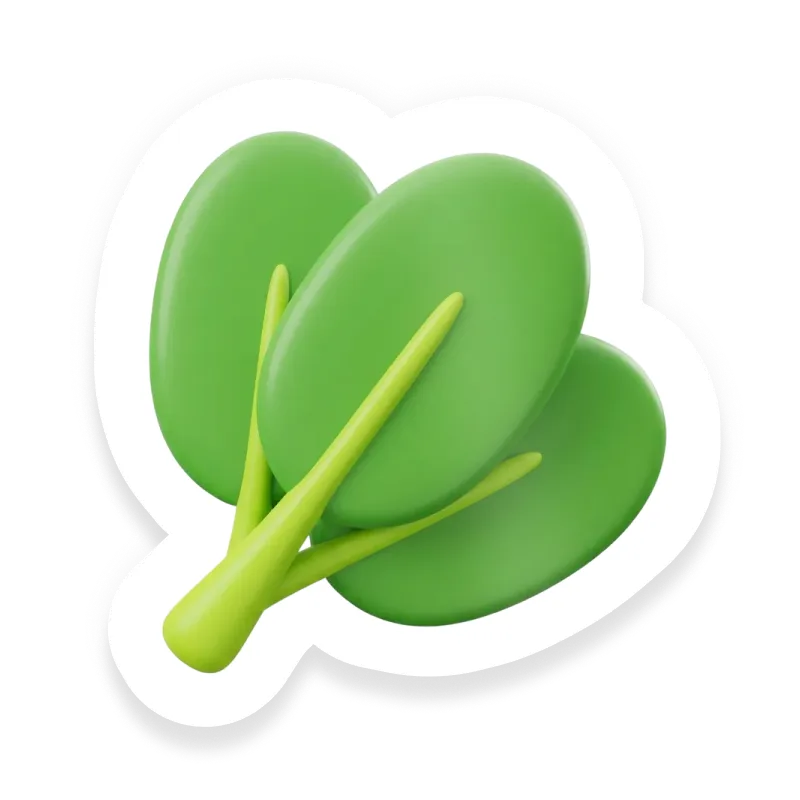
Spinach
Vegetable
Is Spinach Safe for Babies?
Yes, spinach can be introduced around 6 months of age when pureed or well-cooked to ensure it's safe and easy for babies to eat.
Yes, but there are some things to know
At a Glance
Spinach contains non-heme iron, a plant form that helps the body make healthy red blood cells. It also provides vitamin C and folate; the vitamin C helps iron absorption while folate supports cell growth.
Spinach is high in fiber and rich in magnesium, which can help soften stools and support regular bowel movements. It also contains water and plant compounds that aid gentle digestion.
How Do You Serve Spinach?
- 1Finely chop fully cooked spinach until very soft, then mix into mashed vegetables, porridge, or purees so baby can scoop and swallow easily.
- 2Fold small amounts of chopped spinach into soft finger foods like thin egg strips or tiny, well-cooked meat patties to introduce texture without large leaf pieces.
- 3Avoid offering whole leaf pieces on their own. They may cling to the tongue or roof of the mouth and make swallowing harder.
- 4Serve small portions, check the temperature, and watch while they eat to ensure pieces are small and easy to swallow.
Is Spinach a Common Allergen?
Spinach is not a common food allergen for most children, but rare allergic reactions and oral allergy syndrome (mouth itching/swelling) have been reported. For infants, spinach can contain high nitrate levels — some health agencies advise avoiding spinach/chard as baby food for very young infants (often recommending waiting until around 6–12 months or avoiding as a main baby food) because of methemoglobinemia risk; introduce small amounts of cooked, well‑washed spinach later. Always watch for signs of an allergic reaction (hives, swelling, vomiting, difficulty breathing) and seek medical care if they occur.
What Nutrients Does Spinach Have?
Spinach is nutrient-dense for babies—particularly high in vitamin K, folate, vitamin A (carotenoids) and a source of iron, vitamin C, and B vitamins that support bone, blood, growth and vision development. The iron is non-heme and partly bound by oxalates, so absorption is lower; pair cooked spinach with a vitamin C source and cook it to reduce oxalates, and avoid large-volume spinach purees or long refrigerated storage because of nitrate concerns. When offered as part of a varied diet, spinach provides valuable nutrients with few downsides, though rare allergic cross-reactions (e.g., with latex) have been reported.
Is Spinach a Choking Hazard?
Very Low Choking Risk
Spinach is generally a low choking risk for babies, but small leaf pieces—raw or cooked—can cling to the tongue or roof of the mouth and cause harmless gagging. Gagging is common and usually not dangerous, but caregivers should stay within arm’s reach and watch closely during meals. Know the signs of true choking and be prepared to act; training in infant/toddler rescue is recommended.
Have More Questions?
Yes – spinach can be stored in the refrigerator for a few days or frozen for longer storage, but fresh is best for retaining nutrients and flavor.
Yes – you can freeze spinach puree in airtight containers for up to 3 months, making it convenient to prepare baby food in advance.
Yes – choosing organic spinach reduces exposure to pesticides, but conventional spinach is also safe when properly washed and prepared for babies.
Yes – combining cooked spinach with fruit purees or cereals can enhance flavor and nutrient absorption for your baby.
Yes – standard portion sizes for babies start small, about 1-2 teaspoons, gradually increasing as your baby gets used to new textures and flavors.
Is Spinach safe for your baby?
Get personalized guidance on introducing Spinach — with prep tips, allergen alerts, and age-specific serving ideas.
Sources
- Ancuceanu et al. (2015) - A Survey of Plant Iron Content (Nutrients) doi.org
- Yadav & Sehgal (2002) - Effect of processing on iron availability (Nutrition and Health) doi.org
- Bergquist et al. (2005) - Flavonoids in Baby Spinach (Journal of Agricultural and Food Chemistry) doi.org
- Mayo Clinic - E. coli: Symptoms and Causes mayoclinic.org
- Ferrer et al. (2011) - Food allergy to spinach (Allergologia et Immunopathologia) doi.org
- Maillard et al. (2000) - Cross-allergy to latex and spinach (Acta Dermato-Venereologica) doi.org
- Sanchez et al. (1997) - Oral allergy syndrome induced by spinach (Allergy) doi.org
- Brkić et al. (2017) - Nitrate in leafy green vegetables (AJTCAM) doi.org
What Other Vegetable Can Babies Eat?
See all →
Backed by Science
Data you can trust.
Every food, guideline, and recommendation in Tummi is sourced from leading health institutions and peer-reviewed research.
 Centers for Disease Control and Prevention
Developmental milestones, nutrition guidelines, and allergen introduction timelines.
 American Academy of Pediatrics
Evidence-based feeding recommendations from the leading pediatric authority.
 National Institutes of Health
Peer-reviewed research on infant nutrition, allergies, and food safety.