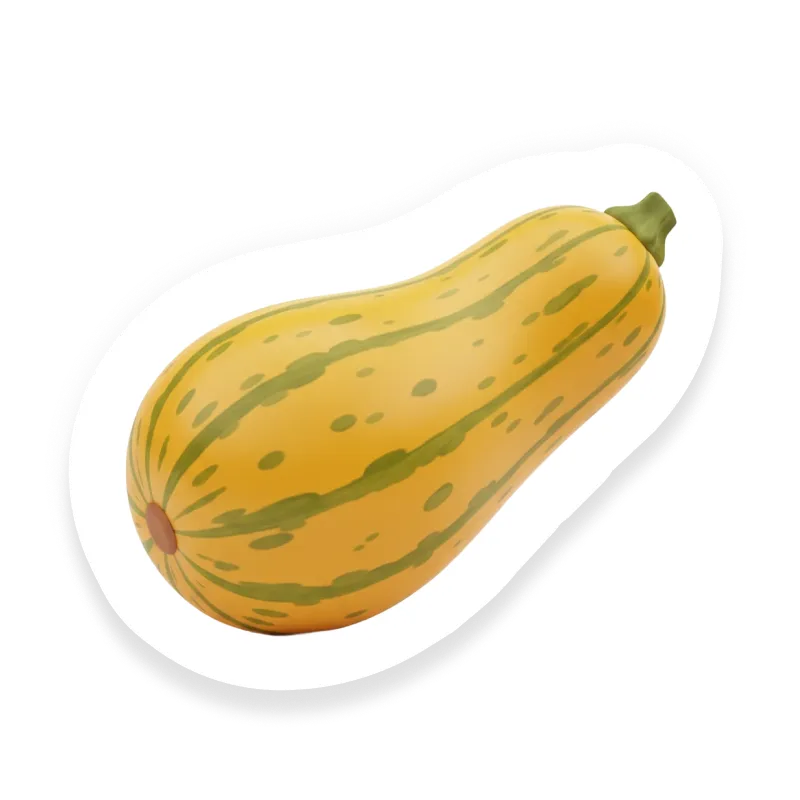
Summer Squash
Vegetable
Is Summer Squash Safe for Babies?
Yes, babies can eat cooked and pureed summer squash beginning around 6 months of age, once they are ready to start solids.
Yes, but there are some things to know
At a Glance
Summer squash has a high water content and provides a natural fiber boost, which help soften stool and keep digestion regular. It also offers potassium, vitamins and minerals that support healthy gut and normal bowel function.
How Do You Serve Summer Squash?
- 1Cook summer squash until very tender so pieces are soft and easy to mash—steam, boil, or bake for about 8–15 minutes depending on size.
- 2Serve as short spears or halved pieces that a baby can grasp; cut to a holding length and ensure all edges are soft.
- 3If pieces are slippery, add texture by rolling them in finely ground nuts, seeds, or shredded coconut, or mix shredded squash into patties, egg strips, or pancakes.
- 4Keep the skin and seeds—they soften with cooking and add nutrients—but check for any firm bits and remove them.
- 5Always supervise feeding and adjust size and texture to your baby’s chewing ability; cut or mash further if needed.
Is Summer Squash a Common Allergen?
Summer squash (e.g., zucchini) is not a common food allergen, but rare allergic reactions have been reported. Children with ragweed or birch pollen allergies can get oral allergy (mouth/throat itching) from raw summer squash—cooking often reduces this risk. If your child has a history of pollen allergies or develops hives, swelling, breathing trouble, vomiting, or other allergy symptoms after eating squash, stop feeding it and seek medical care and allergist evaluation.
What Nutrients Does Summer Squash Have?
Summer squash is high in water and provides vitamin C, beta‑carotene (a source of vitamin A), and carotenoids such as lutein and zeaxanthin that support vision and immunity, along with small amounts of fiber, B vitamins, and choline. For babies, vitamin C helps with iron absorption from plant foods and the water-plus-fiber content can aid digestive regularity; the skin contains extra nutrients, so washing rather than peeling is recommended. Overconsumption is unlikely to cause harm, though very large amounts could cause mild digestive upset or benign carotenemia (skin yellowing); introduce it as part of a varied diet and watch for rare oral allergy symptoms with raw squash.
Is Summer Squash a Choking Hazard?
Moderate Choking Risk
Summer squash is generally not a common choking hazard—its cooked flesh and soft seeds are usually easy for babies to manage. Large raw chunks, however, can be slippery and tougher to chew, and the skin may sometimes trigger gagging even though it’s not typically a true choking risk. As with any food, stay close and watch your baby during meals because any food can pose a choking risk.
Have More Questions?
Yes. Summer squash can be stored in the refrigerator, wrapped loosely in plastic or stored in a breathable bag, for up to a week.
Yes. Summer squash purees can be frozen in airtight containers or freezer bags for up to 3 months, making bulk preparation easy.
Yes. Choosing organic summer squash can reduce exposure to pesticides, but conventionally grown squash is also safe if washed thoroughly.
Yes. Combining summer squash with other veggies or proteins can introduce your baby to a variety of flavors and textures, aiding in diverse palate development.
Yes. Typical portion sizes for babies start with a few teaspoons of pureed squash, gradually increasing as they get older and more accustomed to solids.
Is Summer Squash safe for your baby?
Get personalized guidance on introducing Summer Squash — with prep tips, allergen alerts, and age-specific serving ideas.
Sources
- Carotenoids. Linus Pauling Institute lpi.oregonstate.edu
- Lee HS et al. Dietary Intake of Phytonutrients in Relation to Fruit and Vegetable Consumption in Korea (J Acad Nutr Diet, 2013) doi.org
- Fill up on phytochemicals. Harvard Health (Feb 2019) health.harvard.edu
- Allergy caused by ingestion of zucchini (Reindl et al., 2000). Journal of Allergy and Clinical Immunology pubmed.ncbi.nlm.nih.gov
- Oral Allergy Syndrome (OAS). American Academy of Allergy, Asthma & Immunology aaaai.org
- Food allergy. Mayo Clinic mayoclinic.org
What Other Vegetable Can Babies Eat?
See all →
Backed by Science
Data you can trust.
Every food, guideline, and recommendation in Tummi is sourced from leading health institutions and peer-reviewed research.
 Centers for Disease Control and Prevention
Developmental milestones, nutrition guidelines, and allergen introduction timelines.
 American Academy of Pediatrics
Evidence-based feeding recommendations from the leading pediatric authority.
 National Institutes of Health
Peer-reviewed research on infant nutrition, allergies, and food safety.