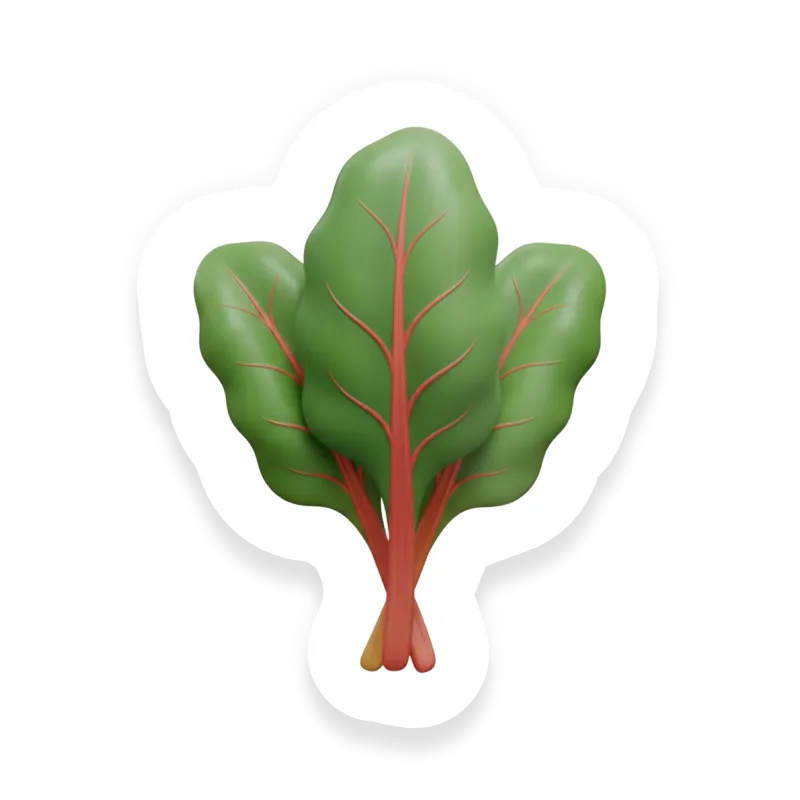
Swiss Chard
Vegetable
Is Swiss Chard Safe for Babies?
Yes, Swiss chard can be introduced around 6 months of age when your baby is ready to start solids, ensuring it's cooked and chopped finely.
Yes, but there are some things to know
At a Glance
Swiss chard is a leafy green that supplies iron and vitamin C to help the body make healthy red blood cells. It also adds leafy green iron, vitamin C boost, and gentle dietary fiber to round out family meals.
How Do You Serve Swiss Chard?
- 1Rinse leaves and stems well, then trim away thick, fibrous ribs—use only the tender leaves and thin stems for baby foods.
- 2Cook until very soft (steam, sauté, or simmer 5–15 minutes; stems may need longer), and check tenderness by squishing between fingers.
- 3Finely chop or puree to a spoonable consistency, or stir into porridges, mashed vegetables, yogurt, or fold into a frittata for soft strips.
- 4For a supervised teether, cook a whole stalk until very tender, let it cool, offer while you closely supervise, and remove immediately if any pieces break off.
Is Swiss Chard a Common Allergen?
Swiss chard is not a common food allergen for most children, but it can trigger pollen–food (oral allergy) reactions in pollen‑sensitive individuals, typically causing mild mouth or throat itching. Rare cases of respiratory reactions to cooking vapors have been reported. Check how chard is prepared (may be cooked with butter or nuts) and introduce cautiously in children with known pollen or severe food allergies; seek medical advice if mouth/throat swelling or breathing trouble occurs.
What Nutrients Does Swiss Chard Have?
Swiss chard is a nutrient-dense leafy green especially high in vitamin K and a good source of vitamin A (beta‑carotene), vitamin C, iron (non‑heme), calcium, magnesium, potassium, vitamin E and fiber — nutrients that support babies’ blood and bone health, immune function, vision, and neurodevelopment. Vitamin C in the greens helps non‑heme iron absorption, while vitamin K and calcium support healthy bone and clotting development. Risks are limited: swiss chard is high in vitamin K (relevant only for infants on blood‑thinning medications), contains nitrates and oxalates (nitrates are primarily a concern for infants under 3 months), and large amounts may cause gas or loose stools. Serve cooked and age‑appropriately in small amounts to introduce these benefits safely.
Is Swiss Chard a Choking Hazard?
Very Low Choking Risk
Swiss chard can be a choking concern mainly because its firm, fibrous stalks can be difficult for babies to chew, while bits of leaf can stick to the mouth and trigger gagging. Keep babies within arm’s reach and supervise closely during meals, and be extra cautious around stalky pieces or large leaf fragments. Know the difference between gagging and true choking and review infant choking first aid so you can respond quickly if needed.
Have More Questions?
Yes, babies can safely incorporate small amounts of swiss chard into their diet as part of a varied diet once they are ready to start solids, around 6 months old.
Yes, Swiss chard is healthy for babies as it provides essential nutrients like vitamin K, vitamin A, iron, and calcium, which support their growth and development.
No, Swiss chard is not a common food allergen for most babies, though those with pollen allergies like grass and mugwort may experience oral allergy syndrome when eating it.
Yes, the stalks of Swiss chard can be challenging for babies to chew due to their firmness, which could increase choking risk if not prepared properly.
No, there's generally no concern about nitrates in Swiss chard for most babies, as the levels are considered safe and the health benefits outweigh the risks.
Is Swiss Chard safe for your baby?
Get personalized guidance on introducing Swiss Chard — with prep tips, allergen alerts, and age-specific serving ideas.
Sources
- Mayo Clinic. E.Coli: Symptoms and Causes.
- de la Hoz, B., Fernandez-Rivas, M., Quirce, S., Cuevas, M., Fraj, J., et al. (1991). Swiss chard hypersensitivity: clinical and immunologic study. Annals of Allergy, 67(5), 487–492.
- American Academy of Allergy, Asthma, Immunology. (2019). Oral Allergy Syndrome – Pollens and Cross-Reacting Foods.
- Nowak-Wegrzyn, A. (2021). Patient Education: Oral Allergy Syndrome (Beyond the Basics).
- Brkić, D., Bošnir, J., Bevardi, M., Bošković, A. G., Miloš, S., et al. (2017). NITRATE IN LEAFY GREEN VEGETABLES AND ESTIMATED INTAKE. African journal of traditional, complementary, and alternative medicines, 14(3), 31–41. doi.org
- Preboth, M. (2005). AAP clinical report on infant methemoglobinemia. American Family Physician, 72 (12), 2558.
- European Food Safety Authority. (2017). EFSA Explains Risk Assessment: Nitrites and Nitrates Added in Food.
- Filer, L. J., Lowe, C. J., Barness, L. A., Goldbloom, R. B., Heald, F. P., et al. (1970). Infant Methemoglobinemia: The Role of Dietary Nitrate. Official Journal of The American Academy of Pediatrics, 46(3), 475-478.
What Other Vegetable Can Babies Eat?
See all →
Backed by Science
Data you can trust.
Every food, guideline, and recommendation in Tummi is sourced from leading health institutions and peer-reviewed research.
 Centers for Disease Control and Prevention
Developmental milestones, nutrition guidelines, and allergen introduction timelines.
 American Academy of Pediatrics
Evidence-based feeding recommendations from the leading pediatric authority.
 National Institutes of Health
Peer-reviewed research on infant nutrition, allergies, and food safety.