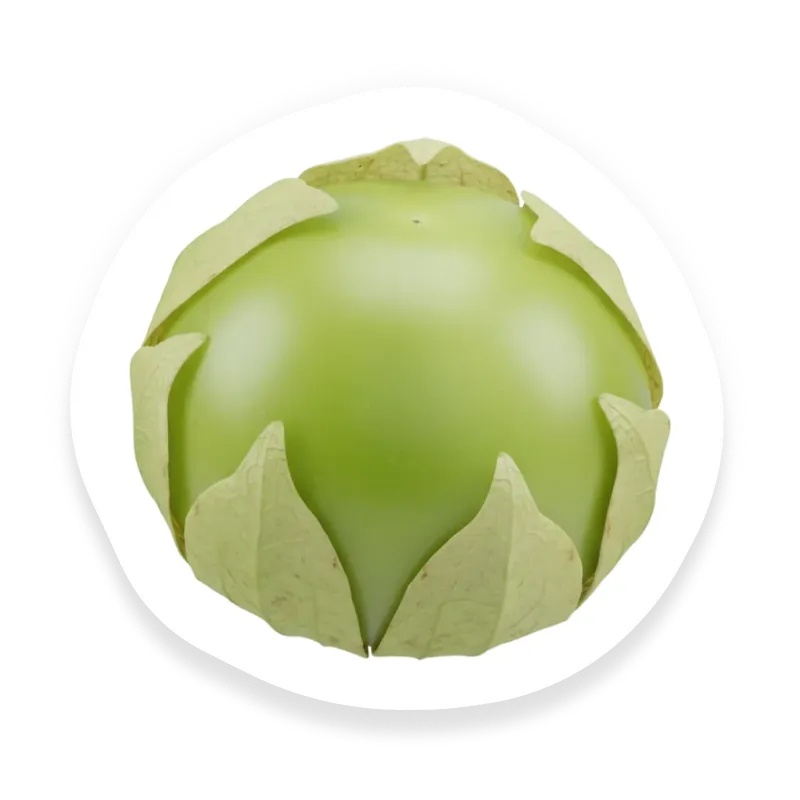
Tomatillo
Vegetable
Is Tomatillo Safe for Babies?
Yes, babies can eat cooked and pureed tomatillo starting at around 6 months, once they are ready to start solids.
Yes, but there are some things to know
At a Glance
Tomatillos are high in fiber and vitamin C, so they help nourish gut bacteria. The dietary fiber content adds bulk to stool and helps keep bowel movements regular.
How Do You Serve Tomatillo?
- 1Remove the husk and rinse tomatillos under running water to remove the sticky residue, then pat dry.
- 2Roughly chop into small pieces for saucing, or cut into halves/quarters if the fruit is large enough for grabbing.
- 3Cook until very soft — simmer in a small pot with a splash of water, or roast on a baking sheet; this mellows tartness and softens the flesh.
- 4For scoopable foods, puree or mash the cooked tomatillos into a smooth or slightly chunky sauce and mix into porridge, mashed vegetables, or bean purees.
- 5For finger-feeding, offer soft, cooked halves or quarters that fit comfortably in the baby’s mouth; always check temperature and texture before serving.
Is Tomatillo a Common Allergen?
Tomatillos are in the nightshade (Solanaceae) family and aren’t a common allergen, but people who react to tomatoes or other nightshades may also react to tomatillo. Rarely, pollen‑food (oral allergy) or typical food allergy symptoms (hives, swelling, vomiting, breathing difficulty) have been reported—watch for these signs. If your child has a known tomato/nightshade allergy, avoid tomatillo and consult an allergist before offering it. Otherwise introduce it cautiously and seek medical care for any concerning reactions.
What Nutrients Does Tomatillo Have?
Tomatillos provide fiber, potassium and vitamins B6, C, and K—nutrients that support digestion and gut health, hydration and electrolyte balance, iron absorption, immunity, and bone development. Offer in small, age‑appropriate portions (cooked/mashed or sauced for young infants) since the fruit’s acidity can cause mild mouth or diaper irritation and large amounts may lead to loose stools. Tomatillos are not a common allergen but do not supply significant iron, so continue to include iron-rich foods in baby’s diet.
Is Tomatillo a Choking Hazard?
Elevated Choking Risk
Tomatillos can be a choking hazard because when raw or undercooked they’re firm, slippery, and sometimes small, which increases the risk of choking. Keep a close watch and stay within arm’s reach of your baby during meals so you can respond quickly if choking or gagging occurs. Make sure you and caregivers know basic infant choking first aid and have a plan in case of emergency.
Have More Questions?
Yes, parents can store leftover cooked tomatillo in an airtight container in the refrigerator for up to 2 days, but it’s best to serve fresh for optimal flavor and texture.
Yes, you can freeze pureed tomatillo in ice cube trays for easy portioning and up to 3 months, making meal prep more convenient.
It depends. Opt for organic tomatillos when possible to avoid pesticides, especially as babies are more sensitive to chemical residues.
Yes, you can combine cooked or pureed tomatillo with other baby foods like avocado, chicken, or rice to create balanced, nutritious meals.
For babies starting solids around 6 months, serve small portions, about 1-2 teaspoons, increasing gradually based on appetite and tolerance.
Is Tomatillo safe for your baby?
Get personalized guidance on introducing Tomatillo — with prep tips, allergen alerts, and age-specific serving ideas.
Sources
- M302 TOMATILLO ALLERGY: A UNIQUE CASE (Annals of Allergy, Asthma & Immunology, 2020) annallergy.org
- ACAAI 2015 Program Guide (Annual Scientific Meeting abstracts, includes 'A unique case of anaphylaxis to tomatillo') college.acaai.org
What Other Vegetable Can Babies Eat?
See all →

Backed by Science
Data you can trust.
Every food, guideline, and recommendation in Tummi is sourced from leading health institutions and peer-reviewed research.
 Centers for Disease Control and Prevention
Developmental milestones, nutrition guidelines, and allergen introduction timelines.
 American Academy of Pediatrics
Evidence-based feeding recommendations from the leading pediatric authority.
 National Institutes of Health
Peer-reviewed research on infant nutrition, allergies, and food safety.