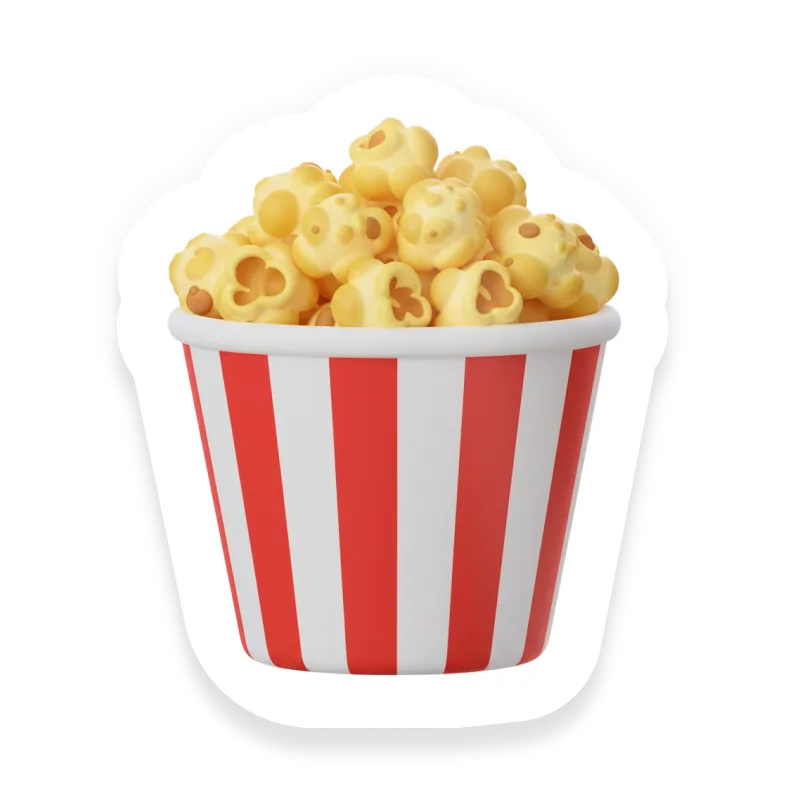
Popcorn
Grain
Is Popcorn Safe for Babies?
No, popcorn should not be given to babies due to choking hazards; wait until they are at least 4-5 years old and can chew and swallow safely.
Yes, but there are some things to know
At a Glance
Air-popped popcorn is a whole grain snack high in fiber, which helps support healthy digestion and regular bowel movements. It also contains natural antioxidants called polyphenols, and when made with little added fat or salt it’s a low calorie option that helps kids feel full between meals.
How Do You Serve Popcorn?
- 1Offer popcorn only when the child reliably chews well and can eat small, firm pieces safely; always have them seated and attentive.
- 2Remove and discard unpopped or hard kernels and any stale pieces—hard pieces are choking hazards.
- 3Avoid powdery or finely ground seasonings that can be inhaled; choose light coatings like a small amount of melted butter or olive oil instead.
- 4Serve in small portions, encourage slow, small bites, and remain within arm’s reach to supervise every bite.
Is Popcorn a Common Allergen?
Plain air-popped popcorn is made from corn and is not typically a source of the major allergens (milk, egg, fish, shellfish, peanut, tree nuts, wheat/gluten, soy), but corn allergy, while rare, is possible. Flavored, pre‑packaged or microwave popcorn often contains or is processed near dairy (butter/cheese), soy (lecithin), wheat/gluten, and tree nuts/peanuts—always read ingredient and “may contain”/facility statements or contact the manufacturer. Cross‑contact during production can occur, so verify labels for allergy-sensitive individuals. Also note popcorn is a choking hazard for young children (typically under 4 years).
What Nutrients Does Popcorn Have?
Popcorn is a whole grain that provides carbohydrates and dietary fiber and contains small amounts of B vitamins (e.g., niacin), magnesium, zinc, and polyphenol antioxidants. These nutrients support energy, digestion/gut health, and general growth and resilience, but popcorn is not a meaningful source of protein or many micronutrients compared with other baby foods. The main risks are not nutrient-related: popcorn is a high choking hazard for babies and young toddlers, and excess sodium or butter on popcorn is the primary concern if served to older children. Corn allergy is uncommon but possible; introduce cautiously and watch for reactions.
Is Popcorn a Choking Hazard?
Moderate Choking Risk
Popcorn is a common choking and aspiration hazard for babies and young children. It’s safest to avoid offering popcorn until a child demonstrates mature eating skills—many children aren’t ready until around 24–36 months, and the American Academy of Pediatrics considers popcorn high‑risk for those under 4. If you introduce it later, stay close and attentive and be prepared to respond immediately if choking occurs.
Have More Questions?
It depends. Due to high choking risk, popcorn is generally not recommended for babies under 4 years old, and even then, only when they can chew thoroughly and eat safely.
Yes, popcorn is a whole grain that can be part of a balanced diet for toddlers, but it should be served cautiously and in age-appropriate ways to minimize choking hazards.
No, popcorn is not considered a common allergen, but corn allergies are rare and possible. Always check ingredient labels for added allergens.
Yes, popcorn poses a significant choking hazard for babies and young children, especially if the kernels are unpopped or only partially popped.
It depends. For safety, choose hull-less or fully popped popcorn, and serve in small, manageable pieces only when your child is developmentally ready for it.
Is Popcorn safe for your baby?
Get personalized guidance on introducing Popcorn — with prep tips, allergen alerts, and age-specific serving ideas.
Sources
- Analysis of Popcorn (Zea Mays L. var. everta) for Antioxidant Capacity and Total Phenolic Content mdpi.com
- Maize food allergy: a double-blind placebo-controlled study onlinelibrary.wiley.com
- Other Food Allergens - Food Allergy Research & Education foodallergy.org
- The maize major allergen, which is responsible for food-induced allergic reactions, is a lipid transfer protein pubmed.ncbi.nlm.nih.gov
- Chitinases as Food Allergens mdpi.com
- Immunologic cross-reactivity among cereal grains and grasses in children with food hypersensitivity pubmed.ncbi.nlm.nih.gov
- Foreign body aspiration in infants and toddlers: recent trends in British Columbia pubmed.ncbi.nlm.nih.gov
- Rigid tracheobronchoscopy in the management of airway foreign bodies: 10 years experience in Kosovo pubmed.ncbi.nlm.nih.gov
- Foreign body in the tracheobronchial tree pubmed.ncbi.nlm.nih.gov
What Other Grain Can Babies Eat?
See all →
Backed by Science
Data you can trust.
Every food, guideline, and recommendation in Tummi is sourced from leading health institutions and peer-reviewed research.
 Centers for Disease Control and Prevention
Developmental milestones, nutrition guidelines, and allergen introduction timelines.
 American Academy of Pediatrics
Evidence-based feeding recommendations from the leading pediatric authority.
 National Institutes of Health
Peer-reviewed research on infant nutrition, allergies, and food safety.