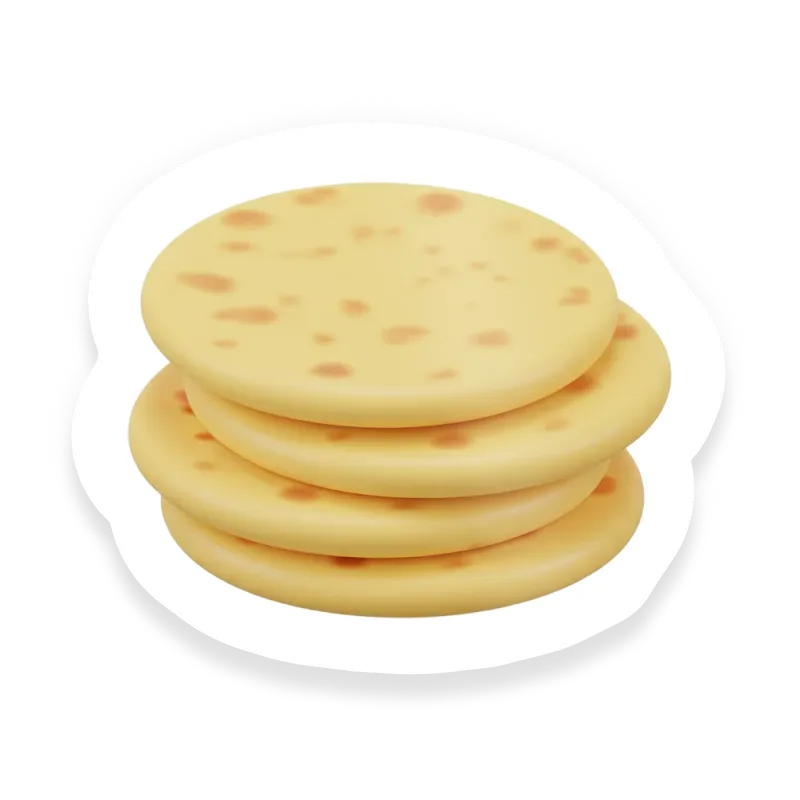
Tortilla
Grain
Is Tortilla Safe for Babies?
Yes, soft corn tortillas can be introduced around 6 months when starting solids; wait until after one year for wheat varieties.
Yes, but there are some things to know
At a Glance
Tortillas made from whole grains or corn provide fiber and resistant starch that feed good bacteria. That fiber also helps with regular bowel movements so kids stay comfortable.
Tortillas make a simple, quick snack and can provide whole grain fiber and B vitamins when made from whole wheat or nixtamalized corn. However, some people react to wheat protein gluten or other cereal proteins, so tortillas may trigger allergic responses in sensitive individuals.
How Do You Serve Tortilla?
- 1Cut a soft corn tortilla into halves or long strips about the width of two adult fingers so the baby can easily grasp and gnaw.
- 2If the tortilla is dry, briefly steam it or hold it in warm (not hot) broth for a few seconds to soften; avoid hot liquids that could burn.
- 3For easier eating, shred or finely cut the tortilla and fold it into scoopable foods like mashed beans so pieces stay moist and are easy to pick up.
- 4Always supervise while feeding and check each piece for softness and appropriate size to reduce choking risk.
Is Tortilla a Common Allergen?
This tortilla contains gluten and is not suitable for children with celiac disease or gluten sensitivity. It does not list milk, eggs, soy, peanuts, tree nuts, sesame, fish, or shellfish as allergens based on the provided data, but always check the product label for added ingredients or cross-contamination warnings. For those avoiding gluten, choose corn tortillas or products labeled certified gluten-free. When in doubt, contact the manufacturer for ingredient and allergen handling details.
What Nutrients Does Tortilla Have?
Soft corn tortillas are primarily a source of carbohydrates (quick energy) with small amounts of protein and fiber; nixtamalized corn tortillas also supply B‑vitamins (niacin, thiamine, riboflavin), calcium, and resistant starch that can act as a prebiotic. Wheat/flour tortillas are often enriched with iron and B‑vitamins but may be lower in fiber and higher in sodium. For babies, tortillas offer energy, some micronutrients, and fiber that can support growth and the gut microbiome when offered in age‑appropriate textures and portions; however, excessive intake can displace other nutrient‑dense foods and packaged tortillas can add too much sodium. Note: wheat is a common allergen and grain‑free varieties may contain other allergens—read labels and introduce new grains carefully.
Is Tortilla a Choking Hazard?
Low Choking Risk
Soft tortillas present a low choking risk for babies when matched to their developmental chewing skills, but any food can pose a risk if a child isn’t developmentally ready. Crispy or brittle tortillas and tortilla chips are choking hazards for younger children and are best reserved for older kids with more mature eating skills. Always keep your child seated and within arm’s reach during meals, watch closely for signs of choking or gagging, and be familiar with infant/toddler choking first aid.
Have More Questions?
Yes. It's generally safe to freeze tortillas for later use, but avoid freezing freshly steamed or hot tortillas to prevent moisture buildup; wrap them tightly or store in air-tight containers.
Yes. To store safely, place pureed or mashed tortillas in airtight containers or freezer bags, remove excess air, and label with date to prevent freezer burn and ensure freshness.
It depends. Organic tortillas may have fewer pesticides and synthetic additives, but conventional tortillas are often more affordable. Check product labels to compare ingredients and standards.
Yes. Combining tortillas with pureed vegetables, beans, or proteins can provide balanced nutrition and introduce your baby to new flavors; ensure textures are appropriate for your baby's stage.
For babies starting solids around 6 months, serving small, age-appropriate portions—such as torn or cut tortillas—about 1-2 times daily is recommended, gradually increasing as tolerated.
Is Tortilla safe for your baby?
Get personalized guidance on introducing Tortilla — with prep tips, allergen alerts, and age-specific serving ideas.
Sources
- Food Allergy Research & Education — Wheat Allergy foodallergy.org
- American College of Allergy, Asthma & Immunology — Wheat Allergy acaai.org
- Kashyap RR & Kashyap RS (2015) — Oral Allergy Syndrome: An Update for Stomatologists doi.org
- Feldweg AM (2017) — Food-Dependent, Exercise-Induced Anaphylaxis doi.org
- Scibilia J et al. (2008) — Maize food allergy: a double-blind placebo-controlled study doi.org
- Blackman AC et al. (2019) — Emerging triggers of food protein-induced enterocolitis syndrome doi.org
- Mehr S & Campbell DE (2019) — Food protein-induced enterocolitis syndrome: guidelines summary and practice recommendations doi.org
What Other Grain Can Babies Eat?
See all →
Backed by Science
Data you can trust.
Every food, guideline, and recommendation in Tummi is sourced from leading health institutions and peer-reviewed research.
 Centers for Disease Control and Prevention
Developmental milestones, nutrition guidelines, and allergen introduction timelines.
 American Academy of Pediatrics
Evidence-based feeding recommendations from the leading pediatric authority.
 National Institutes of Health
Peer-reviewed research on infant nutrition, allergies, and food safety.