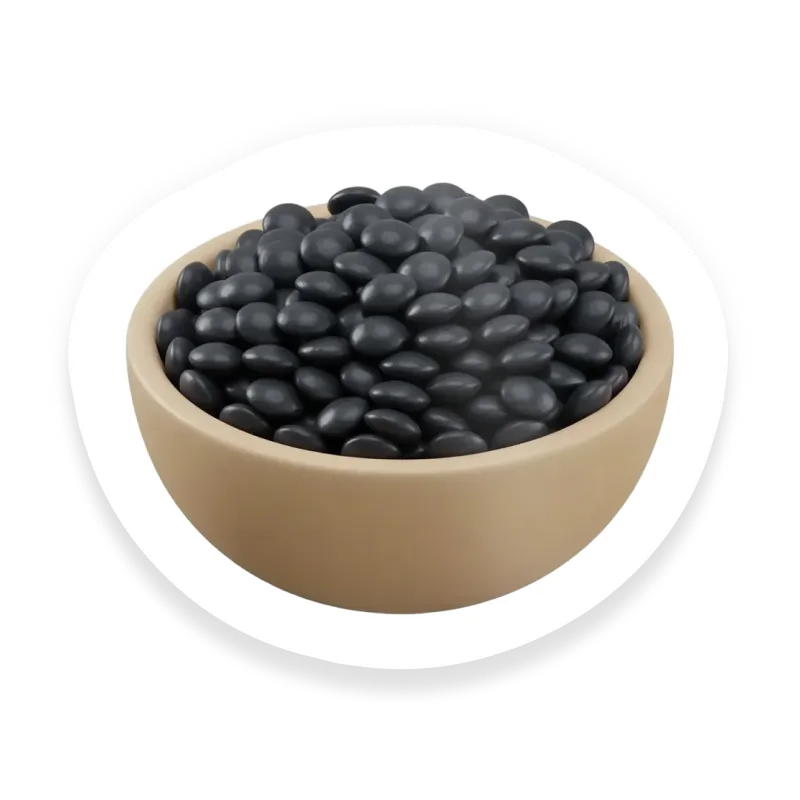
Black Lentils
Legume
Is Black Lentils Safe for Babies?
Yes, black lentils can be introduced around 6 months, cooked until soft and pureed for babies starting solids.
Yes, but there are some things to know
At a Glance
Black lentils are rich in iron, supplying several milligrams per serving mainly as non-heme iron that helps make healthy red blood cells. They also provide protein and folate, plus fiber, which support overall nutrition and help the body use iron.
Black lentils are rich in fiber and contain resistant starch, which adds bulk and helps keep stools soft. Their prebiotic carbohydrates and oligosaccharides feed gut microbes, supporting regular digestion and nutrient absorption.
How Do You Serve Black Lentils?
- 1Rinse and sort black lentils under cold water to remove dust or debris before cooking.
- 2Cook in plenty of water (or pressure-cook) until the lentils are falling apart and very soft—stovetop usually takes ~20–30 minutes depending on size.
- 3Mash or puree to a smooth, lump-free consistency, then thin with breastmilk, formula, or reserved cooking liquid until the spoon glides off easily.
- 4Offer small spoonfuls while the child is seated upright, let them set the pace, and pause between bites to reduce choking risk.
- 5Cool leftovers quickly and refrigerate within 2 hours, use within 48 hours, avoid adding salt, sugar, or honey, and watch for any signs of intolerance (rash, vomiting, diarrhea).
Is Black Lentils a Common Allergen?
Black lentils are not sources of top‑9 allergens like dairy, egg, fish, shellfish, sesame or gluten, but they are legumes and can cause true allergic reactions in some people. Children with peanut or other legume allergies may react to lentils due to cross‑reactivity, so introduce them cautiously and consult an allergist if there is a known legume allergy. Always read labels for added ingredients or warnings about cross‑contact during processing. For infants and toddlers, cook lentils until very soft and mash or puree to reduce choking risk.
What Nutrients Does Black Lentils Have?
Black lentils are a particularly iron-rich, protein-packed legume that also supplies folate, zinc, potassium and B vitamins—nutrients important for infant growth, brain development and red blood cell production. Their fiber supports healthy digestion (hence ‘poop-friendly’), but the iron is non-heme, so pair lentils with vitamin C–rich foods to boost absorption. Serve well-cooked and mashed or pureed from around 6 months; large portions can cause gas or, if relied on exclusively, very high fiber may slightly reduce mineral uptake, so balance with varied complementary foods. Not a common allergen.
Is Black Lentils a Choking Hazard?
Very Low Choking Risk
Well-cooked black lentils are generally soft and pose a low choking risk, but whole, undercooked, or very firm lentils can be a choking hazard because of their small, round shape. Always supervise infants closely while they eat and be alert for coughing, gagging, or changes in breathing; seek immediate help if choking occurs. Take extra caution with babies who are still learning to chew.
Have More Questions?
Yes. Black lentils can be beneficial for babies as they are rich in iron, protein, and fiber, supporting growth and development when introduced appropriately.
It depends. Black lentils are not classified as a common allergen but can cause allergic reactions in some children, especially those allergic to other legumes.
Yes. When prepared and served in an age-appropriate way, black lentils are low risk for choking, but always supervise feeding and serve in a suitable texture.
It depends. Black lentils are whole and retain their hulls, giving them a firmer texture compared to split lentils, which makes them suitable for different meal types.
Yes. Black lentils can be stored in an airtight container in a cool, dry place for several months, and can be frozen for longer storage if needed.
Is Black Lentils safe for your baby?
Get personalized guidance on introducing Black Lentils — with prep tips, allergen alerts, and age-specific serving ideas.
Sources
- USDA FoodData Central fdc.nal.usda.gov
- Food Sources of Iron - Dietary Guidelines for Americans dietaryguidelines.gov
- 6 months - Feeding your baby - Best Start in Life - NHS nhs.uk
What Other Legume Can Babies Eat?
See all →

Backed by Science
Data you can trust.
Every food, guideline, and recommendation in Tummi is sourced from leading health institutions and peer-reviewed research.
 Centers for Disease Control and Prevention
Developmental milestones, nutrition guidelines, and allergen introduction timelines.
 American Academy of Pediatrics
Evidence-based feeding recommendations from the leading pediatric authority.
 National Institutes of Health
Peer-reviewed research on infant nutrition, allergies, and food safety.