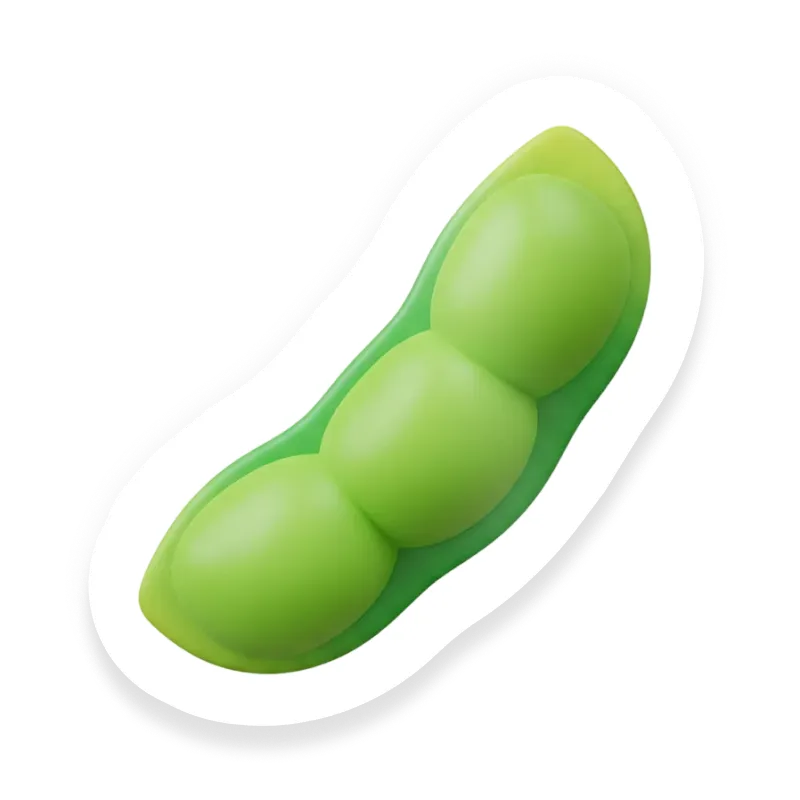
Edamame
Legume
Is Edamame Safe for Babies?
Yes, babies can eat edamame starting at around 6 months old, prepared appropriately to prevent choking.
Yes, but there are some things to know
At a Glance
Edamame is a good plant based source of iron and folate that helps the body make red blood cells. It also provides protein and fiber to support muscles and digestion.
Edamame is high in fiber, with one cup cooked providing about 8 grams. This fiber adds bulk and acts as a mild prebiotic, helping the gut move things along more easily.
Edamame comes from soybeans, which can cause allergic reactions in people who are sensitive to soy. It is also high in protein, high in fiber, and rich in folate, giving plant nutrients and isoflavones that support heart and bone health.
How Do You Serve Edamame?
- 1Cook shelled edamame (boil or steam) until very tender, about 5–8 minutes, then drain and cool slightly.
- 2Remove any skins if needed and mash or puree until completely smooth to eliminate choking risk.
- 3Thin the mash gradually with breast milk, formula, a little olive oil, or warm water until spoonable.
- 4Serve plain (no added salt or seasonings) as a dip or spread on toast strips, crackers, or other age-appropriate foods; check temperature and offer a small amount first to monitor for allergic reactions.
Is Edamame a Common Allergen?
Edamame are immature soybeans and contain soy protein — avoid if your child has a soy allergy. Packaged or seasoned edamame may include added ingredients or be processed in facilities with other allergens (e.g., wheat/gluten, dairy, sesame, nuts), so always check product labels. Serve shelled (and cut for very young children) to reduce choking risk.
What Nutrients Does Edamame Have?
Nutrient Snapshot: Edamame is nutrient-dense for babies — a good source of plant protein, fiber, iron, folate, choline, vitamin B6, zinc and plant-based omega-3s, which support growth, brain development, digestion and immunity. Pair with a vitamin C–rich food to boost iron absorption. Note soy is a common allergen; serve in age-appropriate forms and avoid over-relying on soy so it doesn’t displace other foods (phytoestrogens are not a concern at typical intake).
Is Edamame a Choking Hazard?
High Choking Risk
Edamame is round, firm, and slippery, which makes it a higher choking risk for infants and toddlers. Stay within arm’s reach and closely supervise any child eating edamame, watching for gagging or signs of choking. Ensure caregivers are familiar with infant choking first aid before offering this food.
Have More Questions?
Yes. Edamame can be stored in the refrigerator for up to 2-3 days once cooked, but it is best to serve fresh or properly cooled to ensure safety and quality.
Yes. Edamame puree can be frozen in airtight containers for up to 3 months, making it convenient to prepare in batches.
It depends. Organic edamame may have fewer pesticides, but conventionally grown edamame is also safe; choose based on your preference and organic availability.
Yes. Combining edamame with vegetables like carrots or sweet potatoes can diversify your baby's diet and boost nutrient variety.
It depends. Appropriate portion sizes vary; generally, offering small servings (1-2 tablespoons) tailored to your baby’s age and appetite is best.
Is Edamame safe for your baby?
Get personalized guidance on introducing Edamame — with prep tips, allergen alerts, and age-specific serving ideas.
Sources
- The natural history of soy allergy — Savage JH et al. (2010). The Journal of Allergy and Clinical Immunology doi.org
- Food protein-induced enterocolitis syndrome and allergic proctocolitis — Nowak-Węgrzyn A. (2015). Allergy Asthma Proc. doi.org
- Phytoestrogens and Their Health Effect — Desmawati & Sulastri (2019). Open Access Macedonian Journal of Medical Sciences doi.org
- The potential health effects of dietary phytoestrogens — Rietjens I. et al. (2017). British Journal of Pharmacology doi.org
- The health effects of soy: A reference guide for health professionals — Messina M. et al. (2022). Frontiers in Nutrition doi.org
What Other Legume Can Babies Eat?
See all →



Backed by Science
Data you can trust.
Every food, guideline, and recommendation in Tummi is sourced from leading health institutions and peer-reviewed research.
 Centers for Disease Control and Prevention
Developmental milestones, nutrition guidelines, and allergen introduction timelines.
 American Academy of Pediatrics
Evidence-based feeding recommendations from the leading pediatric authority.
 National Institutes of Health
Peer-reviewed research on infant nutrition, allergies, and food safety.