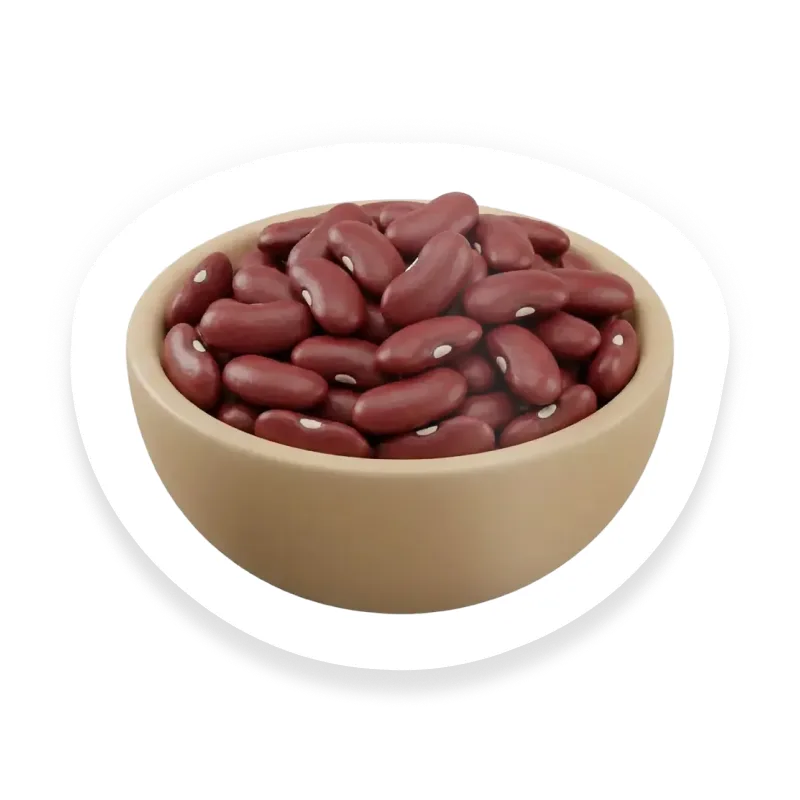
Kidney Beans
Legume
Is Kidney Beans Safe for Babies?
Yes, kidney beans can be introduced to babies as early as 6 months, when they are properly cooked and pureed for easy consumption.
Yes, but there are some things to know
At a Glance
Kidney beans are a good plant source of iron and provide fiber and protein to support growth and steady energy. The iron they contain is the non‑heme type, so eating them with vitamin C–rich foods (like orange slices or peppers) helps your body absorb it better.
Kidney beans are high in fiber, which adds bulk and helps keep bowel movements regular. They also contain resistant starch and plant protein that feed gut bacteria and support healthy digestion.
How Do You Serve Kidney Beans?
- 1Mash or blend fully cooked kidney beans into a smooth puree for first tastes, or leave a slightly thicker, spoonable mash as skills develop.
- 2Thin with breast milk, formula, plain full-fat yogurt, or a little oil or butter until it reaches an easy-to-scoop consistency.
- 3Offer very small amounts on a pre-loaded spoon or spread thinly onto another soft food so baby can practice feeding and mouth coordination.
- 4Start with tiny tastes and increase portions gradually, watching for digestive upset and stopping if vomiting, diarrhea, or a rash occurs.
Is Kidney Beans a Common Allergen?
Kidney beans are a legume and aren’t among the common major allergens for most children, but some people—especially those with legume or peanut allergies—can react to them. Cross‑reactions with other legumes are uncommon but possible, so introduce slowly and watch for hives, swelling, vomiting, or breathing difficulty. Raw or undercooked kidney beans contain a lectin (phytohaemagglutinin) that can cause significant stomach upset—always cook beans thoroughly. For infants, serve well‑cooked, mashed or pureed beans after other solids are tolerated and seek medical advice if you suspect an allergic reaction.
What Nutrients Does Kidney Beans Have?
Kidney beans are nutrient-dense for babies—good sources of protein, fiber, iron, folate, calcium, choline, potassium, selenium, zinc, and vitamins B6 and K, which support growth, neurodevelopment, red blood cell formation, bone health, and a healthy gut microbiome. They’re especially valuable as a plant-based source of iron and protein; serve with vitamin C–rich foods (e.g., bell pepper, tomato) to boost iron absorption. Introduce beans gradually and in age-appropriate textures; large portions can cause gas or fullness, and undercooked beans contain lectins (phytohemagglutinin), so always serve fully cooked or canned beans.
Is Kidney Beans a Choking Hazard?
Elevated Choking Risk
Kidney beans are small, rounded, and can be firm, which increases their choking risk for babies. Always stay within an arm’s reach and closely supervise babies when beans are offered, and make sure caregivers know the signs of choking and how to perform infant choking first aid. If you’re unsure, have a trained responder nearby or take a refresher course in Infant Rescue.
Have More Questions?
Yes. To serve kidney beans to babies, ensure they are thoroughly cooked to destroy toxins, and mash or puree them to a suitable consistency based on your baby's developmental stage.
It depends. Canned kidney beans are pre-cooked and safe to serve after draining and rinsing, but always check for any signs of spoilage before serving.
Yes. Cooked kidney beans can be stored in an airtight container in the refrigerator for up to 3-4 days, making them convenient for baby food prep.
It depends. Freezing cooked pureed kidney beans is safe and extends shelf life, but make sure to use airtight containers and thaw thoroughly before feeding.
It varies, but typically a tablespoon or two of cooked beans per serving is enough for a toddler, depending on their age and dietary needs.
Is Kidney Beans safe for your baby?
Get personalized guidance on introducing Kidney Beans — with prep tips, allergen alerts, and age-specific serving ideas.
Sources
- A case of severe anaphylaxis to kidney bean: phaseolin (vicilin) and PHA (lectin) identified as putative allergens. doi.org
- Managing Cross-Reactivity in Those with Peanut Allergy. doi.org
- Cross-reactivity of peanut allergens. doi.org
- Oral Allergy Syndrome: An Update for Stomatologists. doi.org
- Impact of chronic ingestion of white kidney beans on small-intestinal disaccharidase activity. doi.org
- Bioactive constituents in pulses and their health benefits. doi.org
- Effect of household cooking methods on nutritional and anti nutritional factors in green cowpea pods. doi.org
- Soaking the common bean reduced contents of raffinose-type oligosaccharides. doi.org
- A review of the impact of preparation and cooking on the nutritional quality of vegetables and legumes. doi.org
- Lectins. Harvard T.H. Chan School of Public Health. hsph.harvard.edu
What Other Legume Can Babies Eat?
See all →
Backed by Science
Data you can trust.
Every food, guideline, and recommendation in Tummi is sourced from leading health institutions and peer-reviewed research.
 Centers for Disease Control and Prevention
Developmental milestones, nutrition guidelines, and allergen introduction timelines.
 American Academy of Pediatrics
Evidence-based feeding recommendations from the leading pediatric authority.
 National Institutes of Health
Peer-reviewed research on infant nutrition, allergies, and food safety.