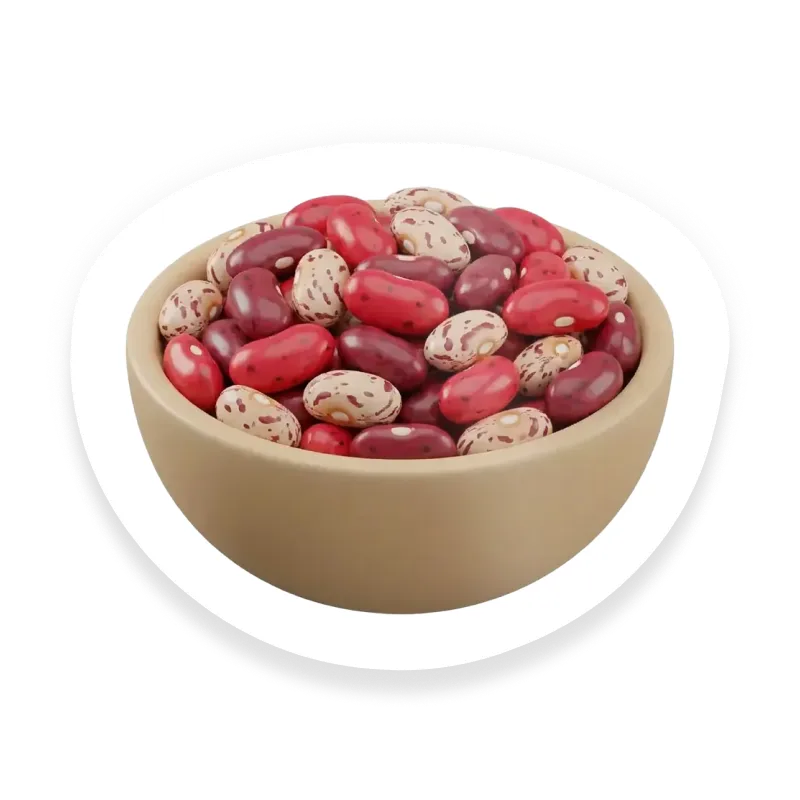
Cranberry Bean
Legume
Is Cranberry Bean Safe for Babies?
Yes, cranberry beans can be introduced to babies around 6 months old, prepared thoroughly and served in an age-appropriate manner.
Yes, but there are some things to know
At a Glance
Cranberry beans are rich in iron and also supply folate and copper, nutrients that help make healthy red blood cells. Their fiber and protein also make them a good plant protein choice for family meals.
Cranberry beans are a gentle choice for digestion because they are high in fiber, which adds bulk and helps food move through the gut. They also contain resistant starch and oligosaccharides that support gut bacteria, while providing protein and iron for balanced nutrition.
How Do You Serve Cranberry Bean?
- 1Mash fully cooked cranberry beans until smooth or leave a slight texture; thin with breastmilk, formula, olive oil, or plain yogurt to reach a soft, spoonable consistency.
- 2If bean skins are noticeable, strain or pick them out to reduce choking risk. Ensure no whole beans remain.
- 3Offer a very small taste first (a teaspoon) and slowly increase serving size while watching for digestive changes or allergic reactions.
- 4Serve from a pre-loaded spoon or spread a thin layer on a teething rusk and allow supervised self-feeding; always keep the baby sitting upright and closely supervised.
Is Cranberry Bean a Common Allergen?
Cranberry beans are a common bean (legume) and themselves don’t contain dairy, egg, fish, shellfish, tree nuts, sesame, or gluten. Because they’re legumes, children with known peanut or soy allergies may rarely react or show cross‑reactivity—check with your allergist before introducing if your child has legume allergies. Cook dried beans thoroughly (soak and boil until soft) to destroy lectins (phytohaemagglutinin), and avoid giving whole hard beans to young children because of choking risk. Also review packaging for any cross‑contact warnings (shared equipment) before serving.
What Nutrients Does Cranberry Bean Have?
Cranberry beans are nutrient-dense for babies—rich in plant protein, iron, fiber, and key micronutrients including zinc, folate, choline, and vitamin B6—which support healthy blood formation, immune function, and brain development. Their fiber and antioxidant content also aid digestion and cellular resilience; soaking and thorough cooking improves digestibility and reduces lectins and gas-producing raffinose. Overconsumption is unlikely to cause nutrient toxicity, but beans can cause gas and, due to phytates, modestly reduce mineral absorption—serve in age-appropriate portions, introduce slowly, and use soaking/cooking to minimize anti-nutrients.
Is Cranberry Bean a Choking Hazard?
Very Low Choking Risk
Cranberry beans are small, rounded, and can be firm, which raises their choking risk for babies. Always stay within arm’s reach and closely supervise infants during meals, since whole or firm beans can block an airway. Be prepared by knowing infant choking first aid and keeping emergency contacts handy.
Have More Questions?
Yes. Cranberry beans are generally safe for babies and can be introduced once they start solids around 6 months, provided they are cooked thoroughly and served in age-appropriate textures.
Yes. Cranberry beans are rich in iron, fiber, and essential micronutrients, making them a nutritious addition to a growing child's diet.
No. Cranberry beans are not a common allergen, but some children allergic to other legumes like peanuts or soy might also react. Always start with small amounts and watch for reactions.
Yes. Cool, cooked cranberry beans can pose a choking risk due to their size and texture, so they should be served mashed or in very small, soft pieces.
It depends. Soaking dried cranberry beans can reduce certain compounds like lectins and improve digestibility, but they are not strictly necessary if the beans are cooked thoroughly.
Is Cranberry Bean safe for your baby?
Get personalized guidance on introducing Cranberry Bean — with prep tips, allergen alerts, and age-specific serving ideas.
Sources
- Hilger et al. (2015). Micronutrient Intake in Healthy Toddlers: A Multinational Perspective. Nutrients. doi.org
- Ganesan & Xu (2017). Polyphenol-Rich Dry Common Beans (Phaseolus vulgaris L.) and Their Health Benefits. International Journal of Molecular Sciences. doi.org
- Singh et al. (2017). Phenolic composition and antioxidant potential of grain legume seeds: A review. Food Research International. doi.org
- Chan et al. (2019). Managing Cross-Reactivity in Those with Peanut Allergy. The Journal of Allergy and Clinical Immunology: In Practice. doi.org
- Bublin & Breiteneder (2014). Cross-reactivity of peanut allergens. Current Allergy and Asthma Reports. doi.org
- Kashyap & Kashyap (2015). Oral Allergy Syndrome: An Update for Stomatologists. Journal of Allergy. doi.org
- Queiroz et al. (2002). Soaking the common bean in a domestic preparation reduced the contents of raffinose-type oligosaccharides. J Nutr Sci Vitaminol (Tokyo). doi.org
- Grases et al. (2006). Renal lithiasis and nutrition. Nutrition Journal. doi.org
- Chitra et al. (1996). Phytic acid, in vitro protein digestibility... Plant Foods for Human Nutrition. doi.org
- Singh et al. (2017). Bioactive constituents in pulses and their health benefits. Journal of Food Science and Technology. doi.org
- National Health Service. Oral allergy leaflet. ouh.nhs.uk
What Other Legume Can Babies Eat?
See all →
Backed by Science
Data you can trust.
Every food, guideline, and recommendation in Tummi is sourced from leading health institutions and peer-reviewed research.
 Centers for Disease Control and Prevention
Developmental milestones, nutrition guidelines, and allergen introduction timelines.
 American Academy of Pediatrics
Evidence-based feeding recommendations from the leading pediatric authority.
 National Institutes of Health
Peer-reviewed research on infant nutrition, allergies, and food safety.