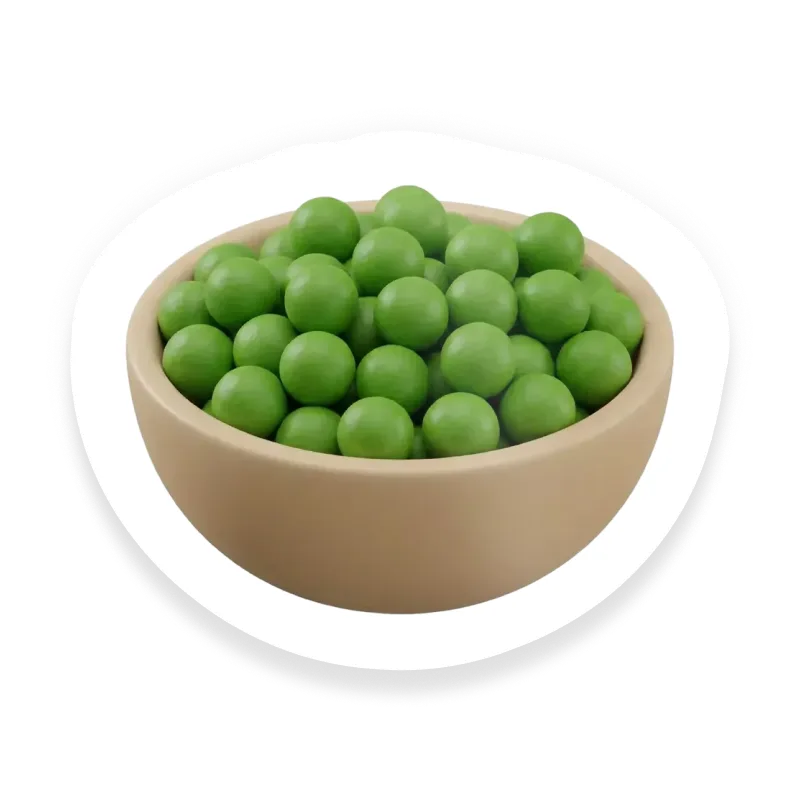
Peas (Garden)
Legume
Is Peas (Garden) Safe for Babies?
Yes, babies can eat peas starting at 6 months, but serve them cooked and mashed to prevent choking hazards.
Yes, but there are some things to know
At a Glance
Peas are high in fiber and contain resistant starch, which helps soften stools and keeps digestion moving. That fiber also acts as a prebiotic and supports gut bacteria, producing short‑chain fatty acids that nourish the gut lining.
How Do You Serve Peas (Garden)?
- 1Cook peas (fresh or frozen) by boiling or steaming until very soft, about 8–10 minutes; drain.
- 2Puree or mash with a little breastmilk, formula, or reserved cooking water until completely lump-free.
- 3Offer a thin spread on teething rusks or toast strips, or place a small amount on a spoon for self-feeding — avoid large dollops.
- 4Let the pea puree cool to lukewarm before serving and stay within reach while baby eats; refrigerate leftovers within 2 hours and use within 24–48 hours.
Is Peas (Garden) a Common Allergen?
Peas are legumes and usually cause fewer severe reactions than peanuts/tree nuts, but they can trigger allergic reactions in people with legume allergies; studies show cross-reactivity between peas and other legumes (including peanuts) in some patients. Peas can also cause oral allergy syndrome (mouth or throat itching) in people with pollen allergies (eg, birch). Manufacturing cross-contact is possible, so check labels if a child has other food allergies. Introduce per usual infant feeding guidance but watch for reactions and consult an allergist if there is a personal or family history of legume/peanut allergy.
What Nutrients Does Peas (Garden) Have?
Peas are a nutrient-dense choice for babies—rich in plant protein, fiber, and complex carbohydrates, and notable sources of folate, vitamin B6, vitamin C, vitamin K, and zinc. These nutrients support growth, neurodevelopment, immune function, and a healthy gut microbiome. Avoid added salt in canned peas and don’t rely on pea-based milk before 12 months so it doesn’t displace breastmilk/formula. Be cautious with concentrated pea-protein products (possible allergic reactions) and expect that large amounts may cause gas due to high fiber—offer moderate, age-appropriate portions.
Is Peas (Garden) a Choking Hazard?
High Choking Risk
Peas are small, round, and can easily lodge in a baby’s airway, so they pose a notable choking hazard. Closely supervise any child eating peas and stay within arm’s reach so you can respond immediately if they cough, gag, or show signs of choking. Make sure caregivers know infant choking signs and basic first-aid procedures before introducing this food.
Have More Questions?
Yes. To reduce choking risk, serve peas mashed, pureed, or slightly flattened for babies, and always supervise eating.
It depends. Frozen peas are safe after cooking and mashing, but still pose a choking hazard if served whole or frozen.
Yes. Fresh peas can be introduced to babies around 6 months, once they are ready for solids.
It depends. Organic peas are generally free of chemicals, but both organic and conventional peas are nutritious and safe when prepared properly.
It depends. Combining peas with other vegetables and grains can create balanced, varied meals for your baby.
Is Peas (Garden) safe for your baby?
Get personalized guidance on introducing Peas (Garden) — with prep tips, allergen alerts, and age-specific serving ideas.
Sources
- Allergy to cooked, but not raw, peas: a case series and review doi.org
- Study of Glucose-6-Phosphate Dehydrogenase Deficiency: 5 Years Retrospective Egyptian Study doi.org
- Managing Cross-Reactivity in Those with Peanut Allergy doi.org
- Cross-reactivity of peanut allergens doi.org
- Emerging triggers of food protein-induced enterocolitis syndrome doi.org
- Food protein-induced enterocolitis syndrome: guidelines summary and practice recommendations doi.org
- Oral Allergy Syndrome: An Update for Stomatologists doi.org
- Vig r 6 cross-reacts with Bet v 1-related allergens doi.org
- Occurrence of Listeria and Escherichia coli in frozen fruit and vegetables (2018-2019) doi.org
- Oral allergy syndrome (NHS) nhs.uk
- FDA: listeria outbreaks and recalls (general page) fda.gov
- Oral Allergy Syndrome (AAAAI) aaaai.org
What Other Legume Can Babies Eat?
See all →
Backed by Science
Data you can trust.
Every food, guideline, and recommendation in Tummi is sourced from leading health institutions and peer-reviewed research.
 Centers for Disease Control and Prevention
Developmental milestones, nutrition guidelines, and allergen introduction timelines.
 American Academy of Pediatrics
Evidence-based feeding recommendations from the leading pediatric authority.
 National Institutes of Health
Peer-reviewed research on infant nutrition, allergies, and food safety.