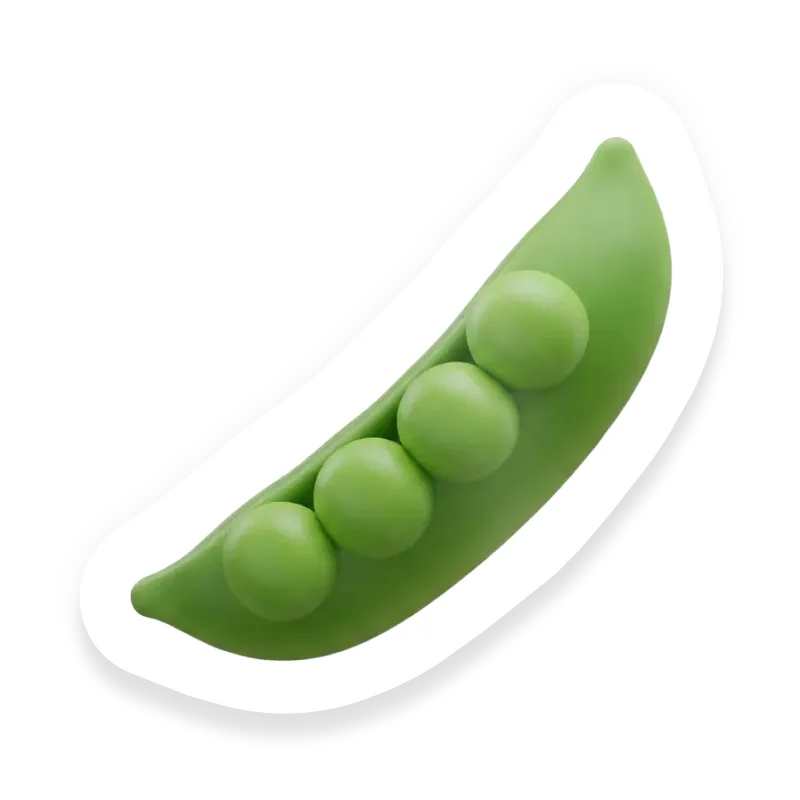
Snap Pea
Legume
Is Snap Pea Safe for Babies?
Yes, cooked snap peas can be introduced around 6 months of age, ensuring the pods and peas are prepared safely to prevent choking.
Yes, but there are some things to know
At a Glance
Snap peas are high in fiber, which helps soften stool and keeps digestion moving. They also contain vitamin C and prebiotic fibers that feed healthy bacteria.
How Do You Serve Snap Pea?
- 1Remove the pod seam and cook pods until very soft so they mash easily.
- 2Finely chop, mash, or lightly blend cooked pods and mix into scoopable purees or porridges for easy eating.
- 3A cooked, flattened pod can be offered as a supervised teether to practise mouth movements; expect little actual intake.
- 4Cut pieces small and soft and test temperature. Within arm’s reach, watch closely during feeds to minimize choking risk.
Is Snap Pea a Common Allergen?
Snap peas are not one of the common top-9 allergens and are generally well tolerated, but they are legumes so rare cross-reactivity with peanut/soy allergies can occur. People with pollen allergies may experience oral allergy syndrome (itchy mouth/throat) when eating raw peas. For infants and young toddlers, whole raw snap peas can be a choking hazard—serve cooked or cut into age-appropriate pieces. Always wash thoroughly to reduce surface residues and introduce new foods one at a time.
What Nutrients Does Snap Pea Have?
Snap peas provide folate and vitamins B6, C, and K—nutrients that support neurodevelopment, metabolism, immune function, and healthy blood clotting—plus fiber, antioxidants, and modest amounts of iron; vitamin C in snap peas helps boost absorption of plant-based iron. These benefits make snap peas a nutritious complementary food when starting solids as part of a varied diet. Because their iron content is modest and high fiber can cause mild GI upset in large amounts, offer snap peas alongside higher-iron foods and in age-appropriate portions.
Is Snap Pea a Choking Hazard?
Elevated Choking Risk
Snap peas can be a choking hazard because the firm, round peas inside each pod can lodge in a baby’s airway. Stay within arm’s reach during meals and avoid giving pieces that are hard for your child to chew. Be prepared by learning infant choking first aid and call emergency services immediately if your child is choking.
Have More Questions?
Yes. Snap peas can be introduced to babies around 6 months when cooked and prepared appropriately. Always serve in a safe, age-appropriate manner to prevent choking.
Yes. Cooked snap peas can be frozen in airtight containers for up to 8-12 months, making them convenient for batch feeding and ensuring freshness.
It depends. Choosing organic snap peas may reduce pesticide exposure, but conventionally grown ones are also safe if washed thoroughly.
Yes. Combining snap peas with other baby-friendly vegetables and proteins can create balanced meals, but always introduce new foods gradually and separately.
Yes. Portion sizes for babies depend on their age and appetite, but typically start with a few teaspoons to tablespoons and gradually increase as they grow.
Is Snap Pea safe for your baby?
Get personalized guidance on introducing Snap Pea — with prep tips, allergen alerts, and age-specific serving ideas.
Sources
- Managing Cross-Reactivity in Those with Peanut Allergy doi.org
- Cross-reactivity of peanut allergens doi.org
- Oral Allergy Syndrome: An Update for Stomatologists doi.org
- Oral allergy syndrome (NHS) nhs.uk
- Vig r 6 — cross-reactivity study (Molecular Nutrition & Food Research) doi.org
- Oral Allergy Syndrome (OAS) or Pollen Fruit Syndrome (PFS) — AAAAI aaaai.org
What Other Legume Can Babies Eat?
See all →
Backed by Science
Data you can trust.
Every food, guideline, and recommendation in Tummi is sourced from leading health institutions and peer-reviewed research.
 Centers for Disease Control and Prevention
Developmental milestones, nutrition guidelines, and allergen introduction timelines.
 American Academy of Pediatrics
Evidence-based feeding recommendations from the leading pediatric authority.
 National Institutes of Health
Peer-reviewed research on infant nutrition, allergies, and food safety.