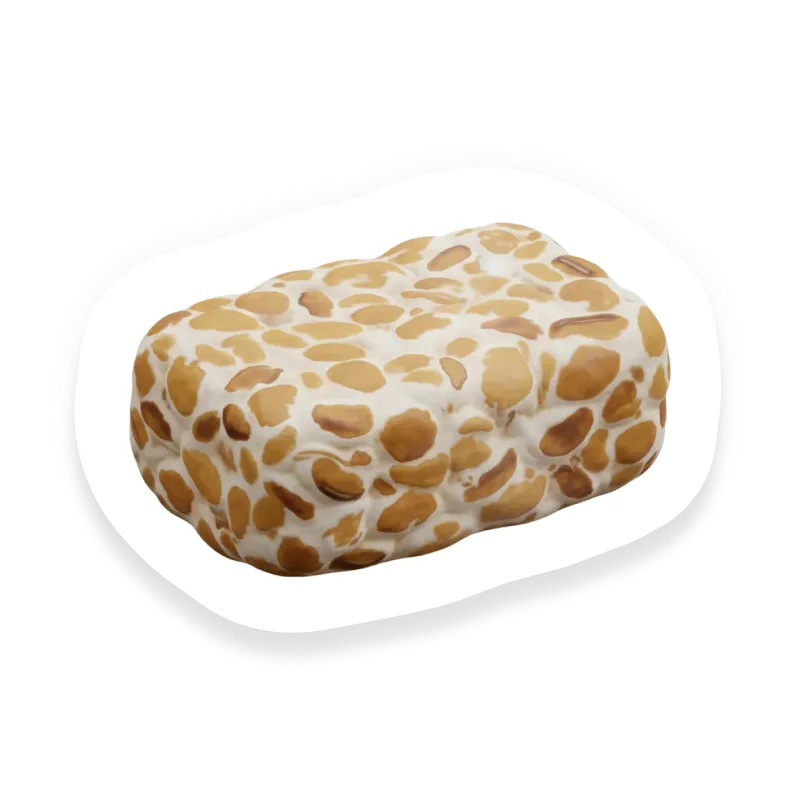
Tempeh
Legume
Is Tempeh Safe for Babies?
Yes, babies can eat tempeh starting around 6 months when they are ready for solid foods, ensuring it is cooked thoroughly and cut into small, manageable pieces.
Yes, but there are some things to know
At a Glance
Tempeh is a good iron source and provides plant protein, with about 2 mg of iron per 100 g. Fermentation lowers phytic acid so its iron is more easily absorbed, especially when eaten with vitamin C.
Tempeh is made from soybeans, so people with soy allergies can have allergic reactions when they eat it. It is also a nutritious fermented soy food that provides high plant protein and improved nutrient absorption thanks to its fiber, isoflavones, and fermentation.
How Do You Serve Tempeh?
- 1Cut tempeh into strips about the width of two adult fingers pressed together so pieces are easy for little hands to grasp.
- 2Steam or simmer the strips for 10–15 minutes, or pan-fry gently in a little oil, until they are very soft and can be mashed between your fingers.
- 3Lightly brush pieces with a small amount of butter or neutral oil before serving to add moisture; soft and flexible pieces are best, not hard or crispy.
- 4Serve with vitamin C–rich foods (bell pepper, broccoli, citrus) to help plant iron absorption. Always supervise while the baby mouths and practices chewing and remove any large or firm pieces.
Is Tempeh a Common Allergen?
Tempeh is a fermented soybean product and contains soy — avoid it if your child has a soy allergy. Check labels: some tempeh varieties include grains (which may contain gluten) or are made in facilities that handle nuts or sesame, so read ingredient lists and allergen statements for cross-contamination warnings. If unsure, choose clearly labeled soy-free alternatives and consult your pediatrician or allergist.
What Nutrients Does Tempeh Have?
Tempeh is a nutrient-dense, fermented soy food that provides high-quality plant protein (comparable to beef), plant-based iron, calcium, B‑vitamins including folate, and omega‑3 (ALA). Its fermentation supplies probiotic microbes and soy fibers act as prebiotics, supporting gut health and digestion. Pair tempeh with vitamin C–rich foods to improve iron absorption, choose plain low‑sodium/pasteurized varieties, and introduce cautiously because soy (and some brands’ added ingredients) is a common allergen. The main concern is processed/high‑sodium forms or unpasteurized/overripe tempeh rather than nutrient excess from typical serving sizes.
Is Tempeh a Choking Hazard?
Low Choking Risk
Tempeh’s firm, sponge-like texture can be a choking hazard for babies and toddlers who are still learning to bite, chew, and move food around in their mouths. Parents should be aware that even cooked tempeh can be resistant and may prompt gagging or difficulty managing pieces, so stay within arm’s reach and closely supervise all feedings. If the child struggles to breathe, coughs persistently, or appears unable to handle pieces safely, stop feeding and seek emergency help.
Have More Questions?
Yes. Tempeh can be stored in the refrigerator for up to 3 days once opened, and it should be kept in an airtight container or its original packaging.
Yes. You can freeze tempeh for up to 3 months by wrapping it tightly in plastic wrap or placing it in a freezer-safe container.
It depends. Organic tempeh is made from soybeans grown without synthetic pesticides or genetically modified organisms, but both organic and conventional tempeh provide similar nutritional benefits.
It depends. Combining tempeh with foods high in vitamin C, like peppers or citrus, helps increase iron absorption for your baby.
Yes. As your baby transitions to more textured foods, you can gradually introduce small, soft cubes of cooked tempeh as part of a balanced diet.
Is Tempeh safe for your baby?
Get personalized guidance on introducing Tempeh — with prep tips, allergen alerts, and age-specific serving ideas.
Sources
- Soy, Soy Foods and Their Role in Vegetarian Diets doi.org
- Evaluation of bean and soy tempeh influence on intestinal bacteria and estimation of antibacterial properties of bean tempeh pubmed.ncbi.nlm.nih.gov
- Fermented Foods: Definitions and Characteristics, Impact on the Gut Microbiota and Effects on Gastrointestinal Health and Disease doi.org
- The Infant Microbiome: Implications for Infant Health and Neurocognitive Development doi.org
- Genetically engineered crops and pesticide use in U.S. maize and soybeans doi.org
- The Introduction of Thousands of Tonnes of Glyphosate in the Food Chain: An Evaluation of Glyphosate Tolerant Soybeans doi.org
- Genetically modified crops safety assessments: present limits and possible improvements doi.org
- Soybean Trade: Balancing Environmental and Socio-Economic Impacts of an Intercontinental Market doi.org
- The natural history of soy allergy doi.org
- Gastroenteritis Outbreak Associated with Unpasteurized Tempeh, North Carolina, USA doi.org
- Oxalate content of food: a tangled web doi.org
- Effect of household cooking methods on nutritional and anti nutritional factors in green cowpea (Vigna unguiculata) pods doi.org
- Phytic acid, in vitro protein digestibility, dietary fiber, and minerals of pulses as influenced by processing methods doi.org
- Renal lithiasis and nutrition doi.org
- Are Anti-Nutrients Harmful? (Harvard T.H. Chan School of Public Health) hsph.harvard.edu
- Phytoestrogens and Their Health Effect doi.org
- The potential health effects of dietary phytoestrogens doi.org
- Soy (NCCIH) nccih.nih.gov
- Soy Allergy (Food Allergy Research & Education) foodallergy.org
What Other Legume Can Babies Eat?
See all →


Backed by Science
Data you can trust.
Every food, guideline, and recommendation in Tummi is sourced from leading health institutions and peer-reviewed research.
 Centers for Disease Control and Prevention
Developmental milestones, nutrition guidelines, and allergen introduction timelines.
 American Academy of Pediatrics
Evidence-based feeding recommendations from the leading pediatric authority.
 National Institutes of Health
Peer-reviewed research on infant nutrition, allergies, and food safety.