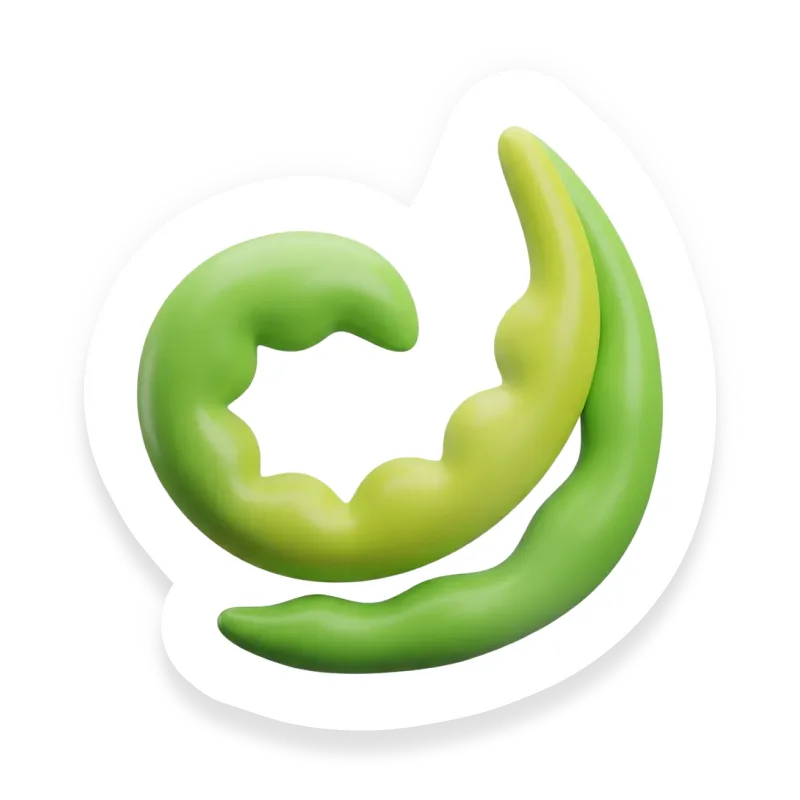
Yardlong Bean
Legume
Is Yardlong Bean Safe for Babies?
Yes, babies can eat yardlong beans starting around 6 months when they are prepared thoroughly and cooked until soft.
Yes, but there are some things to know
At a Glance
Yardlong beans are high in fiber and water, which help make stools softer and easier to pass. They also contain vitamins and fermentable fibers that support regular digestion and feed gut bacteria.
How Do You Serve Yardlong Bean?
- 1Cook the beans until the pod and inner beans are very soft—steam, boil, or sauté until a fork or your finger easily mashes them.
- 2Trim off tough ends and any stringy fibers, then cut into long strips about 4–5 inches (10–13 cm) so a portion extends from each side of the child’s closed fist; longer strips are easier to hold and reduce choking risk compared with small round pieces.
- 3When sharing family meals, remove one or two beans from your plate and trim them before offering; keep seasoned or sauced pieces plain to avoid added salt or choking hazards.
- 4Always supervise while eating and offer one piece at a time; discard any pieces that remain firm or have a hard core.
Is Yardlong Bean a Common Allergen?
Yardlong beans are legumes and are generally safe for most children. They are not common sources of peanut, tree‑nut, dairy, egg, fish, shellfish, sesame, or gluten allergies, but because they belong to the legume family some people with peanut or soy allergy may show cross‑reactivity. If your child has a diagnosed peanut or soy allergy, check with your allergist before serving and introduce yardlong beans cautiously (one new food at a time) while monitoring for symptoms.
What Nutrients Does Yardlong Bean Have?
Yardlong beans are nutrient-dense for babies — they provide folate (B9) for neurodevelopment, vitamin C to support immunity and improve iron absorption, and vitamin A for vision and immune health. They also supply fiber for digestive health, some plant-based omega‑3s for brain support, plus modest protein, iron, and minerals. Normal servings are safe, but very large amounts can cause gas or reduce calorie intake in young babies because of the high fiber; introduce gradually and monitor for legume-related sensitivities.
Is Yardlong Bean a Choking Hazard?
Moderate Choking Risk
Yardlong beans can be a choking hazard because their pods are tough to chew and small sections can be round and easily swallowed rather than chewed. Babies may not be able to break them down reliably with gums alone, which increases the risk of airway obstruction. Stay within arm’s reach and watch closely at every meal, and make sure you know infant choking first aid so you can act quickly if needed.
Have More Questions?
Yes, yardlong beans can be stored in the refrigerator for up to 3-4 days after purchase. It's best to keep them in a plastic bag or container to maintain freshness.
Yes, you can freeze yardlong beans after cooking or blanching them to extend their shelf life for up to 6 months. Ensure they are cooled and stored in airtight containers or freezer bags.
It depends; organic yardlong beans generally have fewer pesticides, but both organic and conventional beans can be safe for babies if thoroughly washed and cooked.
Yes, you can combine yardlong beans with other cooked vegetables or grains to introduce a variety of flavors and textures to your baby’s diet gradually.
For babies, a typical serving size of cooked yardlong beans is about 1-2 tablespoons, depending on their age and appetite. Always observe your baby’s cues.
Is Yardlong Bean safe for your baby?
Get personalized guidance on introducing Yardlong Bean — with prep tips, allergen alerts, and age-specific serving ideas.
Sources
- Ranking of 10 legumes according to the prevalence of sensitization as a parameter to characterize allergenic proteins doi.org
- Managing Cross-Reactivity in Those with Peanut Allergy doi.org
- Cross-reactivity of peanut allergens doi.org
- Oral Allergy Syndrome: An Update for Stomatologists doi.org
- Oral allergy syndrome (NHS) nhs.uk
- Vig r 6 from mung bean sprouts cross-reacts with Bet v 1-related allergens doi.org
- Oral Allergy Syndrome (OAS) or Pollen Fruit Syndrome (PFS) (AAAAI) aaaai.org
What Other Legume Can Babies Eat?
See all →
Backed by Science
Data you can trust.
Every food, guideline, and recommendation in Tummi is sourced from leading health institutions and peer-reviewed research.
 Centers for Disease Control and Prevention
Developmental milestones, nutrition guidelines, and allergen introduction timelines.
 American Academy of Pediatrics
Evidence-based feeding recommendations from the leading pediatric authority.
 National Institutes of Health
Peer-reviewed research on infant nutrition, allergies, and food safety.